

H2S Control During Well Testing and Flowback
A well test and a flowback are the periods when H2S is least predictable and the treating equipment is least permanent. The reservoir may be sour, the completion fluid may have picked up sulfide, and [...]

H2S in Crude Oil Storage Tanks and Production Batteries
A production tank does not treat hydrogen sulfide. It stores it, partitions it, and then releases it at the worst possible moment: when a hatch is opened, a truck is loaded, or a hot afternoon [...]
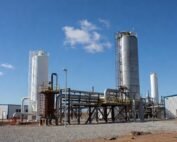
Hydrogen Sulfide in Lithium Brine and Direct Lithium Extraction
Lithium projects are no longer limited to hard-rock spodumene or high-grade salar evaporation. A growing share of new capacity is aimed at sedimentary basin brines, oilfield produced water, and geothermal fluids, then recovered by direct [...]

Spent H2S Scavengers and Spent Adsorbent Media
Most H2S articles stop at the inlet and outlet of the treating unit. Operators live with what happens after the reaction: spent liquid, dithiazine sludge, iron sulfide beds, filter cakes, and the paperwork that follows [...]

Acid Gas Injection for H2S
Acid gas injection for H2S is a disposal pathway that compresses concentrated hydrogen sulfide (and usually carbon dioxide) from a gas sweetening unit and injects it into a suitable subsurface formation. For many mid-size sour [...]

Mobile and Trailer-Mounted H2S Scrubbers
Mobile H2S scrubbers give operators a practical way to meet pipeline, flare, or fuel-gas specs when souring is short-lived, uncertain, or still being defined. Across Western Canada, trailer-mounted H2S scrubber packages are increasingly used for [...]

H2S Removal in Geothermal Power Plants
Geothermal plants turn reservoir heat into baseload electricity. The same steam and brine also carry non-condensable gases. Hydrogen sulfide is usually the most difficult of those gases. It is toxic, corrosive, odorous at parts-per-billion levels, [...]

H2S removal from Landfill gas
This article provides a comprehensive, unbiased overview of hydrogen sulfide (H₂S) in landfill gas (LFG). It covers formation mechanisms, operational and regulatory impacts, removal technologies, design factors, and field practices at municipal solid waste (MSW) [...]

Sour Water Stripping
Sour water stripping is one of the most important, and most frequently underestimated, hydrogen sulfide (H2S) management operations in refineries, upgraders, gas plants, and integrated oil sands facilities. Unlike produced-water treating, which addresses formation water [...]
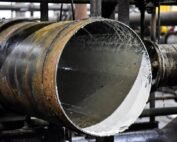
H2S-Induced Corrosion in Oil and Gas Pipelines
This article provides a comprehensive, unbiased overview of H₂S-induced corrosion mechanisms, modern detection and monitoring techniques, and proven mitigation strategies, drawing on established principles from materials science, chemical engineering, and industry standards. Understanding H2S in [...]
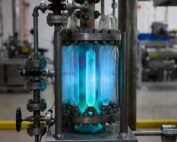
Advanced Oxidation Technologies
This detailed article explores the fundamentals, specific Advanced oxidation technologies, applications, design factors, performance data, economics, and implementation strategies for industrial users in 2026. Industrial wastewater from oil and gas, mining, pulp and paper, chemical [...]

Principles of Mass Transfer
Mass transfer is a fundamental process in chemical engineering that governs the movement of chemical species from one phase to another. In gas-liquid systems, it is critical for operations such as gas absorption, stripping, and [...]