Article Content
Iron oxide and iron hydroxide adsorbents (commonly called Granular Ferric Hydroxide – GFH or GEH®) are among the most effective media for removing arsenic, phosphate, heavy metals, H₂S, and other contaminants from water and gas streams. Their success depends not only on the chemistry of the iron (hydr)oxide but also on how the fine powder is transformed into strong, porous, free-flowing granules or pellets suitable for fixed-bed columns.
This comprehensive guide explains every stage of industrial-scale production: from raw powder synthesis to final shaping, binding, and thermal processing.
1. Synthesis of the Base Iron Oxide / Hydroxide Powder
The active material starts as a high-surface-area precipitate:
- Chemical precipitation: FeCl₃ or Fe₂(SO₄)₃ is neutralized with NaOH or NH₄OH (pH 8–12) to form Fe(OH)₃. Further aging converts it to β-FeOOH (akaganeite) or α-FeOOH (goethite).
- From waste streams: Waterworks sludge, red mud, or iron-rich industrial sludges (70–90 % water) are dewatered and used directly.
- The wet cake is filtered, washed, and gently dried at <100 °C to produce a fine powder with BET surface area 200–350 m²/g.
2. Pelletizing and Extrusion Techniques
Two primary industrial shaping methods are used:
A. Drum / Disc Pelletizing (Granulation)
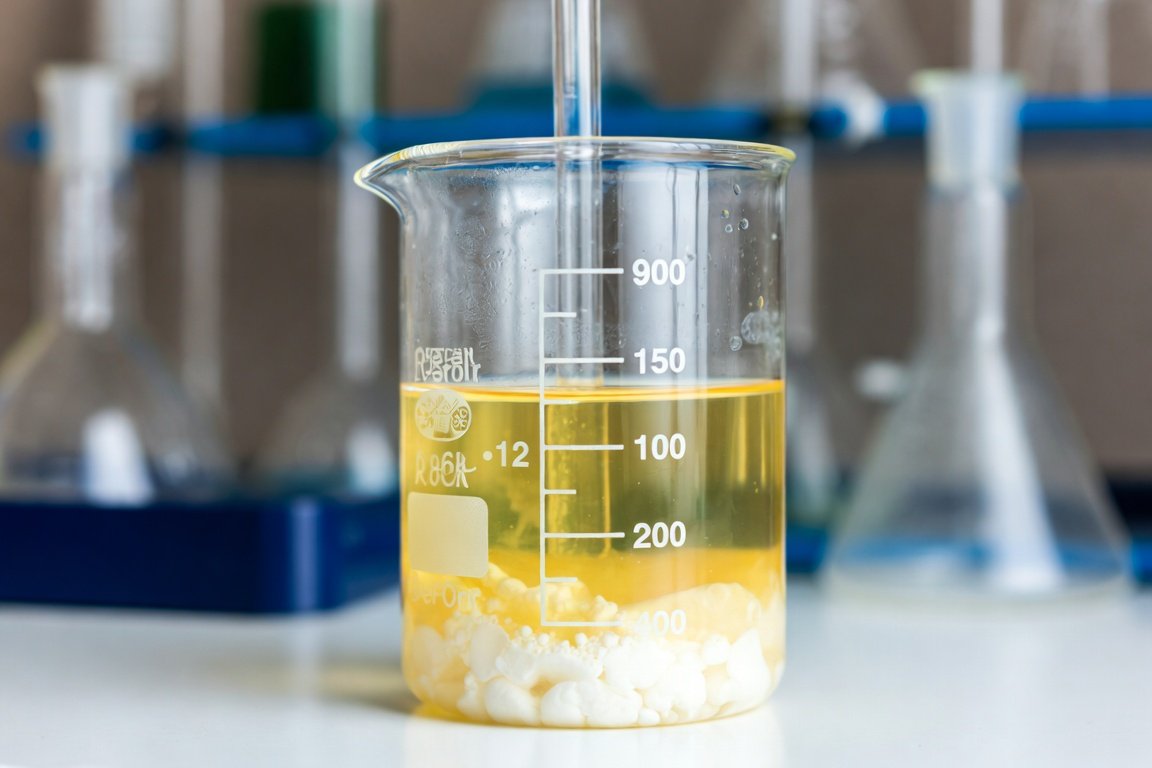
Powder + binder solution is fed into a rotating drum or disc pelletizer. Nucleation and snowballing produce near-spherical granules (0.3–2 mm or 2–20 mm). This is the standard method for commercial GFH/GEH® and phosphate adsorbents.
B. Extrusion (for Cylindrical Extrudates)
Powder is mixed with binder to a plastic dough, forced through a die (2–5 mm diameter), cut into cylinders, and dried. Common for H₂S sorbents and custom media.
C. Other Methods
- Crushing & sieving of dried blocks (irregular granules 0.5–20 mm)
- High-shear mixer granulation
- Fluid-bed agglomeration
3. Types of Granules Produced
| Type | Shape & Size | Typical Use |
|---|---|---|
| Spherical / Near-spherical pellets | 0.3–2 mm or 2–20 mm | Fixed-bed water filters (GFH/GEH®) |
| Cylindrical extrudates | 2–5 mm diameter × 3–10 mm length | Gas-phase H₂S removal |
| Irregular granules (crushed) | 0.5–20 mm | Low-cost or waste-based adsorbents |
4. Binding Agents & Clays Used
Organic binders dominate because they allow low-temperature processing and preserve high surface area:
- Cross-linked Poly(vinyl alcohol) – PVA: Most common for GFH. Optimum binder/powder ratio = 0.6 (by weight). Provides excellent mechanical stability while retaining >75 % of powder adsorption capacity.
- Aqueous polymer dispersions: Vinyl acetate-ethylene, styrene-acrylic ester copolymers (5–25 % solids). Used in patent processes to embed iron hydroxide particles.
- Polyvinyl alcohol (PVA) 5 % w/w: Standard for extruded iron oxide pellets (H₂S sorbents).
- Other organics: Carboxymethyl cellulose (CMC), starch, hydroxypropyl cellulose.
Clays (Bentonite) are rarely used in high-performance adsorbents because they require high-temperature firing (which sinters the iron oxide and destroys porosity). Bentonite (0.25–1.5 %) is the standard binder in metallurgical iron-ore pellets, but for adsorbents it is either avoided or used in trace amounts only when combined with organic binders.
5. Drying, Curing & Hardening Processes
Critical step — excessive heat destroys porosity and crystal structure.
- Drying temperatures: 5–150 °C (typical 90–110 °C or even room temperature for β-FeOOH stability).
- Target residual moisture: <10–20 % (often <5 %).
- Time: 2–24 hours depending on granule size and dryer type (tray, belt, or fluid-bed dryer).
- No high-temperature “baking” or induration (unlike iron-ore pellets at 1200–1350 °C).
- Optional mild calcination (300–400 °C) only if converting Fe(OH)₃ to hematite for specific gas-phase applications — performed carefully to avoid sintering.
6. Real-World Commercial Examples
GEH® / GFH® (GEH Wasserchemie)
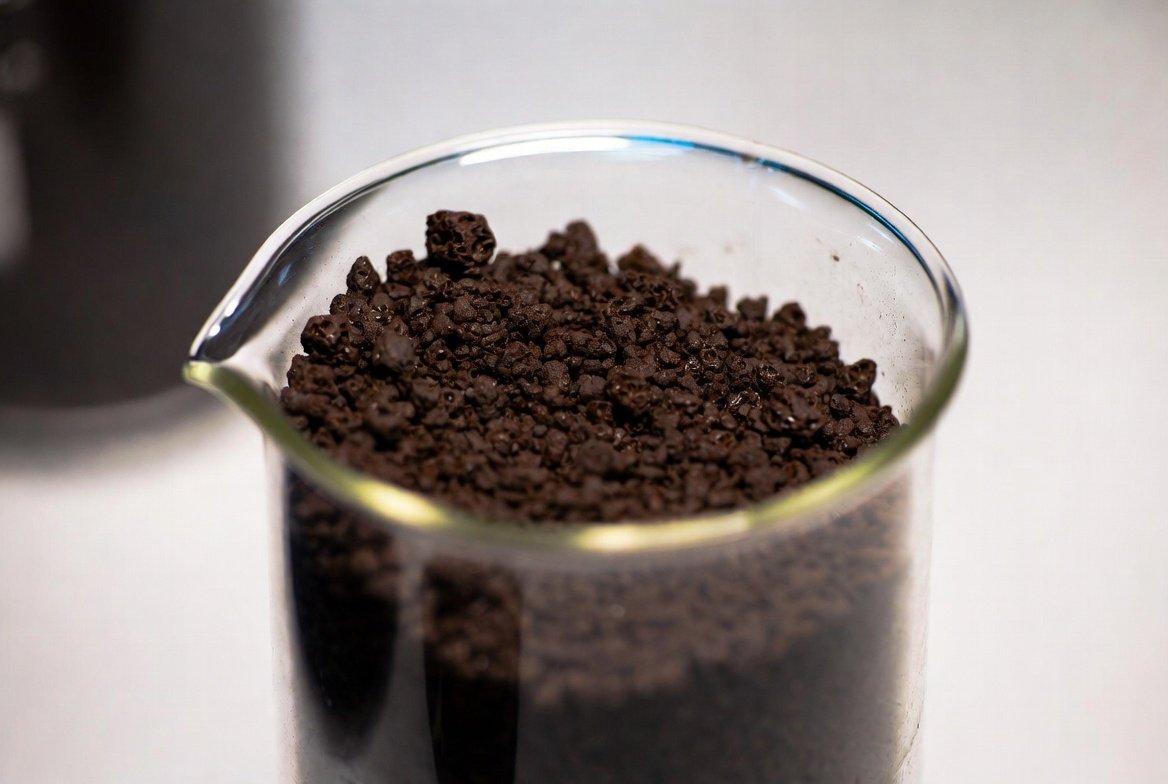
Produced from precipitated β-FeOOH + Fe(OH)₃. Grain size 0.32–2.0 mm or 2–20 mm, bulk density ~1150 kg/m³, BET surface ~300 m²/g. Proprietary granulation process yields the famous “black granulate” used in >20 European waterworks.
Laboratory / Demonstration GFH for Phosphate Removal
Industrial-scale precipitation → drum granulation with cross-linked PVA (ratio 0.6) → drying. Langmuir capacity drops only from 74 mg/g (powder) to 56 mg/g (granules) while gaining mechanical stability.
Extruded Iron Oxide Pellets for H₂S
95 % Fe₂O₃ + 5 % PVA → extrusion → low-temp drying. Surface area retained at 47–54 m²/g; superior to commercial ZnO sorbents.
7. Key Challenges & Optimizations
- Balance between mechanical strength and adsorption capacity
- Minimizing binder content (excess binder blocks pores)
- Preventing dusting and pressure drop in columns
- Regeneration (NaOH for phosphate/arsenic-loaded granules)
Conclusion
Modern iron oxide/hydroxide adsorbents are engineered through precise precipitation, low-temperature shaping (drum pelletizing or extrusion), and carefully selected organic binders (primarily PVA and polymer dispersions). Clays such as bentonite are deliberately avoided to preserve the enormous surface area required for high adsorption performance. The result is a mechanically stable, high-capacity granular or extruded product ready for real-world water and gas treatment applications.
Sources include peer-reviewed papers, patents (DE19826186A1 and others), and commercial specifications from GEH Wasserchemie. Processes are continuously optimized for sustainability and cost-effectiveness.