Article Content
Natural gas is a critical energy source, but raw “sour” gas often contains hydrogen sulfide (H₂S), a highly toxic, corrosive, and environmentally harmful impurity. Pipeline specifications typically require H₂S levels below 4 ppm to ensure safety, prevent corrosion, and meet environmental regulations. Traditional sweetening methods like amine absorption have long dominated the industry, but membrane separation technology is emerging as a compact, energy-efficient alternative—especially for bulk H₂S removal in remote or offshore applications.
This article explores how membranes selectively remove H₂S from natural gas, the stringent requirements for viable membrane systems, their key benefits and drawbacks, the main types of membranes available, and practical guidance on choosing the right technology. Whether you’re an engineer, plant operator, or industry stakeholder, understanding these aspects can help optimize gas processing operations.
How Membrane Separation works
Membrane-based gas separation relies on the principle of selective permeation. Unlike absorption processes that use chemical solvents, membranes act as a physical barrier that allows certain gas molecules to pass through more readily than others.
The dominant transport mechanism in polymeric membranes is the solution-diffusion model. Gas molecules first dissolve into the membrane material on the high-pressure feed side (driven by partial pressure differences), then diffuse across the thin selective layer, and finally desorb on the low-pressure permeate side. Permeability (P) of a gas is the product of its solubility (S) in the polymer and its diffusivity (D) through the matrix: P = D × S.
H₂S has a higher solubility and slightly smaller kinetic diameter (3.6 Å) compared to methane (CH₄, 3.8 Å), making it preferentially permeate through most membranes. The retentate (product) stream exits at high pressure with significantly reduced H₂S content, while the permeate stream—rich in H₂S, CO₂, and some water—exits at lower pressure and can be re-injected, flared, or sent to sulfur recovery.
In commercial systems like MTR’s SourSep™ or Evonik’s PURAMEM® H₂S, high-pressure sour gas (often 30–1200 psia) flows across hollow-fiber or spiral-wound modules. A single-stage setup can achieve 75–90% H₂S bulk removal, producing sweetened gas down to 200–300 ppm. Multi-stage or hybrid configurations push purity further. Pretreatment (coalescing filters to remove liquids, particulates, and heavy hydrocarbons) is essential to prevent fouling.
The driving force is the partial pressure gradient—no moving parts, no chemicals, and steady-state operation make the process inherently simple and reliable.
Requirements for Membranes to Be a Viable Option
For membranes to compete with or complement amine systems, they must meet demanding performance criteria under real-world sour gas conditions:
- High Permeability and Selectivity: H₂S permeability should exceed 100 Barrer for economic flux, with H₂S/CH₄ selectivity ideally >20–40 (and balanced CO₂/CH₄ selectivity >20 in mixed-acid-gas streams) to minimize methane losses (typically kept under 5–10%).
- Plasticization Resistance: H₂S and CO₂ are highly condensable and can swell the polymer matrix at high partial pressures (>10–15 bar), increasing permeability but drastically reducing selectivity. Crosslinking, rigid backbones, or sub-ambient operation help mitigate this.
- Chemical and Mechanical Stability: Tolerance to H₂S concentrations up to 20–30%, water, heavy hydrocarbons, aromatics (e.g., toluene), and temperatures up to 70–80°C. Membranes must resist aging, swelling, and competitive sorption.
- High Pressure and Flux Capability: Operation at feed pressures up to 80–120 bar with thin selective layers (0.1–1 µm) on porous supports for high throughput in compact modules.
- Scalability and Cost-Effectiveness: Modules must be modular, skid-mountable, and economical for flows from 1 to >100 MMSCFD. Pretreatment requirements should be reasonable.
- Environmental and Operational Robustness: No chemical consumption, minimal emissions, and compatibility with hybrid polishing for ultra-low (<4 ppm) H₂S specs.
Commercial viability is often highest for high-acid-gas feeds (>5–15% H₂S/CO₂) at smaller-to-medium scales where amines become uneconomical due to solvent costs and footprint.
Benefits of Membrane Technology for H₂S Removal
Membranes offer compelling advantages over conventional sweetening:
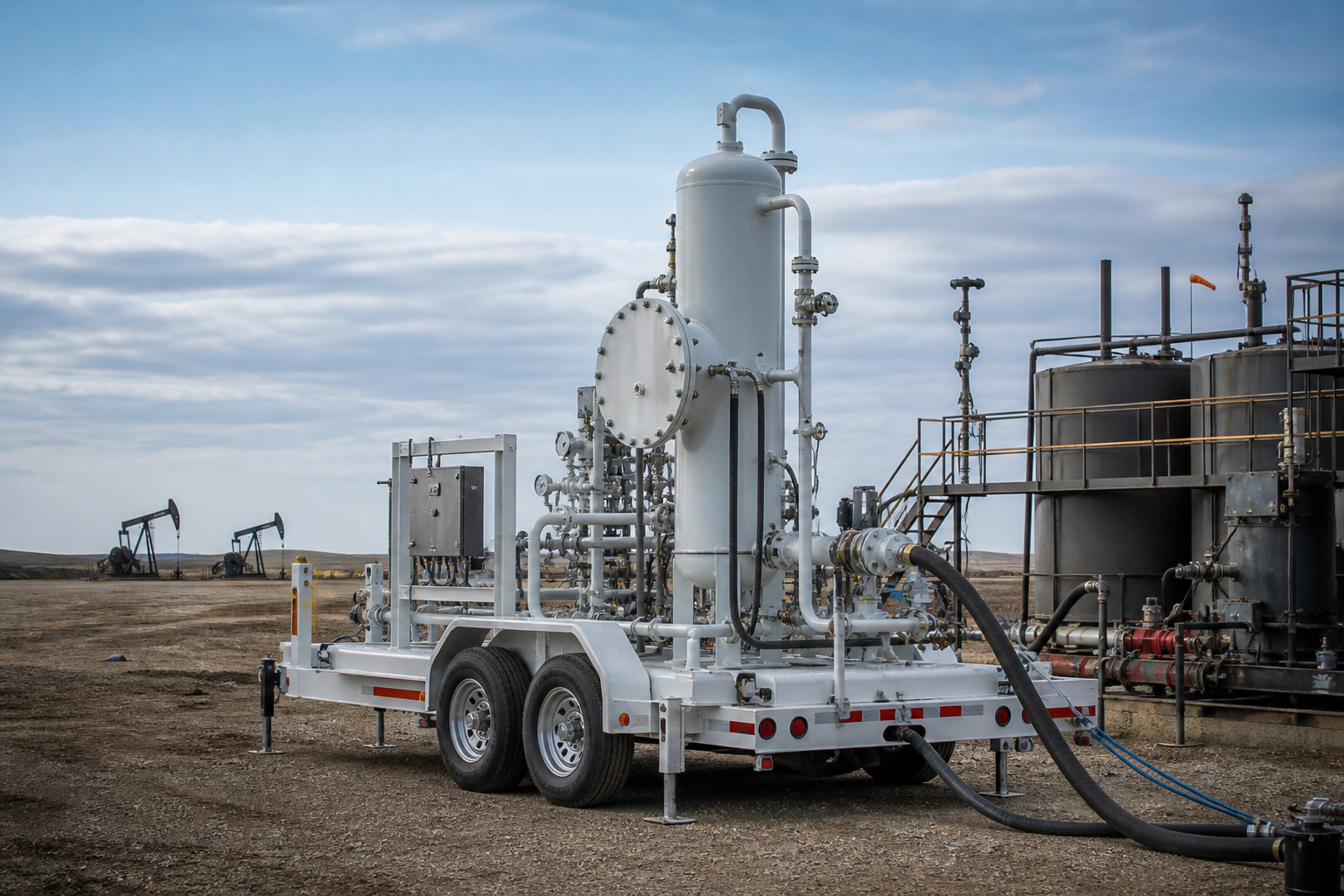
- Compact and Modular Design: Skid-mounted units install quickly (days vs. months for amine plants) and are ideal for offshore platforms or remote fields. Systems from GENERON, MTR, and Evonik process 1–100+ MMSCFD in a fraction of the space.
- Lower Operating Costs and Energy Use: No solvent regeneration, chemical makeup, or reboilers. Simple steady-state operation reduces manpower and maintenance.
- Environmental Friendliness: Zero chemical discharge, reduced emissions, and the ability to re-inject permeate H₂S-rich gas. No sulfur by-product handling in bulk-removal mode.
- Simultaneous Removal of Impurities: H₂S, CO₂, and water are removed together, often yielding a product with improved dew points.
- Fast Start-Up and Turndown Flexibility: Handles variable flow and composition without major adjustments—perfect for upstream production.
- Hybrid Synergies: Bulk removal (75–90% H₂S reduction) followed by light amine polishing or scavengers minimizes overall costs and debottlenecks existing plants.
Industry examples show capital and operating cost savings of 20–50% versus amines for suitable applications, with proven deployments in Indonesia, the Middle East, and North America.
Drawbacks and Limitations
Despite the benefits, membranes are not a universal solution:
- Methane Losses: Permeate streams carry 5–15% of feed methane, reducing recovery unless multi-stage recycling is used (increasing complexity and cost).
- Limited Deep Removal: Standalone membranes rarely achieve <4 ppm H₂S; hybrid systems are often required for pipeline specs.
- Plasticization and Fouling: High H₂S/CO₂ levels can degrade performance over time unless advanced materials are used. Heavy hydrocarbons require robust pretreatment.
- Higher Upfront Capital for Large Scales: Above ~100 MMSCFD or very low H₂S feeds, amines may still be more economical due to membrane area requirements.
- Feed Sensitivity: Strict pretreatment is mandatory; liquids or particulates can irreversibly damage modules.
- Emerging Technology Risks: While proven, newer high-selectivity membranes (e.g., rubbery PEO types) are still scaling commercially compared to decades-old cellulose acetate systems.
These challenges are actively addressed through material innovations and process integration.
Different Types of Membranes for H₂S Removal
Membranes are classified primarily by material and configuration:
1. Polymeric Membranes (Most Commercial)
Glassy Polymers: Rigid structures (e.g., cellulose acetate—CA, polyimides like 6FDA-based). Excellent diffusivity selectivity but moderate H₂S/CH₄ selectivity (10–40). Prone to plasticization; CA remains widely used but limited by hydrocarbon losses.
Rubbery Polymers: Flexible chains (e.g., PEO-based, Pebax®). Superior solubility selectivity for H₂S (selectivities 40–120, permeability 500–1000+ Barrer). Ideal for sour gas; crosslinking improves CO₂/CH₄ balance and plasticization resistance. Evonik’s PURAMEM® H₂S is a prime example.
Polymers of Intrinsic Microporosity (PIMs): High-free-volume materials (e.g., AO-PIM-1) offering ultrahigh permeability (>4000 Barrer) and good selectivity, though still developmental.
2. Inorganic Membranes
Ceramic, zeolite, or carbon-based. Offer superior thermal/chemical stability and plasticization resistance at extreme conditions. Higher cost and brittleness limit widespread use, but promising for high-temperature or aggressive feeds.
3. Mixed Matrix Membranes (MMMs)
Polymers embedded with inorganic fillers (zeolites, MOFs, silica). Combine processability of polymers with selectivity/stability of inorganics. Research shows breakthroughs in H₂S/CH₄ performance, bridging the “upper bound” trade-off between permeability and selectivity.
4. Membrane Contactors
Hollow-fiber modules using a membrane as a non-dispersive interface between gas and liquid absorbent (e.g., amine). High mass-transfer area, compact, and efficient for both H₂S and CO₂. Avoids flooding/foaming issues of packed columns; suitable for co-removal applications.
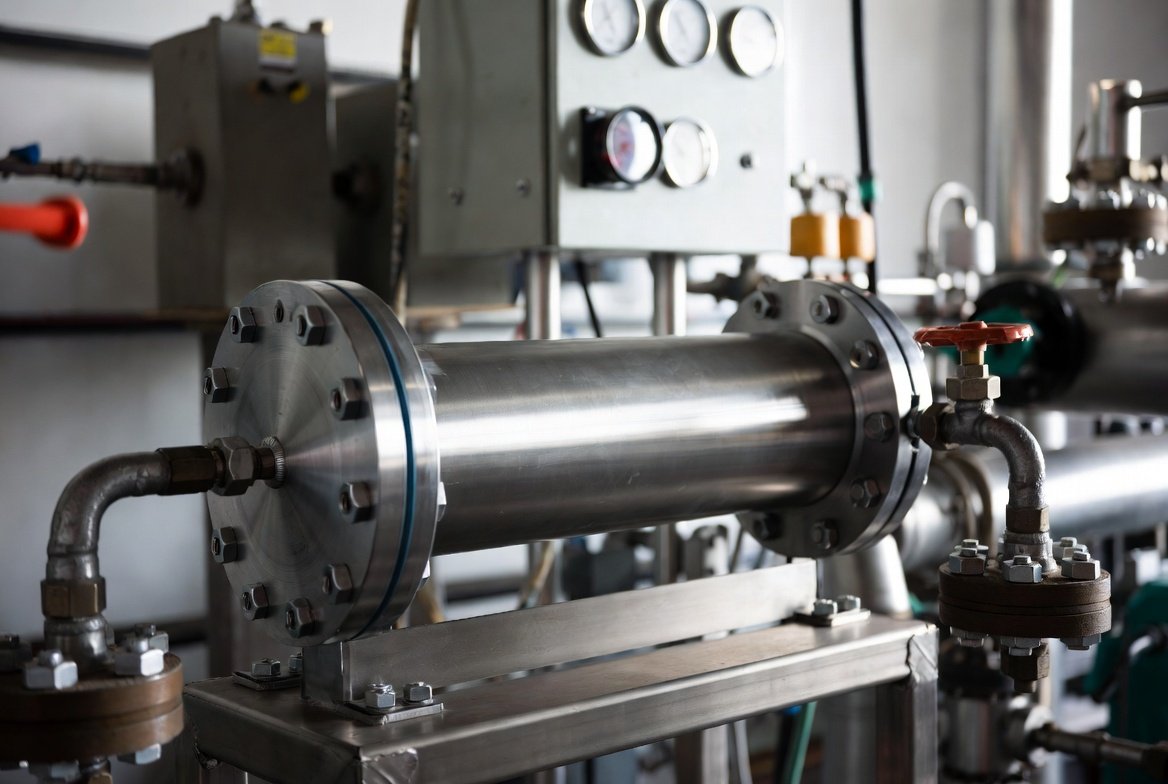
Configuration-wise, hollow-fiber (high packing density) and spiral-wound modules dominate.
How to Choose the Right Membrane Technology
Selection depends on site-specific factors:
- Feed Composition and Flow Rate: High H₂S (>5%) and medium flows favor rubbery polymeric or hybrid systems. Low H₂S favors glassy membranes or contactors.
- Required Purity and Recovery: Bulk removal → single-stage polymeric. Pipeline-spec (<4 ppm) → hybrid (membrane + amine/scavenger).
- Location and Scale: Offshore/remote → compact membranes (MTR, GENERON). Large onshore plants → amines or hybrids.
- Contaminants and Operating Conditions: High hydrocarbons/water → select robust materials (e.g., Evonik’s high-tolerance polymers). Temperature/pressure dictate material choice.
- Economics (CAPEX/OPEX): Calculate total cost including methane loss, pretreatment, and downstream processing. Tools from vendors help model stage-cut and recycle.
- Future-Proofing: Consider upgradability, plasticization-resistant materials (crosslinked PEO, MMMs), and sub-ambient options for enhanced selectivity.
Vendors like MTR, Evonik, Air Liquide (PEEK-Sep), and GENERON offer tailored solutions. Pilot testing with actual feed gas is highly recommended.
Conclusion and Future Outlook
Membrane technology has matured into a reliable tool for H₂S removal, delivering simplicity, efficiency, and sustainability where traditional methods fall short. With ongoing advances in rubbery polymers, MMMs, and contactors—and an H₂S/CH₄ “upper bound” guiding material design—the technology is poised for broader adoption amid growing sour gas production worldwide.
By combining membranes for bulk removal with polishing steps, operators can achieve lower costs, smaller footprints, and greener operations. As fields become more challenging and regulations stricter, membranes will play an increasingly vital role in the natural gas value chain.
References & Further Reading:
– MTR SourSep™ documentation
– Evonik SEPURAN® NG & PURAMEM® H₂S technical literature
– Review: “Polymeric Membranes for H₂S and CO₂ Removal from Natural Gas” (Energies, 2023)
– RSC Advances review on polymer membranes for H₂S separation (2021)