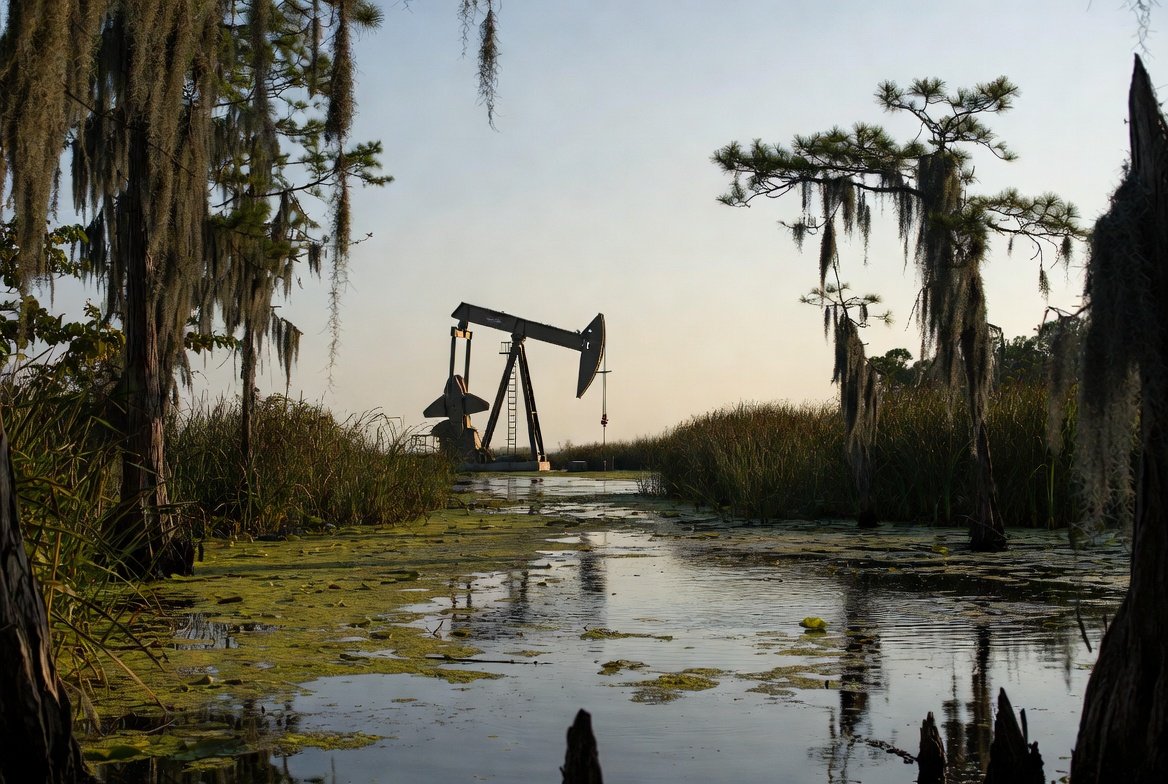
Article Content
Louisiana has played a central role in the development of the American oil and gas industry for more than a century. From the first commercial oil discovery near Jennings in 1901 to pioneering offshore production in the Gulf of Mexico and unlocking major shale gas resources in the Haynesville formation, the state has been a consistent leader in energy innovation, production, and infrastructure. Its unique geology, dominated by salt domes along the Gulf Coast, combined with strategic access to coastal waters and deepwater resources, created ideal conditions for exploration and development.
The industry transformed Louisiana from an agricultural economy into a major energy and petrochemical powerhouse. It generated tens of thousands of jobs, built world-class refineries and fabrication yards, and provided critical tax revenues that funded state services for decades. While production has experienced the classic boom-and-bust cycles of the energy sector, Louisiana remains a vital contributor to U.S. energy security. Today it continues to produce significant volumes of oil and natural gas, serves as a premier refining and petrochemical hub, and hosts major LNG export facilities that connect domestic production to global markets.
The Birth of Louisiana’s Oil Industry: The 1901 Jennings Discovery
The modern petroleum era in Louisiana began on September 21, 1901, when the Heywood brothers—veterans of the legendary Spindletop gusher in Texas earlier that year—brought in the state’s first commercial oil well near the small community of Evangeline, just northeast of Jennings in Acadia Parish. Drilled on the Jules Clements farm in a rice field on the Mamou Prairie, the well initially flowed at very high rates, creating a classic gusher that announced Louisiana’s entry into the oil age.
The discovery well, often referred to as the Heywood well or Jules Clements No. 1, tapped into a salt dome-related reservoir and produced thousands of barrels per day initially. This find established the Jennings Field and proved that commercial hydrocarbons existed in Louisiana. The timing, just months after Spindletop, triggered immediate leasing activity and drilling across southwest Louisiana. Wildcatters and established operators alike recognized the potential of the region’s salt dome geology.
Early Northern Louisiana Developments
While the Jennings discovery captured headlines, significant activity soon shifted northward. In 1905–1906, the Caddo-Pine Island Field in Caddo Parish became one of the earliest major oil discoveries in northern Louisiana. This was followed by the construction of the state’s first natural gas pipeline in 1908, delivering gas from the Caddo area to Shreveport. By 1909–1910, Standard Oil of Louisiana completed a major oil pipeline from the Caddo field to a new refinery in Baton Rouge, which remains one of the largest refineries in North America today.
Additional important early fields included the Bull Bayou Field (1913), the prolific Monroe Gas Field (1916) in Ouachita Parish, and the Haynesville Gas Field (1921) in Claiborne Parish. These northern discoveries provided natural gas for industrial use and helped establish Louisiana as both an oil and gas producing state. Many of these early fields were relatively short-lived in their initial phases, prompting operators to look elsewhere as technology improved.
Geological Foundations: Salt Domes and the Gulf Coast Basin
Louisiana’s hydrocarbon wealth is intimately tied to its geology, particularly the numerous salt domes that pierce through sedimentary layers across the southern half of the state. These domes, formed from Jurassic-age salt that rose buoyantly through overlying sediments over millions of years, created structural traps where oil and gas accumulated. The piercement salt domes of south Louisiana became classic exploration targets because they were relatively easy to identify with early seismic methods and often produced prolific reservoirs in flanking sands and cap rocks.
This geology differs markedly from the Bakken shale play in North Dakota or the conventional plays of the Permian Basin. Louisiana’s combination of salt-related structural traps, multiple stacked pay zones, and proximity to the Gulf of Mexico created a uniquely productive province. Understanding these domes was essential for the industry’s expansion into marshes, bays, and eventually offshore waters.
Expansion into Coastal Marshes, Bays, and Shallow Waters
By the mid-1920s, exploration technology had advanced enough to locate buried salt domes beneath the coastal marshes and shallow bays of south Louisiana. In 1926, Pure Oil Company discovered the Sweetlake Field in Cameron Parish, marking one of the first commercial productions from a coastal well. Large-scale leasing followed in areas such as Terrebonne Bay and other inland water bodies.
Operators adapted quickly to the challenging marsh and shallow-water environment. Innovations included the marsh buggy for seismic crews and submersible drill barges that could operate in a few feet of water. These early marine operations laid the groundwork for the much larger offshore industry that would follow. By the late 1930s and early 1940s, companies were routinely drilling in lakes, bays, and protected coastal waters using barges and early fixed platforms.
Pioneering the Offshore Frontier
Louisiana became the birthplace of the modern offshore oil and gas industry. On November 14, 1947, Kerr-McGee (in partnership with Phillips Petroleum) completed the first commercial well out of sight of land in the Gulf of Mexico. Located in Ship Shoal Block 32, approximately 10–12 miles south of Morgan City in about 20 feet of water, this well marked a historic milestone. It proved that hydrocarbons could be produced economically from the open Gulf.
The following years saw rapid expansion. Major discoveries in 1949 included the Eugene Island, Bay Marchand, and Vermilion fields. Additional finds such as South Pass (1950) and West Cameron (1954) established the western and eastern boundaries of early offshore activity. Fabrication yards sprang up in Morgan City, Houma, and other south Louisiana communities, building the platforms, barges, and support vessels that defined the new industry. By the end of the 1970s, thousands of platforms and extensive pipeline networks crisscrossed Louisiana’s state waters and the federal Outer Continental Shelf.
Peak Production in the Conventional Era
Louisiana’s conventional oil production climbed steadily through the 1950s and 1960s as operators developed both onshore salt dome fields and the new offshore discoveries. Annual oil production (including condensate) reached its peak in 1969, with reported figures exceeding 700 million barrels in some accounts. Giant fields such as Bay Marchand ultimately produced more than 500 million barrels cumulatively, ranking among the most prolific in the United States.
Natural gas production was equally important. Fields like Monroe and Haynesville supplied growing industrial and residential markets, while associated gas from oil wells added to the total. Severance taxes and royalties became major sources of state revenue, hitting record levels in the early 1980s. The industry supported a vast ecosystem of service companies, marine transportation, and fabrication that employed tens of thousands of Louisianans.
The Haynesville Shale Revolution
While south Louisiana focused on conventional and offshore resources, northern Louisiana experienced a second major boom in the late 2000s. The Haynesville Shale (Upper Jurassic), long known as a source rock and conventional reservoir, was re-evaluated using modern horizontal drilling and hydraulic fracturing techniques. Beginning around 2008, operators rapidly leased acreage across DeSoto, Caddo, Red River, and surrounding parishes.
Production from the Haynesville surged dramatically. The play, which extends into East Texas, became one of the largest shale gas developments in the contiguous United States. Daily gas output from the Haynesville peaked near 7.2 billion cubic feet per day around 2011 before moderating, yet it remains a major contributor today. The shale boom revitalized economies in northern Louisiana, created new infrastructure, and benefited from the region’s existing pipeline network and proximity to the Henry Hub pricing point in Erath, Vermilion Parish—the benchmark for U.S. natural gas prices.
Economic, Social, and Infrastructure Legacy
The oil and gas industry fundamentally reshaped Louisiana. South Louisiana communities such as Lafayette, Houma, Morgan City, and Lake Charles grew into energy hubs. The Baton Rouge refinery complex and the string of petrochemical plants along the Mississippi River created one of the world’s premier energy corridors. Port Fourchon evolved into the premier deepwater supply base for the Gulf of Mexico. The Louisiana Offshore Oil Port (LOOP) allowed very large crude carriers to offload oil safely. LNG liquefaction and export terminals, particularly in the Calcasieu and Cameron Parish areas, have positioned Louisiana as a key player in global natural gas trade.
Socially, the industry brought high-wage jobs, but also cycles of prosperity and hardship. The 1980s oil price collapse caused severe unemployment in many parishes and prompted an exodus of companies and workers, many relocating to Houston. Hurricanes Katrina and Rita in 2005 inflicted massive damage on offshore infrastructure and coastal communities, highlighting both the industry’s vulnerability and its resilience.
Challenges and Adaptation
Louisiana’s energy history includes significant environmental and regulatory challenges. Canal dredging for access and subsidence from fluid withdrawal contributed to coastal land loss. Oil spills, produced water discharges, and abandoned infrastructure required improved oversight. Major incidents such as Hurricane Ivan (2004), the Deepwater Horizon spill (2010), and the 2005 storms prompted stricter safety standards, spill response cooperatives like Clean Gulf Associates, and better environmental practices. The industry adapted through technological advances in deepwater drilling, enhanced recovery, and emissions reduction.
Modern Outlook
Despite the maturity of many conventional fields, Louisiana continues to evolve. The Haynesville Shale remains active with ongoing optimization and new drilling. Deepwater Gulf of Mexico resources, though primarily in federal waters, continue to rely heavily on Louisiana’s ports, workforce, and service sector. LNG exports have added a major new growth dimension. As the broader energy landscape shifts, Louisiana’s combination of existing infrastructure, skilled labor, geological resources, and strategic Gulf location positions it to remain relevant for decades to come.
The story of oil and gas in Louisiana is one of bold exploration, technological adaptation, and enduring economic significance. From the gushers of 1901 to today’s high-tech horizontal wells and offshore platforms, the state has repeatedly demonstrated its central place in America’s energy story.
Key Milestones in Louisiana Oil and Gas History
- 1901 – First commercial oil well near Jennings (Heywood/Jules Clements No. 1)
- 1905–1906 – Caddo-Pine Island Field discovery in northern Louisiana
- 1908–1910 – First gas pipeline and Baton Rouge refinery/pipeline system
- 1916 – Monroe Gas Field discovery
- 1921 – Haynesville Gas Field discovery
- 1926 – Sweetlake Field – early coastal production
- 1947 – First commercial offshore well in the Gulf of Mexico (Kerr-McGee)
- 1969 – Peak annual oil production (over 700 million barrels including condensate)
- 1986 – Bay Marchand Field reaches 500 million barrels cumulative
- 2008 onward – Haynesville Shale horizontal drilling boom
For more information on H₂S removal technologies and solutions for oil and gas operations, contact the team at FirstKlaz Technologies.