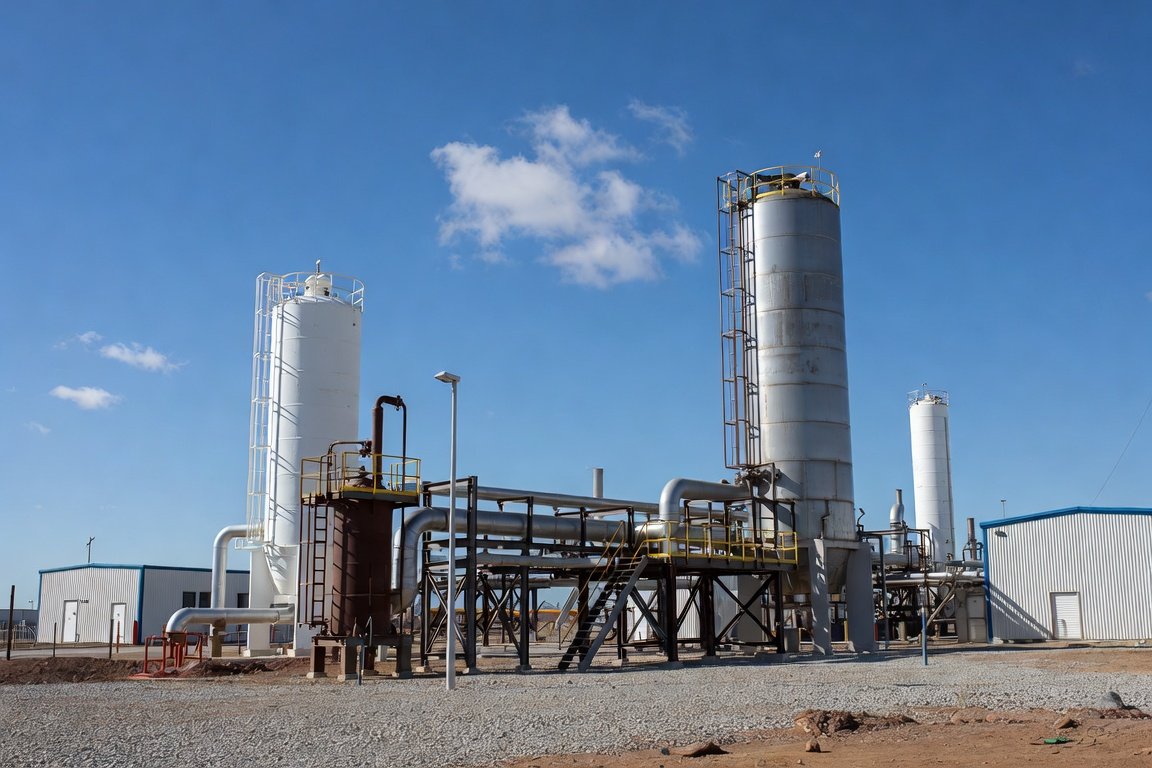

Article Content
In the oil and gas industry, hydrogen sulfide (H2S) is a notorious impurity in natural gas streams, posing significant risks due to its toxicity, corrosiveness, and potential to poison catalysts in downstream processes. Known as “sour gas,” natural gas containing H2S must undergo sweetening to meet pipeline specifications, typically reducing H2S levels to below 4 ppm. Adsorption using solid media is one of the most effective methods for H2S removal, particularly for trace amounts or in scenarios where regeneration is feasible. This article delves into the various types of H2S adsorbents, exploring their chemistries, key differences, advantages, disadvantages, and specific applications in natural gas processing.
Overview of H2S Removal in Natural Gas Processing
Natural gas sweetening involves separating H2S (and often CO2) to produce pipeline-quality “sweet gas.” While absorption with liquid amines (e.g., MEA, DEA, MDEA) dominates for bulk removal, adsorption excels in polishing steps or compact installations like offshore platforms. Adsorbents work via physical (physisorption) or chemical (chemisorption) mechanisms. Physisorption relies on weak van der Waals forces for reversible capture, while chemisorption involves irreversible reactions forming stable compounds like metal sulfides. The choice depends on gas composition (wet vs. dry), H2S concentration, temperature, pressure, and operational constraints.
Types of H2S Adsorbents
Iron-Based Adsorbents (e.g., Iron Oxide)
Iron-based adsorbents, such as those in the SulfaTreat family, are granular iron oxide media that react chemically with H2S to form iron sulfide (Fe2O3 + 3H2S → Fe2S3 + 3H2O). This reactive chemistry makes them ideal for water-saturated gas streams, where moisture enhances reactivity without degrading performance. SulfaTreat products are nonhazardous and non-pyrophoric, addressing safety concerns common with other iron media.
Advantages include high capacity (up to four times that of traditional iron sponge), low pressure drop, and adaptability to varying flow rates via lead-lag vessel configurations. They require minimal operator intervention and offer predictable consumption based on H2S loading. Disadvantages involve irreversible reaction, leading to spent media disposal as non-hazardous waste, and higher costs for high-H2S streams compared to amines.
Iron Hydroxide-Based Adsorbents
Iron hydroxide (Fe(OH)3 or FeO(OH)) adsorbents represent a specialized subset of iron-based media, often favored for their higher surface areas and enhanced reactivity in humid environments compared to pure iron oxides. These materials operate via chemisorption, where H2S reacts with ferric hydroxide to form iron sulfide and water: 2Fe(OH)3 + 3H2S → Fe2S3 + 6H2O. This reaction is exothermic and requires moisture (at least 40% relative humidity) for optimal performance, as H2S dissolves in water before reacting. Unlike non-regenerable iron oxides, some iron hydroxide formulations, such as FERROLOX-G, can be regenerated by oxidation with oxygen or air, producing elemental sulfur: Fe2S3 + 1.5O2 + 3H2O → 2Fe(OH)3 + 3S.
Key advantages include superior H2S loading capacities (up to 710 g H2S/kg, or 20–40% sulfur by weight) and BET surface areas of 258–301 m²/g, outperforming iron oxides (e.g., 135 mg H2S/g for Fe(OH)3 vs. 4 mg/g for α-Fe2O3). They excel in wet gas streams, where hydroxides maintain reactivity without degradation, and also remove siloxanes, reducing downstream activated carbon needs. Drawbacks involve heat generation during regeneration (up to -603 kJ/mol) and potential pore clogging by sulfur deposits over cycles. These are applied in refineries, oil/gas storage, and biogas plants for H2S levels of 50–15,000 ppm, in fixed- or moving-bed absorbers under pressures up to 25 bar.
Iron Carbonate-Based Adsorbents
Ferrous carbonate (FeCO3), often sourced as the mineral siderite, serves as an emerging absorbent for H2S and other sulfur compounds (e.g., mercaptans, COS) in both gaseous and liquid streams. The chemistry involves a sulfide exchange: FeCO3 + H2S → FeS + CO2 + H2O, forming iron sulfide and releasing CO2. This process darkens the media and is highly effective at ambient conditions, with the absorbent pelletized using binders like calcium aluminate for bed use.
Compared to iron oxides or hydroxides, ferrous carbonate offers 99–100% H2S removal efficiency at 70°F and 500 psig, alongside 78–100% thiol removal, and versatility for liquids like NGL or crude oil. It absorbs up to 1.2 wt% sulfur economically, using natural siderite, but the spent material is pyrophoric (heats >135°F in air), requiring careful handling. Applications include natural gas sweetening, acid gas treatment, and integration into drilling muds (40–400 lb/ton) for sour well control. It’s particularly suited for high-pressure, multi-sulfur streams where oxide media may underperform on organics.
Zinc Oxide (ZnO) Adsorbents
Zinc oxide adsorbents operate via chemisorption, where ZnO reacts with H2S to form zinc sulfide (ZnO + H2S → ZnS + H2O). This process is highly selective and effective at elevated temperatures (200–400°C), making ZnO suitable for dry gas streams post-dehydration. Unlike iron oxides, ZnO achieves ultra-low H2S residuals (<1 ppm), often used as a guard bed before molecular sieves.
Key advantages are thermal stability, resistance to SO2 formation, and high precision for trace removal. However, ZnO is sensitive to water vapor, which can form zinc hydroxide and reduce capacity, and it’s more expensive than iron-based options. Regeneration is possible but energy-intensive, often making it disposable in fixed beds.
Mixed-Metal-Oxide Adsorbents (e.g., SELECT S)
Mixed-metal-oxide adsorbents like SELECT S combine iron with other metals (e.g., copper, manganese) on porous supports, enhancing porosity and reactivity. The chemistry involves multi-step sulfidation, providing higher H2S uptake than pure iron oxides while handling both dry and wet gases. These engineered materials offer faster kinetics and reduced compaction, extending bed life.
Compared to iron-based, they provide cost savings through lower consumption rates and flexibility in compact systems. Drawbacks include higher upfront costs and the need for precise design to avoid channeling. They’re non-pyrophoric and support sustainable disposal.
Molecular Sieves
Molecular sieves, such as 13X or 5A zeolites, primarily use physisorption, trapping H2S in uniform micropores (3–10 Å) via electrostatic and dispersion forces. Some variants are impregnated with metals for hybrid chemisorption. Their aluminosilicate framework allows tunable selectivity based on Si/Al ratio—higher silica for hydrophobic behavior in wet gases.
Pros include regenerability via pressure or temperature swing (e.g., 93% capacity retention after cycles), high purity output, and integration with dehydration units. Cons are lower capacity (e.g., 170 mg/g at ambient conditions) and competition from water/CO2, requiring pre-treatment. They’re best for low-H2S polishing.
Activated Carbon and Zeolites
Activated carbon adsorbs H2S physically on its high surface area (up to 2500 m²/g), often impregnated with ZnO or CuO for chemisorption enhancement. Zeolites, a subset of molecular sieves, offer similar physisorption but with superior selectivity due to crystalline pores; ion-exchanged variants (e.g., AgY) form metal-sulfur bonds.
Activated carbon is low-cost and regenerable but suffers from low selectivity in humid conditions. Zeolites excel in trace removal (e.g., 80 mg/g on NaY) but are prone to pore blockage. Both are used for biogas or low-pressure streams, less so for high-pressure natural gas.
Key Differences Between Chemistries
The primary distinction lies in adsorption type: chemisorption (metal oxides) is irreversible and capacity-driven, ideal for high loads, while physisorption (molecular sieves, carbon) is reversible and selectivity-driven for traces. Metal oxides tolerate water better in reactive forms but generate waste; sieves require dry gas but allow reuse. Temperature preferences vary—ZnO for hot processes, iron for ambient. Cost-wise, iron is economical for upstream, ZnO for downstream polishing.
| Adsorbent Type | Chemistry | Capacity (mg/g) | Regenerable? | Best For |
|---|---|---|---|---|
| Iron Oxide | Chemisorption (Fe2S3 formation) | 200–400 | No | Wet gas, high H2S |
| Iron Hydroxide | Chemisorption to Fe2S3, O2 regeneration | 232–710 g H2S/kg | Yes | Wet gas, biogas, refineries |
| Iron Carbonate | Sulfide exchange to FeS + CO2 | 1.2 wt% S | No | Natural gas liquids, drilling muds |
| Zinc Oxide | Chemisorption (ZnS formation) | 100–300 | Limited | Dry gas, ultra-low residuals |
| Mixed Metal Oxides | Hybrid sulfidation | 300–500 | No | Versatile, compact systems |
| Molecular Sieves | Physisorption (pore trapping) | 50–170 | Yes | Trace polishing, dehydration |
| Activated Carbon | Physisorption (impregnated) | 20–200 | Yes | Low-cost, low concentration |
Applications and Specific Use Cases
In upstream operations (e.g., FPSOs, offshore platforms), iron-based adsorbents like SulfaTreat handle sour, wet gas from wells, providing compact, low-maintenance solutions where space is limited. Iron hydroxides bridge oxides and regenerable systems, ideal for variable-humidity biogas or offshore gas with regeneration needs, while carbonates target liquid-heavy or drilling scenarios for broad sulfur scavenging. In high-H2S wet gas (>1,000 ppm), hydroxides extend bed life via moisture tolerance; for crude oil emulsions, carbonates minimize phase separation issues. Environmental benefits include sulfur recovery in hydroxide regeneration, contrasting disposable oxides. Midstream processing favors ZnO for high-temperature guard beds in gas plants, ensuring catalyst protection in reforming units. Mixed-metal oxides bridge gaps in variable-flow scenarios, such as gas storage facilities. Downstream, molecular sieves polish to ppb levels for LNG or fuel cells, often in PSA cycles. Activated carbon suits biogas upgrading or odor control in refineries, where cost trumps selectivity.
Case-specific choices: For high-H2S (>1000 ppm) wet gas, iron oxides prevail due to robustness; for dry, trace H2S (<10 ppm), sieves or ZnO ensure compliance. Environmental regulations favor regenerable options to minimize waste.
Conclusion
H2S adsorbents are pivotal in natural gas sweetening, with each type tailored to operational demands through distinct chemistries. Iron and mixed-metal oxides dominate bulk removal in challenging environments, while molecular sieves and activated carbon enable efficient polishing. As the industry pushes for sustainability, advances in regenerable hybrids and bio-based materials promise to optimize performance further. Selecting the right adsorbent balances cost, efficiency, and site specifics, ensuring safe, compliant gas processing.