Article Content
Amine gas treating — also called gas sweetening or acid gas removal — is the workhorse technology for removing hydrogen sulfide (H₂S) and carbon dioxide (CO₂) from natural gas, refinery streams, biogas, and syngas. At the heart of every amine plant is an aqueous alkanolamine solution that chemically absorbs the acid gases in an absorber tower and releases them in a regenerator (stripper). Since the 1930s, dozens of amines and formulated absorbents have been developed, each optimized for different feed compositions, pressure ranges, selectivity requirements, energy budgets, and corrosion profiles.
This article explores the full spectrum of amines and absorbents currently used or historically trialed in amine plants, their chemistry, advantages, limitations, and selection criteria.
Understanding Amine Gas Treating
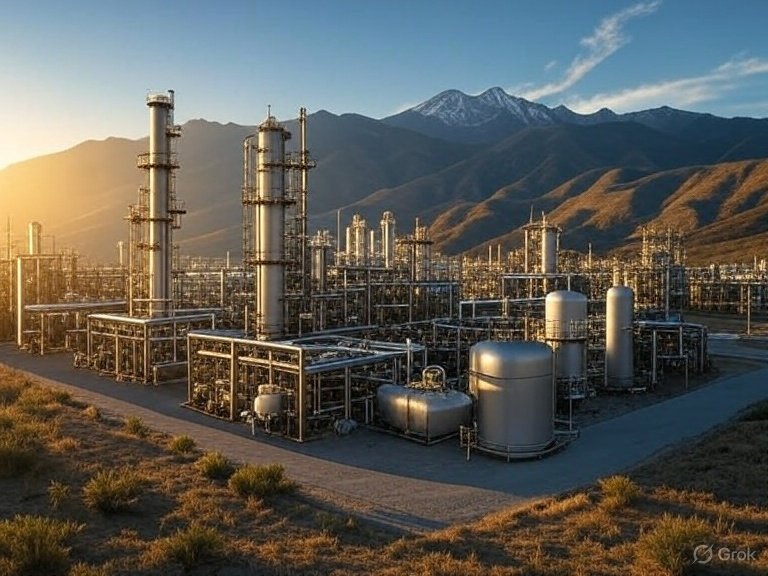
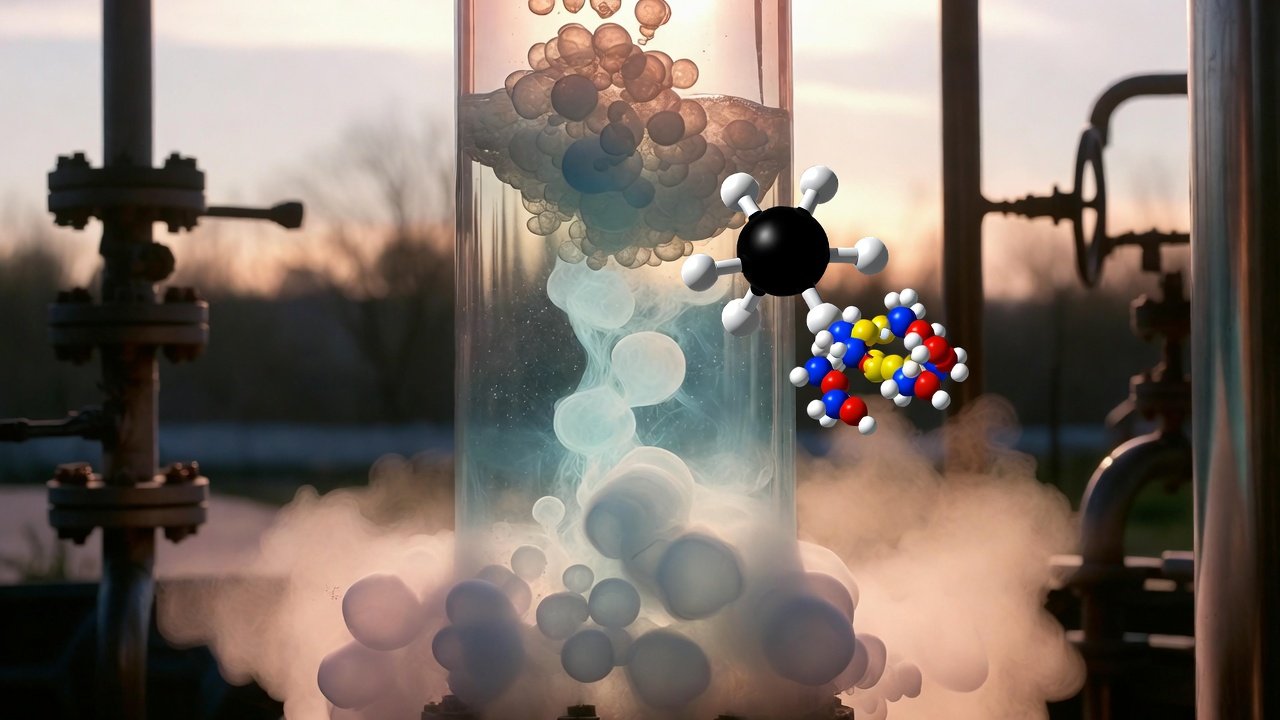
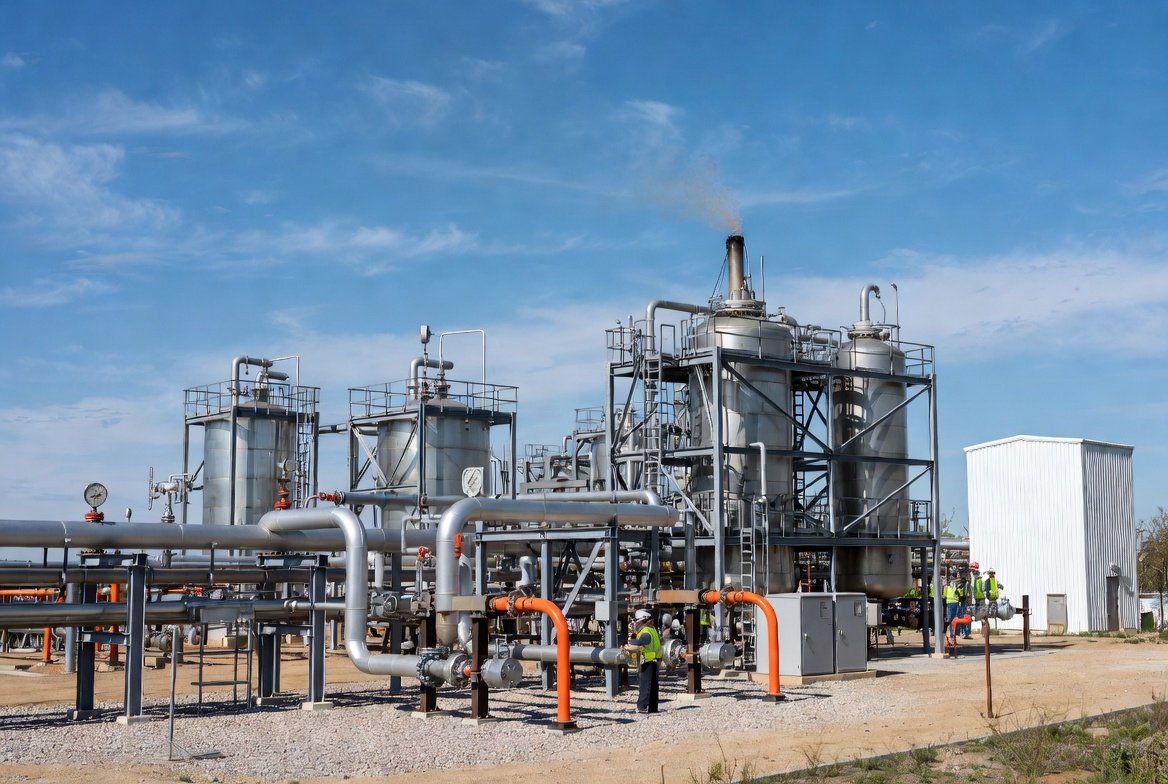
In a typical amine unit, sour gas flows upward through a contactor while lean amine solution flows downward. H₂S reacts almost instantaneously with the amine; CO₂ reacts more slowly. The rich amine is heated in a regenerator to reverse the reactions, producing a concentrated acid-gas stream (sent to sulfur recovery or sequestration) and regenerated lean amine. Choice of solvent directly affects circulation rate, reboiler duty (often 50-70% of OPEX), corrosion rates, and ability to meet pipeline specs (<4 ppm H₂S, <2% CO₂).
Classification of Conventional Alkanolamines
Primary Amines
- Monoethanolamine (MEA) – The original workhorse since the 1930s. Highly reactive primary amine (HO-CH₂-CH₂-NH₂). Typical strength: 15-20 wt% (up to 30% in stainless systems). Acid-gas loading: 0.3-0.35 mol/mol (carbon steel), up to 0.7-0.9 mol/mol in stainless. Excellent for total acid-gas removal and low-pressure streams. Drawbacks: highest heat of reaction (825 BTU/lb CO₂), severe degradation with COS/CS₂/O₂, high corrosion from degradation products, highest vaporization losses.
- Diglycolamine (DGA®) – Primary ether amine. Used at 40-70 wt% for high capacity and low freezing point. Good for small acid-gas streams and COS/mercaptan removal. Higher energy demand than MDEA but lower circulation rates than MEA.
Secondary Amines
- Diethanolamine (DEA) – Most common secondary amine (25-35 wt%). Lower heat of reaction than MEA (~25% less reboiler duty). Better resistance to COS/CS₂ degradation. Can achieve selective H₂S removal under limited conditions (short contact time, low pressure). Still widely used in medium-pressure refinery and gas plants.
- Diisopropanolamine (DIPA) – Used in the ADIP process. Good for selective removal and COS handling.
Tertiary Amines
Methyldiethanolamine (MDEA) is the dominant modern choice (30-50 wt%). Because it cannot form carbamates with CO₂, it offers outstanding H₂S selectivity, high loadings (0.7-0.8 mol/mol), lowest heat of reaction, minimal degradation, and low corrosion. Ideal for high CO₂/H₂S ratio gases and acid-gas enrichment. Triethanolamine (TEA) is rarely used today due to poor performance.
Formulated and Activated Amines
Proprietary blends dominate new installations:
- aMDEA® (BASF) – MDEA + piperazine (PZ) activator. Dramatically increases CO₂ absorption rate while retaining H₂S selectivity. Widely used in LNG, syngas, and CCS projects.
- UCARSOL™ (Dow) – Family of formulated solvents (HS-101, CR-302, etc.) optimized for H₂S, CO₂, or organic sulfur removal in natural gas, refineries, and ammonia plants.
- FLEXSORB™ (ExxonMobil) – Includes severely sterically hindered amines (FLEXSORB SE/SE Plus). Lowest circulation rates and regeneration energy for selective H₂S removal; proven in >100 plants for tail-gas treating and acid-gas enrichment.
- Other commercial formulated amines: GAS/SPEC, OASE sulfexx, etc.
Sterically Hindered Amines
Developed in the 1980s by Exxon (Sartori & Savage), these amines have bulky groups around the nitrogen that hinder carbamate formation. Examples:
- 2-Amino-2-methyl-1-propanol (AMP)
- FLEXSORB SE series (proprietary severely hindered amines)
Benefits: high CO₂ capacity at moderate rates, excellent H₂S selectivity, lower energy use, reduced circulation rates (often 30-50% less than MDEA), and better resistance to degradation. FLEXSORB SE Plus can enrich acid gas to 70-80% H₂S while slipping CO₂, dramatically improving Claus plant performance.
Other Absorbents Tried or Used in Similar Plants
While not strictly amines, these have been used alongside or instead of amine plants:
- Hot Potassium Carbonate (Benfield, Catacarb, Giammarco-Vetrocoke) – Lower energy for bulk CO₂ removal; often activated with amines.
- Physical Solvents – Selexol (DEPG), Rectisol (methanol), Purisol (NMP), Fluor Solvent (propylene carbonate) – preferred for high acid-gas partial pressures and deep sulfur removal in gasification.
- Hybrid Solvents – Sulfinol (MDEA + sulfolane + water) combines chemical and physical absorption.
- Emerging: ionic liquids, phase-change solvents, and enzyme-enhanced amines – still mostly at pilot stage for amine plants.
Comparative Analysis and Selection Criteria
| Amine | Type | Selectivity | Loading (mol/mol) | Reboiler Energy | Typical Use |
|---|---|---|---|---|---|
| MEA | Primary | None | 0.3-0.35 | Highest | Total removal, low pressure |
| DEA | Secondary | Limited | 0.3-0.5 | Medium | Refineries, medium pressure |
| DGA | Primary | None | 0.35+ | High | Small streams, COS removal |
| MDEA | Tertiary | High H₂S | 0.7-0.8 | Lowest | High CO₂/H₂S, LNG, enrichment |
| aMDEA / FLEXSORB | Formulated / Hindered | Excellent | Highest | Very low | Modern plants, CCS, TGTU |
Key selection factors: feed pressure, H₂S/CO₂ ratio, required specs, energy cost, corrosion allowance, and presence of COS/mercaptans/O₂.
Future Trends and Innovations
Modern plants increasingly use formulated/activated MDEA or hindered amines to cut energy 20-40% versus MEA. Carbon-capture-ready solvents (aMDEA + PZ, phase-change systems) are gaining traction. Digital twins, real-time optimization, and hybrid amine-membrane systems are reducing OPEX further. Research continues into low-toxicity, biodegradable amines and non-aqueous solvents.
Conclusion
From the venerable MEA to cutting-edge hindered and formulated amines, the amine plant solvent toolbox offers a solution for virtually every sour-gas challenge. Proper solvent selection can reduce capital costs by 20-30%, slash energy consumption, minimize corrosion, and future-proof the plant for stricter emissions rules and carbon-capture mandates. Operators should work closely with licensors and simulation experts to match the right absorbent to their specific gas composition and business objectives.