Article Content
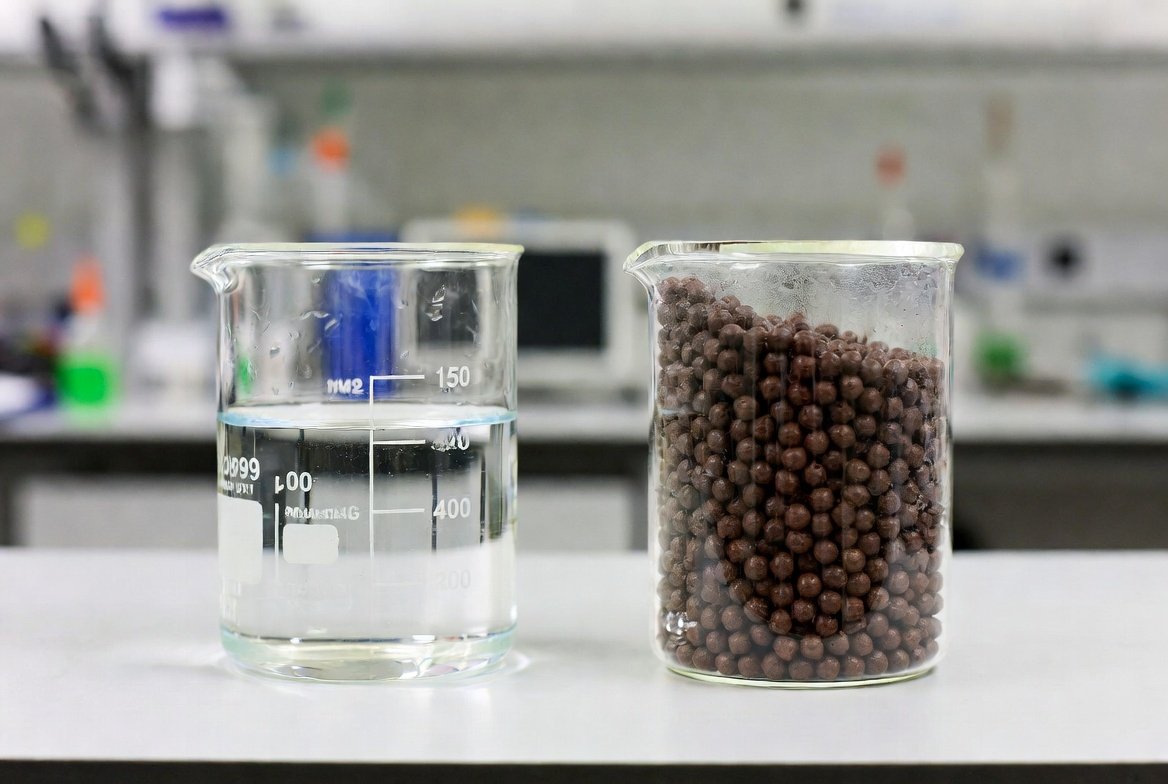
Two of the most common non-regenerative approaches are triazine-based liquid scavengers (typically MEA or MMA triazine) and iron-based adsorbents (such as iron oxide/hydroxide or iron sponge media).
But which one delivers the lowest true cost per kg of H₂S removed in 2026? This article breaks down the economics side-by-side, including chemical/media costs, utilization efficiency, OPEX factors (pumping, disposal, vessel maintenance), and scenario-based examples. Data draws from industry reports, vendor benchmarks, and real-world field performance.
Quick Overview: Triazine vs Iron-Based Adsorbents
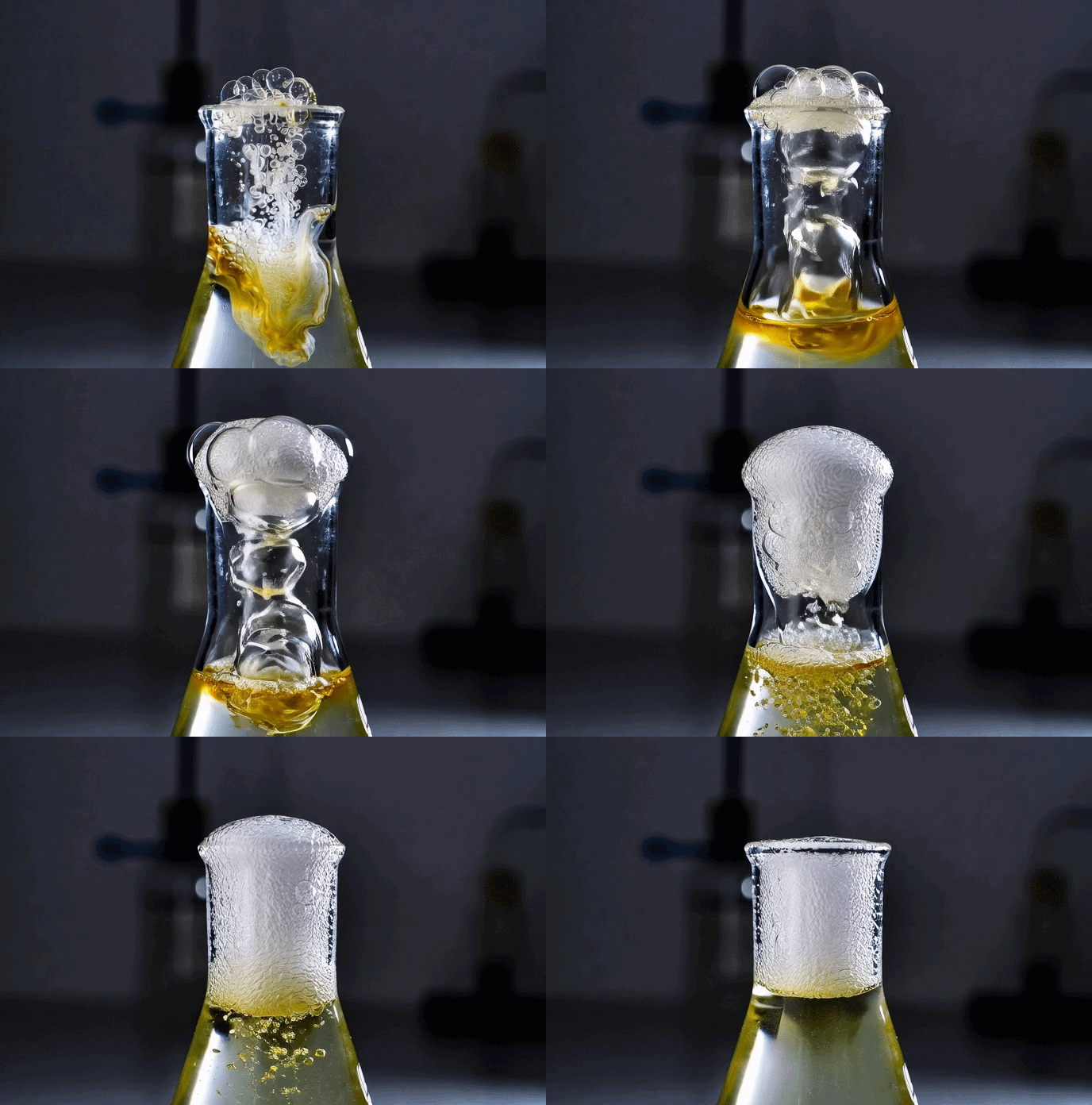
Triazine-based scavengers are liquid chemicals injected directly into the gas stream or contactor. They react irreversibly (non-regeneratively) with H₂S to form stable, water-soluble byproducts like dithiazine.
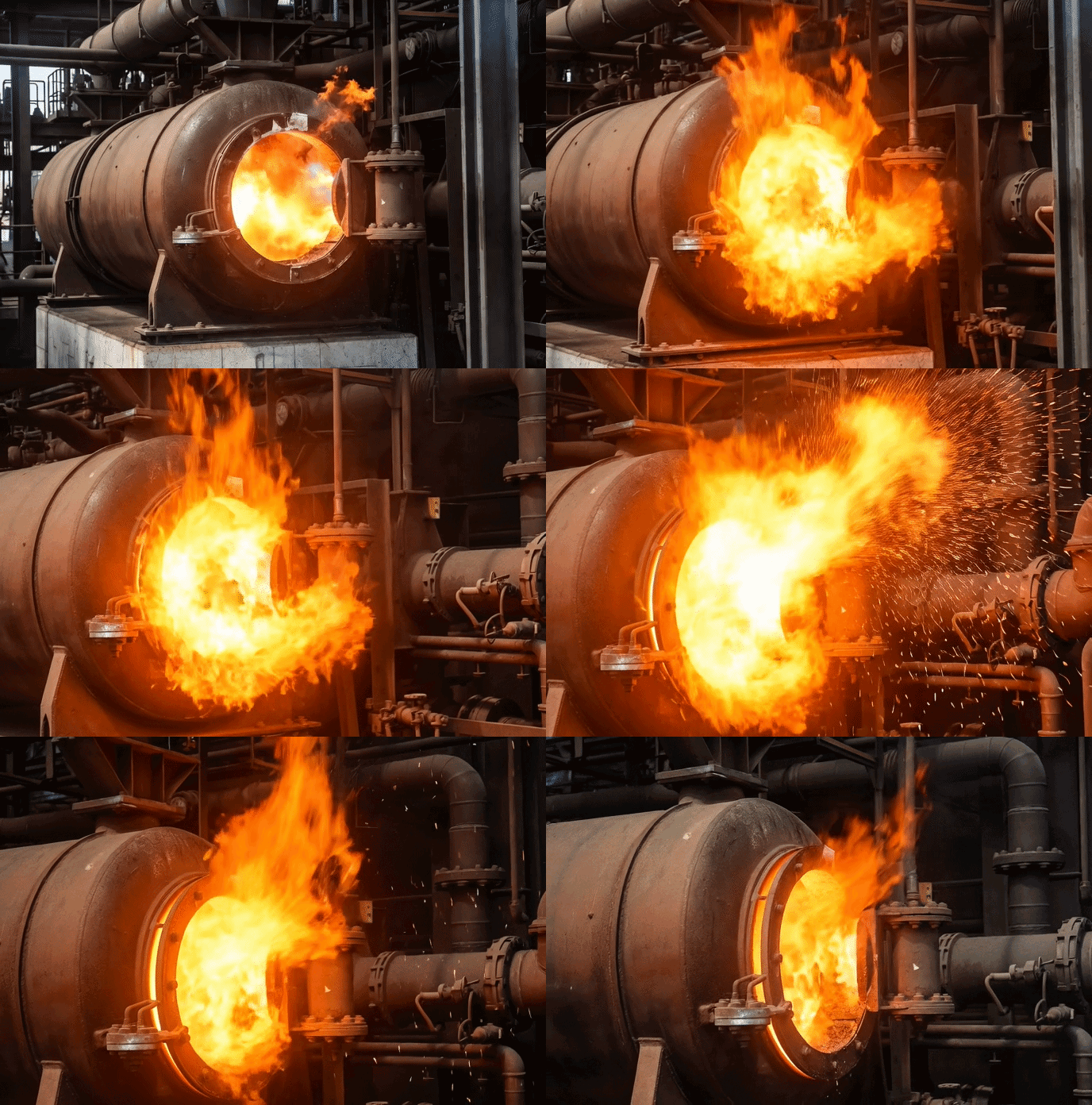
Iron-based adsorbents are solid media (iron oxide impregnated on supports) loaded into fixed-bed vessels. H₂S reacts to form iron sulfides; the bed is replaced or disposed of when spent.
Key Cost Factors Compared
| Factor | Triazine (Liquid) | Iron-Based Adsorbents (Solid) |
|---|---|---|
| Typical $/kg H₂S Removed (2026 est.) | $8 – $18 | $4 – $12 |
| Best Application | Low-to-moderate H₂S (<500-1,000 ppm), smaller flows, direct injection | Moderate-to-high H₂S, steady flows, fixed-bed towers |
| Capital Cost (Equipment) | Low (pumps, injection skids) | Medium-High (vessels, beds, switching valves) |
| OPEX Drivers | Chemical consumption, pumping energy, spent liquid disposal | Media replacement frequency, bed change-out labor, disposal of spent solids |
| Utilization Efficiency | 80–95% (good with proper contact) | 60–85% (bed channeling or breakthrough reduces it) |
| Byproduct Handling | Liquid (easier pumping, but potential fouling) | Solid (landfill or hazardous waste fees vary by region) |
| Environmental / Regulatory Notes | Formaldehyde/MEA residues; some formulations CEFAS Gold compliant | Spent iron sulfide often non-hazardous; lower toxicity profile |
Note: Costs are approximate 2026 industry averages in USD, based on mid-continent US/Europe pricing. Actuals vary by H₂S concentration, gas volume, location, disposal fees, and vendor formulation. Use tools like our Scavenger Treatment Cost Calculator for your exact stream.
Detailed $/kg H₂S Removed Breakdown
Here’s a realistic scenario comparison for a 5 MMSCFD gas stream with 300 ppm H₂S (≈ 1,000 kg H₂S/day removed):
| Scenario | Triazine (MEA-based) | Iron-Based Adsorbent |
|---|---|---|
| Daily H₂S Removed | 1,000 kg | 1,000 kg |
| Theoretical Stoichiometry | ≈ 3–4 kg scavenger / kg H₂S | ≈ 2–3 kg media / kg H₂S |
| Real-World Efficiency | 85–92% | 70–85% |
| Daily Media/Chem Cost | $9,000 – $15,000 | $5,000 – $10,000 |
| Additional OPEX (pumping/disposal/labor) | $1,500 – $3,000 | $2,000 – $4,500 (bed changes) |
| Total Daily Cost | $10,500 – $18,000 | $7,000 – $14,500 |
| $/kg H₂S Removed | $10.50 – $18 | $7 – $14.50 |
Key takeaway: Iron-based adsorbents often win on raw $/kg for higher H₂S loads or steady operations due to lower media cost per unit sulfur removed. Triazine shines in low-capex, flexible, or intermittent applications where quick response and minimal equipment are priorities.
When to Choose Triazine Over Iron-Based (and Vice Versa)
-
- Choose Triazine if: Low-to-moderate H₂S, offshore/space-constrained sites, direct injection preferred, fast H₂S knockdown needed, or you want liquid handling over solid bed swaps.
-
- Choose Iron-Based Adsorbents if: Higher H₂S concentrations, larger continuous flows, you prioritize lowest $/kg long-term, acceptable with fixed vessels, or prefer solid non-hazardous disposal in your region.
Custom Optimization: Beyond Generic Comparisons
At FirstKlaz Technologies, we go further with in-house modeling to blend approaches or select proprietary formulations that beat these averages. Our iron-based media achieves higher utilization in certain conditions, while our optimized triazine blends reduce consumption by 15–25% vs standard products.
Explore more on different kinds of H₂S adsorbents or run your own numbers with our free cost estimator.