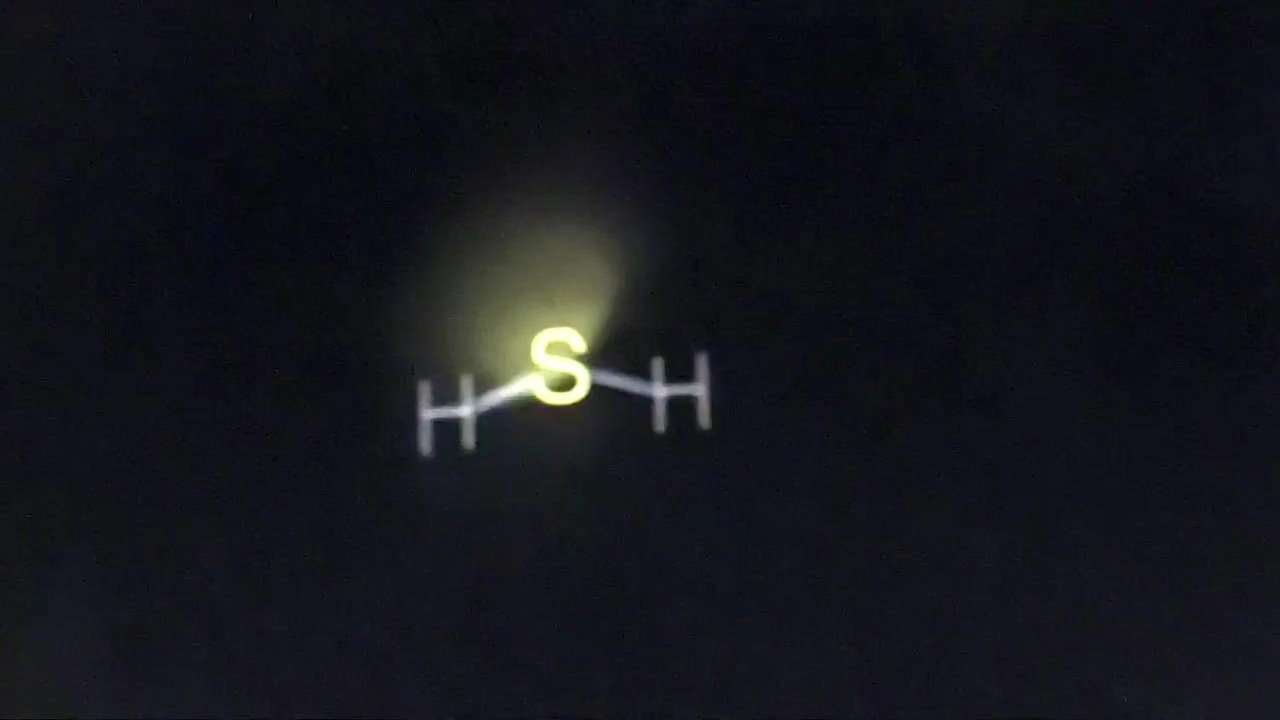
Hydrogen sulfide (H₂S) is a highly toxic, corrosive, and foul-smelling gas commonly present in sour oil and gas production. It creates serious safety hazards, accelerates corrosion in pipelines and equipment, and must be reduced to very low levels (typically <4 ppm) to meet sales specifications and regulatory requirements. Among the various chemical scavengers available, MEA Triazine (monoethanolamine triazine or hexahydro-1,3,5-tris(2-hydroxyethyl)-s-triazine) remains the most widely used liquid H₂S scavenger worldwide, especially for low-to-moderate H₂S concentrations in gas streams, produced water, and crude oil systems.
What Is MEA Triazine?
MEA Triazine is a water-soluble heterocyclic compound produced by the condensation reaction of monoethanolamine (MEA) and formaldehyde in a 1:1 molar ratio (three molecules of each form one triazine ring). Its systematic chemical name is 1,3,5-tris(2-hydroxyethyl)hexahydro-1,3,5-triazine, with the molecular formula C₉H₂₁N₃O₃ (molecular weight ≈ 219 g/mol for the pure active ingredient).
Commercially, it is supplied as an aqueous solution, most commonly at 80% active concentration (range 20–80%). It appears as a clear to light-yellow liquid with a mild amine odor, density of 1.17–1.20 g/cm³, and pH 10–12. It contains small amounts of free MEA (typically 1–1.4%) and is fully miscible with water.
The molecule features a six-membered s-triazine ring (alternating carbon and nitrogen atoms) with three hydroxyethyl side chains (-CH₂CH₂OH) attached to the nitrogen atoms. These provide the electrophilic sites that enable rapid reaction with bisulfide (HS⁻) ions.
How MEA Triazine Reacts with H₂S: Detailed Mechanism
The reaction is non-regenerative and irreversible under typical field conditions. One mole of MEA Triazine scavenges two moles of H₂S, releasing two moles of free MEA and forming 5-(2-hydroxyethyl)hexahydro-1,3,5-dithiazine (commonly called dithiazine or MEA-dithiazine) as the primary byproduct.
Step-by-Step Reaction Mechanism
- Protonation of a ring nitrogen increases the electrophilicity of an adjacent α-carbon.
- HS⁻ performs an SN2 nucleophilic attack on the α-carbon, opening the ring and releasing the first MEA molecule → forms a thiadiazine intermediate.
- Second protonation and HS⁻ attack → ring opens again, yielding dithiazine + second MEA molecule.
- The overall reaction is strongly exothermic; the system becomes progressively more stable (triazine < thiadiazine < dithiazine).
Further reaction to form tritiane (theoretical 3:1 H₂S product) has very high energy barriers and does not occur significantly in practice. Instead, excess H₂S or prolonged exposure causes dithiazine to polymerize into amorphous, insoluble solids — the primary source of field fouling.
Practical Stoichiometry:
- Theoretical: ≈3.22 g pure MEA Triazine per 1 g H₂S.
- Field dosage: Typically 1.2–1.5× stoichiometric to account for inefficiencies and side reactions.
- Optimal performance: Ambient to moderate temperatures (<90 °C) and pH 6–9.
Importantly, the reaction is not significantly inhibited by CO₂, making MEA Triazine especially suitable for high-CO₂ gas streams.
Key Benefits of MEA Triazine
- Proven cost-effectiveness — Often the lowest cost per kg of H₂S removed for low-H₂S applications (<200 ppm); widely available as a commodity chemical.
- Fast reaction kinetics — Effective even at low temperatures and concentrations.
- Versatile application — Works in gas, oil, produced water, and biogas; can be blended with polymers or inhibitors.
- Minimal infrastructure — Direct injection requires only quills/atomizers; no regeneration equipment needed.
- Environmental & safety profile — Byproducts are relatively biodegradable; zero air emissions during use.
- High efficiency when optimized — Contactor towers can achieve up to 80% chemical utilization.
Drawbacks and Operational Challenges
- Low utilization in direct injection — Often only ~40% of theoretical capacity due to mass-transfer limits (contactor towers reach ~80%).
- Fouling & deposition — Dithiazine polymerization forms sticky solids that plug pipelines, valves, chokes, heat exchangers, and refinery equipment.
- Downstream refinery issues — Excess triazine or released MEA causes amine salt deposition, desalter upsets, overhead corrosion, foaming in glycol/amine units, and elevated sulfur in products.
- Temperature sensitivity — Efficiency drops and scaling/degradation increases above ~90–120 °C.
- Disposal concerns — Spent material (especially with solids) may face restrictions; excess triazine is toxic to aquatic life and has a strong odor.
- Non-regenerative nature — Continuous consumption raises OPEX at high H₂S loads or flow rates.
Best Practices for Application in Oil & Gas Systems
1. Direct Injection (Most Common for Pipelines & Wellheads)
- Inject as far upstream as possible (wellhead, flowline, or separator gas outlet).
- Use atomizing quills, fog nozzles, or static mixers for fine droplet formation and maximum contact.
- Ensure at least 15–20 seconds residence time in turbulent flow (annular-mist regime preferred).
- Avoid low-velocity or stratified flow sections.
2. Contactor / Bubble Towers (Highest Efficiency)
- Ideal for onshore gas plants or fixed facilities with available space.
- Gas bubbled upward through triazine liquid; optimize bubble size and contact time.
- Can achieve 80%+ utilization → significantly lower chemical consumption and OPEX.
3. Dosage & Monitoring
- Calculate stoichiometric need, then apply 20–50% excess.
- Use continuous online H₂S analyzers (inlet & outlet) for real-time optimization and to avoid overtreatment.
- Regularly sample for residual triazine and dithiazine levels.
4. Temperature, pH & Compatibility
- Best range: 20–80 °C, pH 6–9.
- Avoid high-chloride or high-temperature environments (>120 °C) where scaling accelerates.
- Test compatibility with corrosion inhibitors, demulsifiers, and other production chemicals.
5. Produced Water & Multiphase Systems
Inject into water legs or mixed streams; monitor for potential emulsion stabilization.
When to Choose MEA Triazine vs. Alternatives
MEA Triazine performs best in low-H₂S, high-CO₂, cost-sensitive applications with existing injection setups. For high H₂S loads, severe fouling risk, or strict downstream specs, consider:
- MMA Triazine (better solubility, reduced fouling)
- Non-triazine options (glyoxal, aldehyde-based, nitrogen-free)
- Regenerative systems (liquid redox) for very high loads
Field trials often show 30–75% chemical reduction with newer alternatives in problematic applications.
Conclusion
Since the 1980s, MEA Triazine has been the workhorse H₂S scavenger due to its speed, low cost, and reliability when applied correctly. Its chemistry — rapid nucleophilic substitution leading to stable dithiazine — is well understood, but the same pathway produces the fouling solids and amine byproducts that cause many operational issues.
Success depends on proper system design (injection method, contact time, real-time monitoring) and realistic expectations about efficiency and downstream effects. With careful engineering, MEA Triazine continues to provide safe, compliant, and economical H₂S control across thousands of installations worldwide.
For new projects or challenging fields, side-by-side field trials against modern alternatives are strongly recommended. Properly managed, it remains a cornerstone technology — but it is no longer the only or always the best choice in every scenario.