Article Content
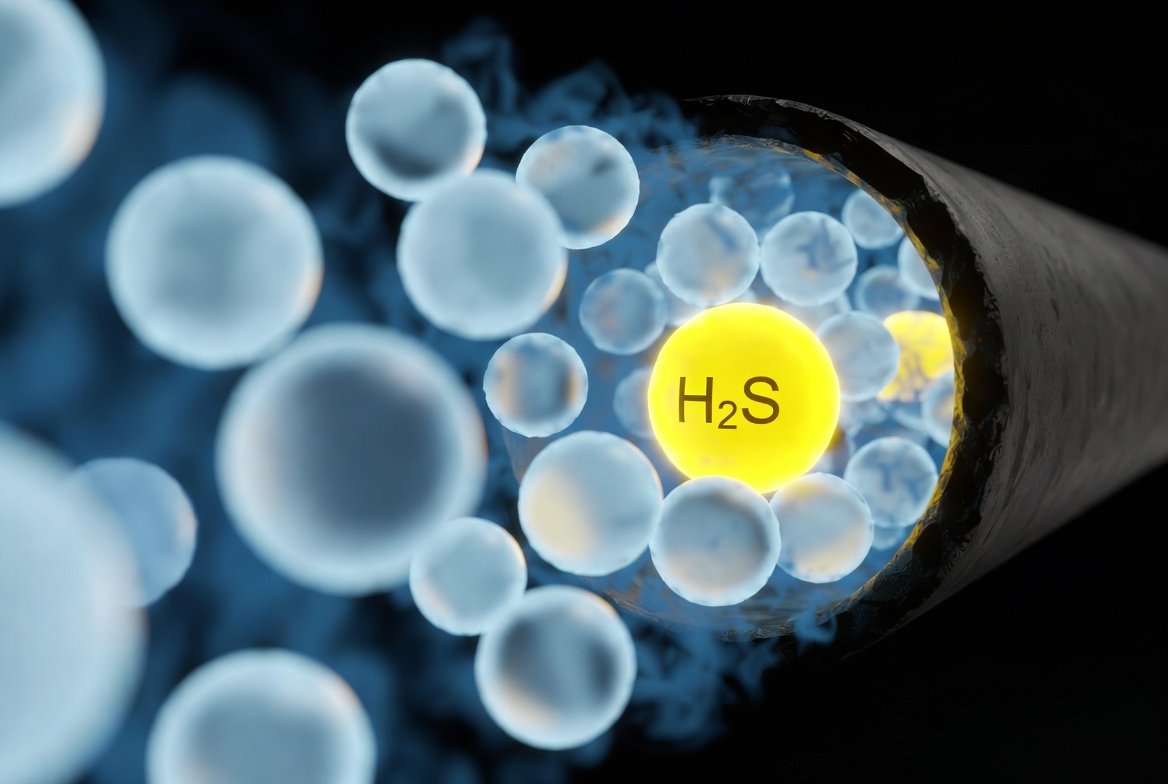
Hydrogen sulfide (H₂S) is a naturally occurring, toxic, and corrosive gas commonly found in natural gas streams extracted from reservoirs. Its presence poses significant risks to pipeline integrity, equipment longevity, and human safety, as it can cause sulfide stress cracking, embrittlement, and environmental hazards if released. Regulatory standards, such as those from the GPA Midstream Association, typically limit H₂S concentrations in pipeline gas to 4 parts per million (ppm) or less to ensure safe transmission and end-use.
To mitigate these issues, H₂S scavengers—chemical agents that react with and neutralize H₂S—are employed. Among various methods, direct injection of liquid scavengers into the gas pipeline is a cost-effective, non-regenerative approach suitable for low to moderate H₂S levels, particularly in field operations, pipelines, and remote locations where more complex systems like amine units are impractical.
Liquid H₂S scavengers, often triazine-based compounds, are introduced into the gas stream via injection systems. Atomizing nozzles play a critical role in this process by breaking the liquid into fine droplets, maximizing surface area for reaction with H₂S in the gas phase. This enhances mass transfer and scavenging efficiency. However, the effectiveness of this method is highly dependent on operational parameters, with gas velocity emerging as a pivotal factor.
Principles of H₂S Scavenging with Liquid Chemicals
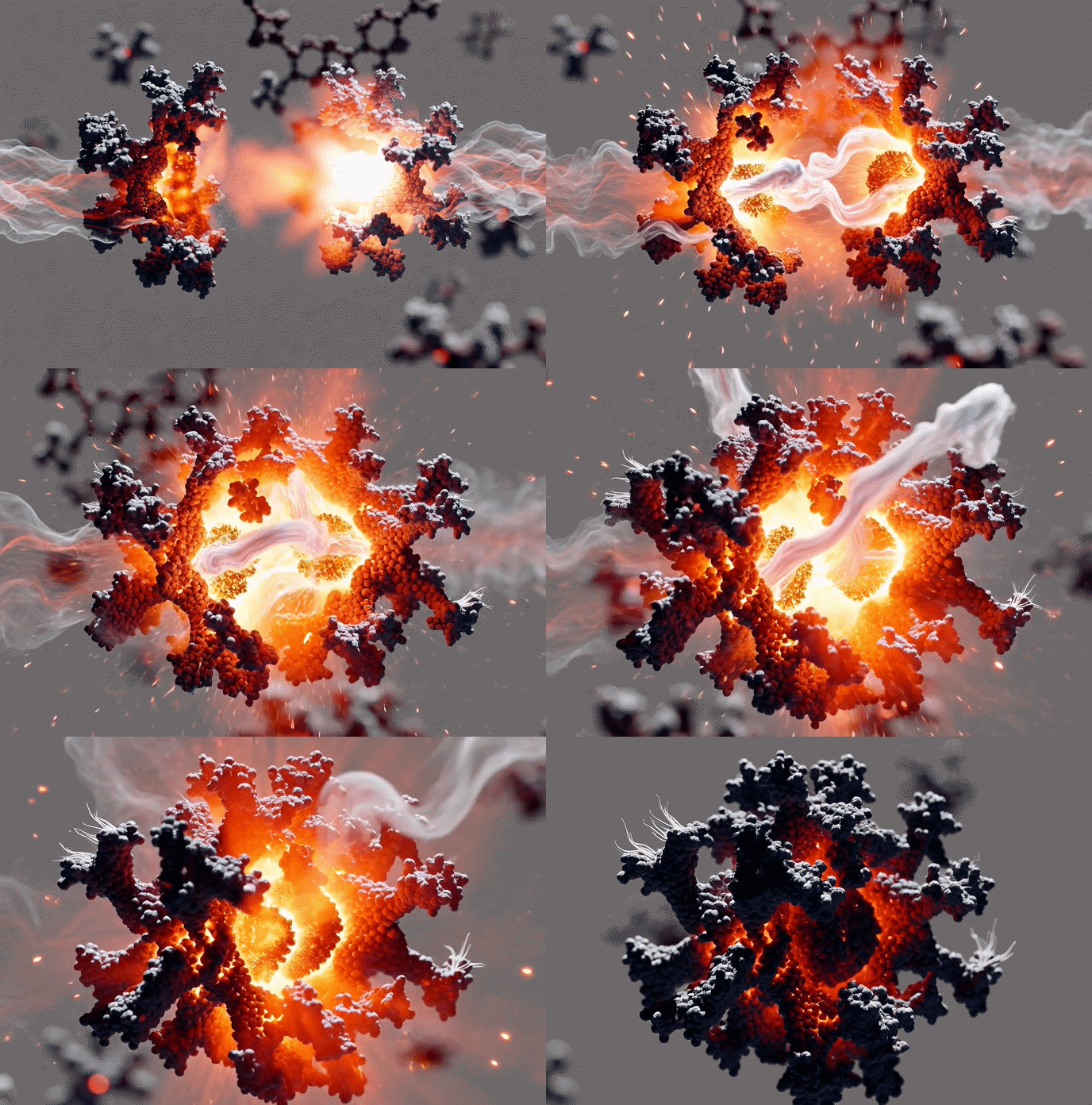
H₂S scavenging involves irreversible chemical reactions where the scavenger binds sulfur compounds, forming non-toxic byproducts that can be separated or remain in the stream. Triazine-based scavengers, for instance, react with H₂S to produce dithiazine and other stable compounds. In direct injection systems, the scavenger is pumped into the pipeline through a tee, quill, or specialized nozzle.
The process relies on gas-liquid mass transfer, governed by factors such as interfacial area, contact time, and mixing intensity. In pipelines, the gas phase is dominant, and the liquid scavenger forms a minor fraction. Effective scavenging requires the liquid to disperse evenly, wetting pipe walls or entraining as droplets to facilitate H₂S diffusion and reaction. Poor dispersion leads to incomplete reactions, excessive chemical usage, or untreated H₂S breakthrough.
Role of Atomizing Nozzles in Injection
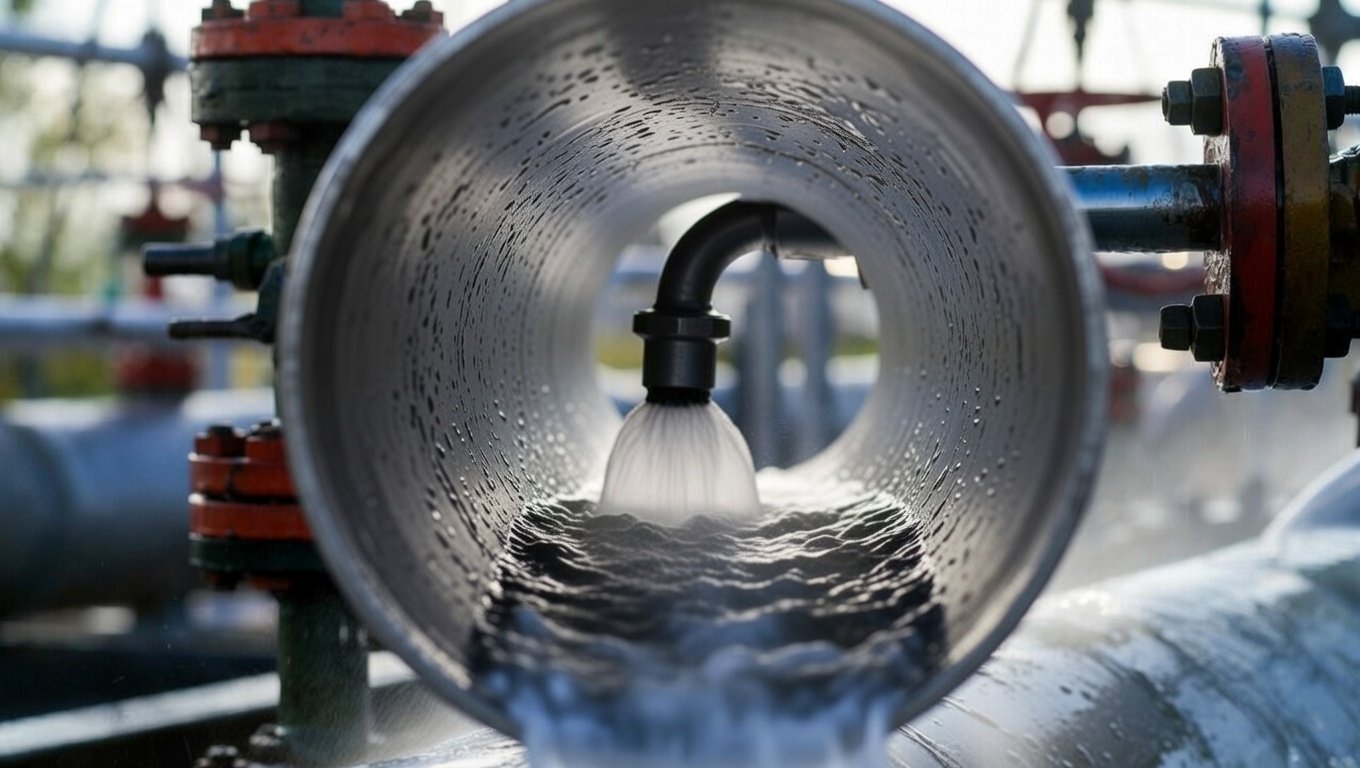
Atomizing nozzles are designed to convert the liquid scavenger into a fine mist or fog, increasing the gas-liquid contact surface area. They utilize the shear forces from the gas flow or internal nozzle mechanisms to produce droplets typically in the range of 10-100 micrometers. This is particularly advantageous in gas-dominated flows, where natural turbulence alone may not suffice for mixing.
Nozzles are commonly used for H₂S scavengers in gas treatment applications, as they promote uniform distribution and prevent droplet coalescence. For true atomization to occur, the system must inject into a gaseous phase (not liquid), and a minimum chemical flow rate—such as at least eight gallons per day—is often required to maintain mist formation. The nozzle’s performance is influenced by injection angle, pressure differential, and gas velocity, with optimal designs aiming for 45° injection angles and dual symmetric nozzles for better uniformity.
Impact of Gas Velocity on Scavenging Performance
Gas velocity in the pipeline directly affects the hydrodynamics of the two-phase flow, including flow regime, droplet dispersion, and residence time for reaction. Natural gas pipelines typically operate at velocities ranging from 5 to 20 meters per second (m/s) or 16 to 66 feet per second (ft/s), but for H₂S scavenging with atomizing nozzles, specific considerations apply.
Effects of Low Gas Velocities
At low velocities (e.g., below 10 ft/s or 3 m/s), the system often transitions to a stratified flow regime, where the liquid scavenger pools at the bottom of the pipe, reducing the wetted surface area and interfacial contact. This leads to poor mixing, incomplete H₂S removal, and excessive chemical consumption. Mass transfer rates drop severely as the upper pipe walls remain unwetted, and droplet entrainment is minimal. When gas velocities are low, pipe lengths are short, or large pipe diameters are used, atomization can significantly improve performance.
Effects of High Gas Velocities
Higher velocities (e.g., above 30 ft/s or 9 m/s) promote an annular-mist flow regime, where liquid droplets are entrained in the gas core, and pipe walls are partially or fully wetted. This increases the interfacial area exponentially, enhancing mass transfer and H₂S removal rates. Increasing velocity reduces droplet size and improves dispersion due to stronger shear forces. At very high velocities, natural turbulence may suffice for mixing, especially in long pipelines. However, excessively high velocities can reduce residence time (reaction contact time = pipe length / velocity), potentially limiting complete scavenging if the pipe is short.
Optimal Gas Velocity Range
Based on industry data and modeling, the ideal gas velocity for liquid H₂S scavenger injection via atomizing nozzles falls in the range of 10-50 ft/s (3-15 m/s). Intermediate to high velocities (e.g., 15-30 ft/s or 4.5-9 m/s) are often optimal for achieving annular-mist flow, maximizing droplet dispersion, and ensuring efficient mass transfer without compromising contact time in typical pipeline lengths. Velocities below 10 ft/s should be avoided unless supplemented by static mixers or extended pipe runs, while those above 50 ft/s may introduce operational challenges like increased pressure drop.
| Velocity Range | Flow Regime | Performance Impact | Nozzle Benefit |
|---|---|---|---|
| <10 ft/s (<3 m/s) | Stratified | Poor mixing, low efficiency | High (enhances wetting) |
| 10-30 ft/s (3-9 m/s) | Transitional to annular-mist | Optimal dispersion and mass transfer | Moderate |
| >30 ft/s (>9 m/s) | Annular-mist | High efficiency, but reduced contact time if pipe short | Low (turbulence suffices) |
Factors Influencing the Ideal Velocity
- Pipe Diameter and Length: Smaller diameters enhance removal rates at given velocities due to higher relative shear. Longer pipes allow more contact time, tolerating higher velocities.
- Pressure and Flow Rate: Low-pressure systems increase velocity for a given flow rate.
- Injection Parameters: Injection rate, angle (optimal at 45°), and method interact with velocity.
- Scavenger Type and Concentration: Triazine mass fractions of 0.4-0.6 are often optimal.
Conclusion
The ideal gas velocity for liquid H₂S scavenger injection via atomizing nozzles in natural gas pipelines balances mixing enhancement with sufficient reaction time, typically ranging from 10-50 ft/s (3-15 m/s), with 15-30 ft/s often optimal for annular-mist flow. Low velocities hinder performance through poor dispersion, while high velocities excel in mixing but demand adequate pipe length. By considering pipe geometry, injection design, and flow regimes, operators can optimize systems for cost-effective, safe H₂S removal.