
Article Content
Choosing the right hydrogen sulfide removal method depends on gas flow rate, H₂S concentration, operating conditions, capital budget, and whether you need a regenerable or non-regenerable solution. In this comprehensive guide, we break down the top 5 h2s removal methods for oil and gas, including how each works, real-world pros and cons, and exactly when to use them.
At FirstKlaz Technologies, we specialize in custom H₂S management solutions — from triazine scavengers and adsorbent systems to turnkey sulfur recovery units — helping operators across upstream, midstream, and downstream sectors achieve compliance and cost efficiency.
1. Liquid Chemical Scavengers (Triazine-Based & Non-Triazine)
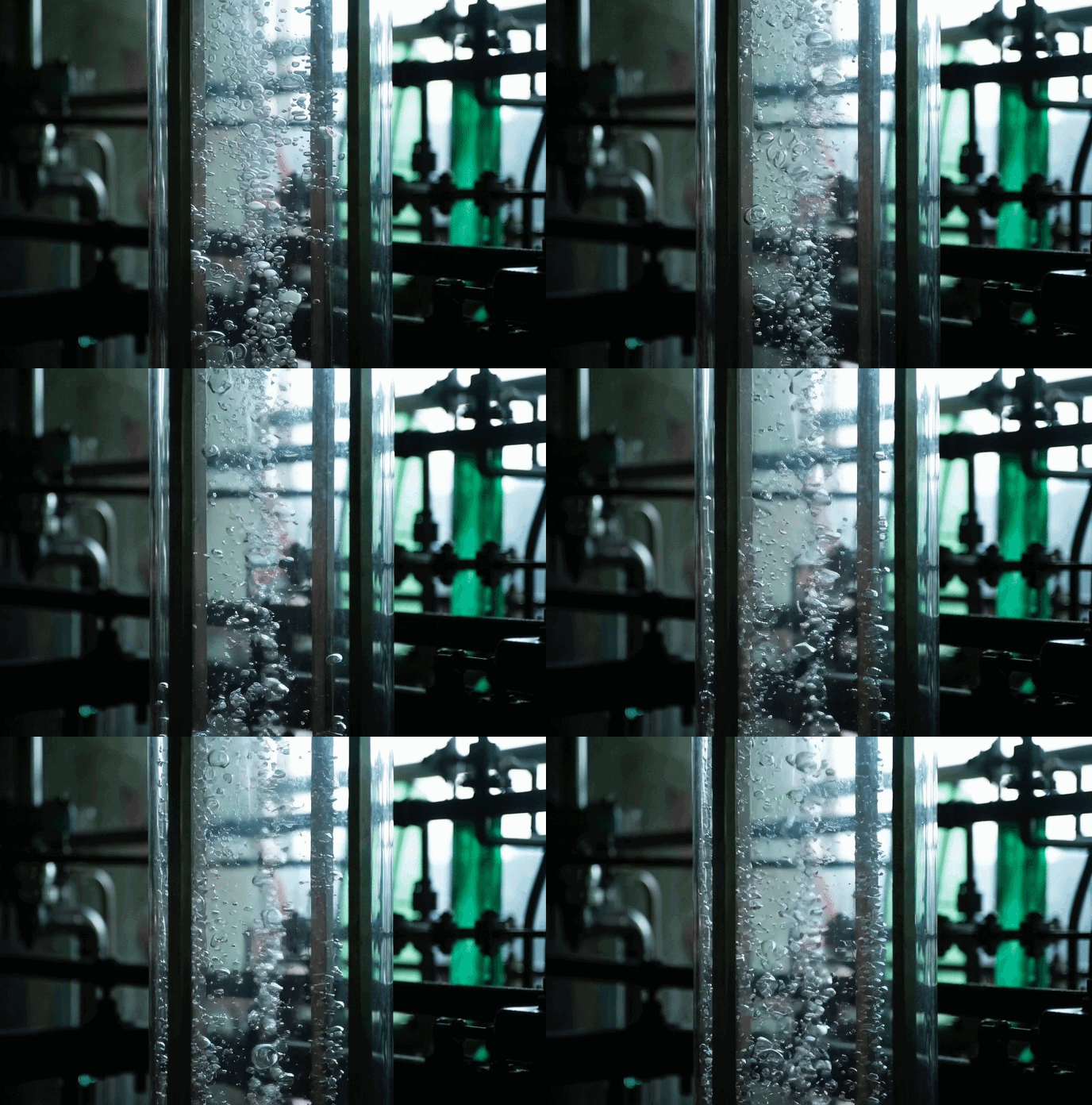
How it works: A liquid scavenger (most commonly MEA or MMA triazine) is injected directly into the gas or liquid stream. It chemically reacts with H₂S to form stable, water-soluble byproducts that are removed downstream.
Pros
- Very low capital cost and simple installation (no large vessels needed)
- Fast reaction time — ideal for continuous or batch treatment
- Effective at low-to-moderate H₂S concentrations
- Can be deployed quickly for temporary or emergency use
Cons
- Non-regenerable — high ongoing chemical costs at higher H₂S levels or volumes
- Spent scavenger requires proper disposal (triazine can create solids or have biocidal properties)
- Over-injection can lead to downstream issues or increased OPEX
- Less efficient above ~300–500 ppm H₂S or high gas volumes
When to Use
Best for upstream wellheads, gathering lines, small-to-medium flow rates (<10 MMscfd), and H₂S concentrations below 300 ppm. Perfect for operators needing quick, low-capex solutions or temporary treating during turnarounds.
2. Iron-Based Solid Adsorbents (Iron Sponge / SulfaTreat®-Type Media)
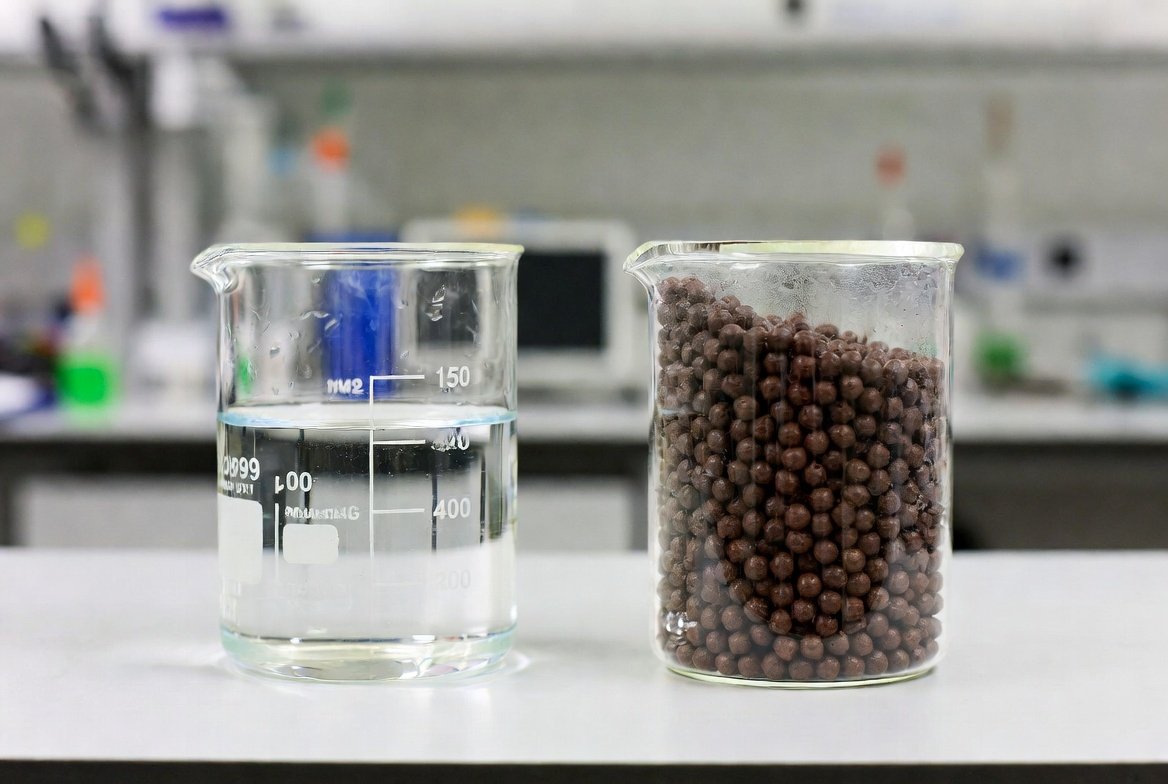
How it works: Sour gas flows through a fixed bed of iron oxide or mixed-metal oxide media. H₂S reacts to form stable iron sulfides, permanently removing the contaminant.
Pros
- Simple operation with minimal operator intervention
- Converts H₂S into a stable, non-hazardous solid
- Excellent for dry gas streams and moderate H₂S levels
- Lower long-term costs than liquid scavengers in many batch applications
Cons
- Requires periodic media replacement and vessel downtime
- Spent media disposal (though often non-hazardous)
- Can experience pressure drop or bed channeling if not designed properly
- Not regenerable in most field applications
When to Use
Ideal for midstream dehydration plants, fuel gas polishing, and applications with moderate H₂S loads (up to several hundred ppm) and dry gas conditions. FirstKlaz offers high-capacity FeO-based adsorbents tailored for oil & gas.
3. Amine Gas Sweetening (Regenerative Absorption)
How it works: Sour gas contacts an aqueous amine solution (MDEA, DEA, or MEA) in an absorber tower. Acid gases (H₂S and often CO₂) are absorbed, then stripped in a regenerator using heat and steam.
Pros
- Highly scalable for large gas volumes (tens to hundreds of MMscfd)
- Regenerable chemistry dramatically lowers long-term chemical costs
- Can selectively remove H₂S while leaving CO₂ or vice-versa
- Proven technology with decades of reliable performance
Cons
- High capital expenditure and footprint
- Energy-intensive regeneration (steam consumption)
- Corrosion and degradation issues if not properly managed
- Complex operation requiring skilled personnel
When to Use
Standard choice for large-scale gas processing plants, refineries, and high-H₂S sour gas streams where continuous, high-volume treating is required. Often paired with downstream sulfur recovery.
4. Claus Sulfur Recovery Process
How it works: Acid gas from an amine unit is partially burned to convert H₂S to SO₂, then catalytically reacted to produce elemental sulfur (2H₂S + SO₂ → 3S + 2H₂O).
Pros
- Converts toxic H₂S into marketable elemental sulfur
- High recovery efficiency (95–98% standard, >99.9% with tail-gas treating)
- Economical at large scales (typically >20 tonnes/day sulfur)
- Industry-standard for major sour gas facilities
Cons
- Requires large, expensive infrastructure and skilled operators
- Not suitable for small or variable H₂S loads
- Tail gas still needs treatment to meet emissions standards
- High upfront investment
When to Use
Best for large centralized gas plants and refineries where sulfur production exceeds 20 tonnes per day. FirstKlaz designs and optimizes custom Claus-based Sulfur Recovery Units (SRUs) for maximum uptime and recovery.
5. Liquid Redox Processes (e.g., LO-CAT®, VALKYRIE®)
How it works: H₂S is absorbed into a chelated iron solution and directly oxidized to elemental sulfur. The iron solution is regenerated with air in a separate oxidizer.
Pros
- Direct conversion to high-purity elemental sulfur (sellable byproduct)
- Lower energy use than amine + Claus for medium-scale operations
- Environmentally friendly with minimal emissions
- Handles variable H₂S loads and co-removes mercaptans
Cons
- More complex chemistry than simple scavengers
- Sulfur filtration and handling required
- Higher initial capital than scavengers or adsorbents
- Best suited for specific concentration ranges
When to Use
Excellent middle-ground solution for 0.1–15 tonnes/day sulfur production — too large for scavengers but too small for full Claus. Popular in midstream and biogas-adjacent oil & gas operations seeking green credentials.
Quick Comparison Table: H₂S Removal Methods for Oil & Gas
| Method | Typical Scale | H₂S Range | Capex | Opex | Byproduct | Best For |
|---|---|---|---|---|---|---|
| Liquid Scavengers (Triazine) | Small–Medium | <500 ppm | Very Low | High | Spent liquid | Upstream, quick fix |
| Iron-Based Adsorbents | Small–Medium | Moderate | Low | Medium | Spent media | Dry gas polishing |
| Amine Sweetening | Large | Any | High | Medium | Acid gas | Gas plants |
| Claus SRU | Very Large | High | Very High | Low | Elemental sulfur | Major facilities |
| Liquid Redox | Medium | Moderate–High | Medium | Low–Medium | High-purity sulfur | Medium-scale green ops |
How to Choose the Right H₂S Removal Method for Your Operation
Start with these key questions:
- What is your gas flow rate and H₂S concentration?
- Do you want regenerable chemistry or a simple once-through system?
- Is elemental sulfur a valuable byproduct for you?
- What are your space, power, and operator skill constraints?
Our team at FirstKlaz Technologies performs free technical assessments and delivers custom-engineered solutions — including hybrid systems that combine the best of multiple technologies.
Published by FirstKlaz Technologies — Specialists in Hydrogen Sulfide Removal for Oil & Gas. Explore more technical articles in our H₂S knowledge base.