Article Content
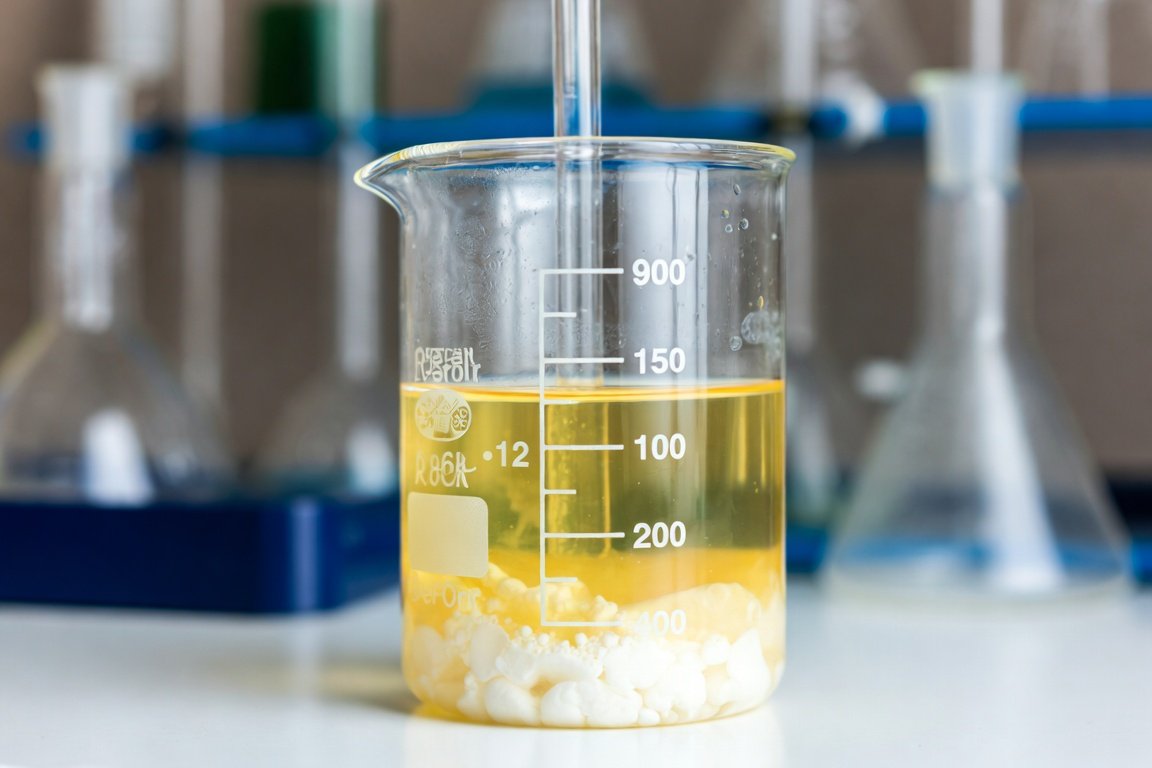
Liquid H2S scavengers, primarily hydrogen sulfide (H₂S) scavengers used in the oil and gas industry, are chemical solutions (such as triazine-based, aldehyde-based, or non-amine alternatives) designed to remove toxic and corrosive H₂S from gas streams, crude oil, or drilling fluids. Accurate laboratory evaluation is essential for selecting the right scavenger chemistry, optimizing dosage, predicting field performance, and ensuring safety and cost-effectiveness.
This comprehensive article explores lab-based evaluation techniques, with a focus on the two primary test methods: bubble column (or tower/contactor) tests and direct injection tests (including specialized simulators like the Direct Injection Laboratory Simulator or DILS). We cover detailed procedures, apparatus, measurements, key parameters, calculations, advantages/disadvantages, and real-world examples drawn from industry standards, patents, and research protocols.
What Are Liquid Scavengers and Why Evaluate Them in the Lab?
Liquid H₂S scavengers react irreversibly with H₂S to form stable, non-toxic byproducts (e.g., dithiazines from triazines or thioacetals from aldehydes). Common types include water-based MEA-triazine, MMA-triazine, glyoxal, and emerging oil-soluble or non-triazine formulations.
Lab evaluation determines:
- Scavenging capacity (typically lb H₂S removed per gallon of scavenger or kg/kg).
- Reaction kinetics and efficiency (under varying conditions).
- Breakthrough time and performance curves.
- Effects of operating variables (temperature, pressure, CO₂ presence, flow regime, droplet size).
- Byproduct formation (solids, pH changes, compatibility issues).
- Field applicability (tower vs. pipeline injection).
Without rigorous lab testing, field dosing can be inefficient (often only 40-80% of theoretical capacity is achieved), leading to under-treatment, over-dosing, corrosion, or regulatory non-compliance.
Key Metrics and Calculations in H2S Scavengers Testing
Scavenging capacity is calculated as:
Capacity (lb H₂S/gal) = [∫(Inlet H₂S conc. – Outlet H₂S conc.) × Gas flow rate × Time × Molecular weight conversion] / Scavenger volume
Or in practical terms: Total mass of H₂S absorbed until breakthrough divided by scavenger volume. Theoretical stoichiometry (e.g., 2-3 mol H₂S per mol triazine) is adjusted by efficiency factors (typically 50% for direct injection, 70-80% for bubble columns).
Other metrics include % removal efficiency, half-life of H₂S depletion, and spent scavenger analysis (viscosity, solids content, residual H₂S via titration or spectroscopy).
Bubble Column (Tower/Contactor) Test Method
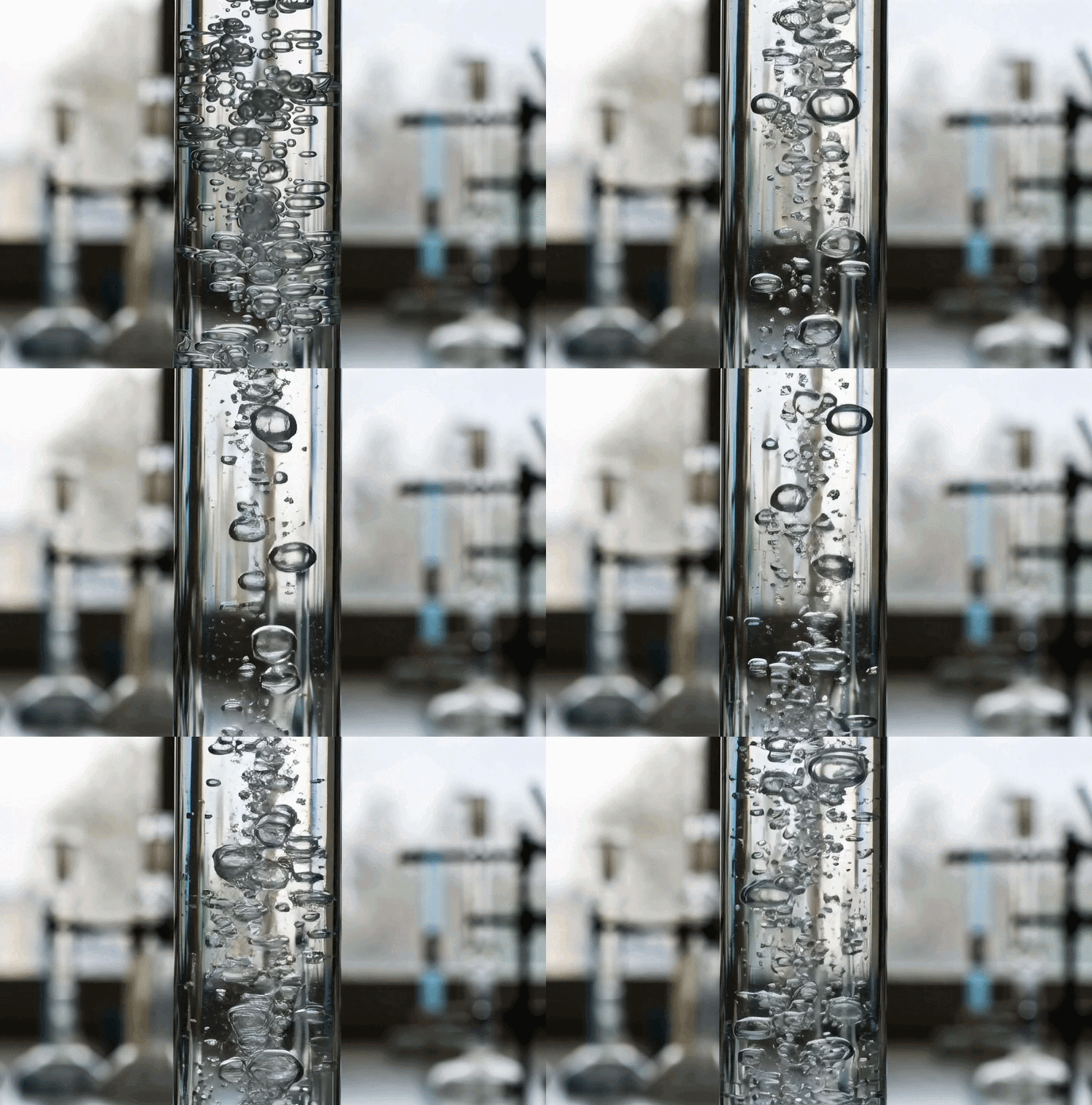
This method simulates gas-liquid contactors, scrubber towers, or batch treatment systems where sour gas is bubbled through a volume of liquid scavenger. It is ideal for evaluating performance in fixed towers or drilling mud applications and provides data on intrinsic reactivity and capacity under continuous gas-liquid contact.
Apparatus Setup
- Clear glass or plastic column (typical: 1.25 inches / 20-32 mm ID × 16-60 cm height).
- Bottom sparger or fritted disc (produces fine bubbles, ~8 mm diameter for optimal mass transfer).
- Gas inlet (bottom), outlet (top), temperature/pressure control (jacketed or oven).
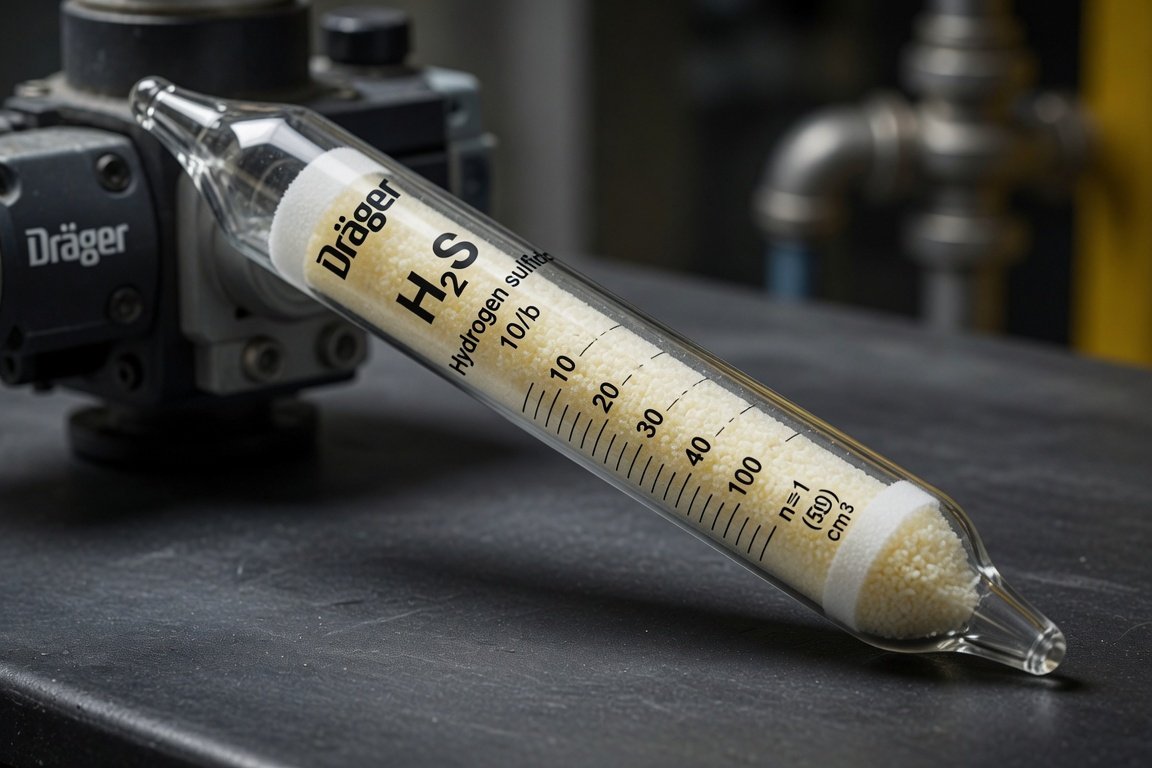
- H₂S analyzers: Dräger/SENSIDYNE tubes, electrochemical sensors, GC, or online IR/UV detectors.
- Gas supply: Synthetic mix (N₂ + CO₂ + H₂S at 100-15,000 ppm) or field gas; flow meter (0.4-4 scfh or 0.1-1 SLPM).
- Scavenger volume: 10-80 mL (scaled for lab practicality).
Step-by-Step Test Procedure
- Prepare scavenger solution at field concentration (e.g., 20-50% active) and charge into column (e.g., 80 mL or 10 mL for drilling mud tests).
- Preheat to test temperature (ambient to 130°F/55°C or field-relevant; higher T increases kinetics but may affect solubility).
- Introduce sour gas at controlled flow rate (e.g., 2-4 scfh per tower or 100 mL/min), pressure (atmospheric to 185 psig), and inlet H₂S concentration (e.g., 100-12,000 ppm, with/without 2-9% CO₂).
- Monitor inlet and outlet H₂S continuously or at intervals (every 15-30 min).
- Record breakthrough time: time until outlet H₂S exceeds threshold (e.g., 4 ppm pipeline spec, 1,000 ppm for capacity, or detectable rise).
- Continue until full saturation or fixed endpoint; inspect spent liquid for solids, pH drop, color change, or viscosity increase.
- Repeat with variables: scavenger type, dose, temperature, CO₂ level, flow rate.
Example from Industry Protocols
In a classic sparger-tower test (e.g., U.S. Patent 5,462,721), 80 mL scavenger in 1.25-inch × 16-inch towers treats Texas Gulf Coast gas (12,200 ppm H₂S, 185 psig, 130°F) at 4 scfh. Effluent is monitored with GASTEC tubes until 1,000 ppm slippage. Results compare formulations: one advanced MEA-ethanedial product achieved 83.2% absorption efficiency vs. 77.3% for commercial triazine over 300+ minutes.
In drilling fluid tests: 10 mL mud in 60 cm × 1 cm ID column with 100 ppm H₂S gas flow; breakthrough time up to 22-63 hours for effective scavengers (e.g., KMnO₄ or ZnO formulations), yielding capacities of 300-480 g H₂S/barrel mud.
Advantages and Limitations
- Pros: Simple, reproducible, excellent for capacity ranking and tower applications; simulates high interfacial area via bubbling.
- Cons: Does not replicate pipeline spray dynamics or short residence times; may overestimate performance for direct-injection scenarios.
Direct Injection Test Method
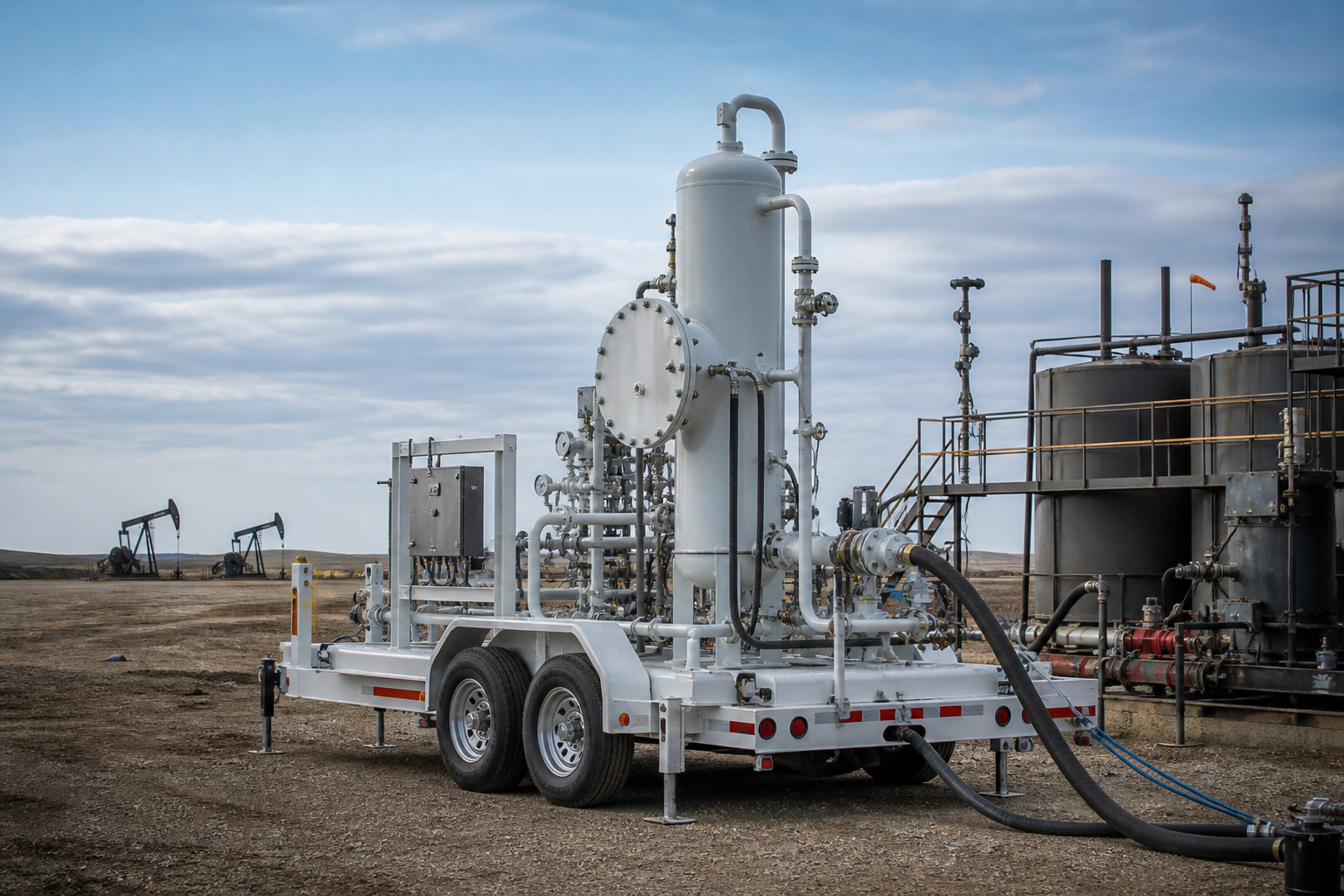
This method simulates pipeline or flowline injection, where liquid scavenger is atomized via nozzles/quills into a flowing sour gas stream. It is critical for evaluating real-world applications with limited contact time (15-60 seconds residence) and flow-regime effects (stratified vs. annular-mist).
Apparatus Setup
- Glass chamber or pipe test loop (e.g., ¾-1¼ inch Sch 80 pipe sections, 20-240 ft total length; sapphire windows for flow visualization).
- Atomizing nozzle or quill for scavenger injection (precise metering pump).
- Gas recirculation or once-through system with compressor, heater, sample ports every 20 ft.
- Pressure (up to 1,000 psi), temperature (95-260°F), flow (up to 400 scfm), H₂S analyzer (online TAC/Dräger/GC).
- Specialized: Direct Injection Laboratory Simulator (DILS) – compact glass pipeline chamber for spray formation testing.
Step-by-Step Test Procedure
- Establish baseline sour gas flow (e.g., 400 scfm circulation with 90 ppm H₂S, target pressure/temperature/velocity).
- Inject scavenger at controlled rate (e.g., stoichiometric or excess loading) via atomizing nozzle to create mist/droplets.
- Observe flow regime through windows (stratified flow = poor performance; annular-mist = high interfacial area and better scavenging).
- Sample H₂S at multiple points along the “pipe” to generate removal profile vs. distance/time.
- Measure outlet H₂S reduction; calculate efficiency and capacity until target residual or saturation.
- Vary parameters: nozzle type, gas velocity, pipe diameter (smaller = faster removal), CO₂ level (competes and lowers pH), temperature (higher = better kinetics), scavenger loading.
- Analyze spent scavenger and any solids; repeat for different chemistries.
Example from Industry Protocols
In GTI scavenger test loops (¾-1¼ inch pipes), direct injection of triazine at varying loadings shows dramatic improvement in annular-mist flow. Higher temperature and velocity accelerate removal; smaller diameter pipes outperform larger ones at low pressure. CO₂ presence reduces efficiency via competition.
DILS protocol (glass chamber simulation): Scavenger is sprayed into flowing gas; inlet/outlet H₂S measured post-residence time. This differentiates products better than static tests by replicating atomization and short-contact dynamics, addressing limitations of traditional kinetic jar tests.
Advantages and Limitations
- Pros: Highly realistic for pipeline applications; accounts for mass transfer, flow regimes, and droplet behavior.
- Cons: More complex/expensive setup; requires safety protocols for high-pressure H₂S handling.
Complementary Tests and Considerations
For crude oil applications (e.g., Petrobras protocol): Sour gas (0.6 L/min, known H₂S) is passed over/through treated crude at elevated temperature/pressure; liquid-phase H₂S monitored via titration or headspace analysis.
Static jar/autoclave tests provide quick screening. Always include:
- Safety: H₂S monitors, PPE, fume hoods, proper disposal.
- Variables: Temperature (kinetics), pressure (solubility), CO₂ (competition), hydrocarbons (partitioning).
- Byproduct evaluation: Solids formation risk (can plug lines).
- Field translation: Apply efficiency factors (50% direct injection, 80% towers) to lab capacity for dosing calculations.
Interpreting Results and Selecting Scavengers
Compare breakthrough curves, capacity plots, and efficiency across methods. A product excelling in bubble columns may underperform in direct injection (and vice versa). Use results to model field injection rates or tower sizing. Advanced labs combine methods with CFD modeling for ultimate optimization.
Conclusion
Lab evaluation via bubble column and direct injection tests provides the data foundation for successful H₂S mitigation. Bubble columns excel for contactor systems, while direct injection (DILS and pipe loops) mirrors pipeline reality. By understanding procedures, metrics, and influencing factors, operators can achieve reliable, cost-effective, and safe operations.
Consult specialized labs (e.g., Scaled Solutions, GTI protocols) for custom testing. Always validate with field trials.
Published March 2026 | For educational and operational reference only. Specific protocols may vary by vendor or standard (API, ASTM equivalents).