
Article Content
Sodium hydroxide (NaOH), commonly known as caustic soda, is a powerful alkaline compound widely employed as a chemical scavenger for hydrogen sulfide (H₂S) removal in the oil and gas sector. H₂S, a highly toxic, corrosive, and odorous gas naturally present in sour crude, natural gas, and associated water streams, poses significant safety, environmental, and operational risks. NaOH neutralizes H₂S through rapid acid-base reactions, converting it into non-volatile, water-soluble salts. This makes caustic scrubbing one of the simplest and most effective non-regenerable methods for treating low-to-moderate H₂S streams in refineries, gas plants, upstream production, and downstream processing.
While amines and specialized scavengers dominate large-scale sweetening, NaOH remains a preferred choice for targeted applications due to its low cost, fast kinetics, and ability to produce marketable byproducts like sodium hydrosulfide (NaHS).
History of Sodium Hydroxide Use in Oil & Gas H₂S Removal
Caustic scrubbing has been an established technology since the early days of petroleum refining and natural gas processing in the mid-20th century. Its use dates back to at least the 1950s, when Dow Chemical patented short-contact-time (SCT) caustic scrubbing in 1956 (U.S. Patent 2,747,962) to selectively remove H₂S from CO₂-rich streams. By the 1980s and 1990s, mathematical models and pilot studies refined its application for refinery fuel gas, sour water stripper off-gas, and molten sulfur vents.
Historically, NaOH was favored over regenerable amines for small-volume, intermittent, or vent streams where capital investment needed to stay low. Improvements in design (e.g., packed towers, venturi contactors) and the commercial value of NaHS byproduct have kept it relevant today, especially in facilities where spent caustic can be sold or reused.
Chemical Reactions: NaOH with H₂S and CO₂
NaOH acts as a strong base, rapidly reacting with the weak acid H₂S:
- Primary reaction (forming NaHS):
H₂S + NaOH → NaHS + H₂O - Secondary reaction (forming Na₂S at high pH):
NaHS + NaOH → Na₂S + H₂O
The reaction is near-instantaneous (rate constant ~10³–10⁵ M⁻¹s⁻¹), completing in seconds under proper mixing. Stoichiometry favors NaHS formation at moderate pH (7–10) for cost efficiency; excess NaOH drives Na₂S at pH >10.
CO₂, often co-present in sour gas, competes for NaOH:
- CO₂ + NaOH → NaHCO₃
- NaHCO₃ + NaOH → Na₂CO₃ + H₂O
Importantly, H₂S absorption kinetics are much faster than CO₂, enabling selective H₂S removal via short-contact-time designs (0.01–0.2 seconds). This minimizes caustic consumption and preserves NaHS product quality (low carbonate contamination).
How NaOH Is Applied in the Oil & Gas Industry
NaOH is typically applied as a 20–50% aqueous solution via:
- Direct Injection: Metered into pipelines, tanks, or water streams for produced water or crude sweetening.
- Caustic Washing: In refinery Merox or liquid treating units to remove H₂S and mercaptans from LPG, naphtha, and light hydrocarbons.
- Wet Scrubbing: Continuous or batch treatment of vent gases, fuel gas, sour water stripper gas, or molten sulfur tank vents.
Dosage is 1.1–1.5 times stoichiometric (1.17–2.35 g NaOH per g H₂S), adjusted for pH control and competing reactions. Spent solution (rich in NaHS) is often bled off and sold as a valuable byproduct or disposed of after treatment.
NaOH Scrubber Designs and Systems
Common designs include:
- Packed-Bed Towers: Counter-current contact with recirculating NaOH for high-efficiency removal (>99%).
- Venturi or Spray Towers: For particulate-laden streams (e.g., sulfur vents) or high-velocity gas.
- Short-Contact-Time (SCT) Systems: Static mixers or down-flow contactors with rapid phase separation for selective H₂S removal in CO₂-rich gas.
- Hybrid/Multi-Stage: Venturi pre-scrubbers + packed towers to handle solids and deep removal.
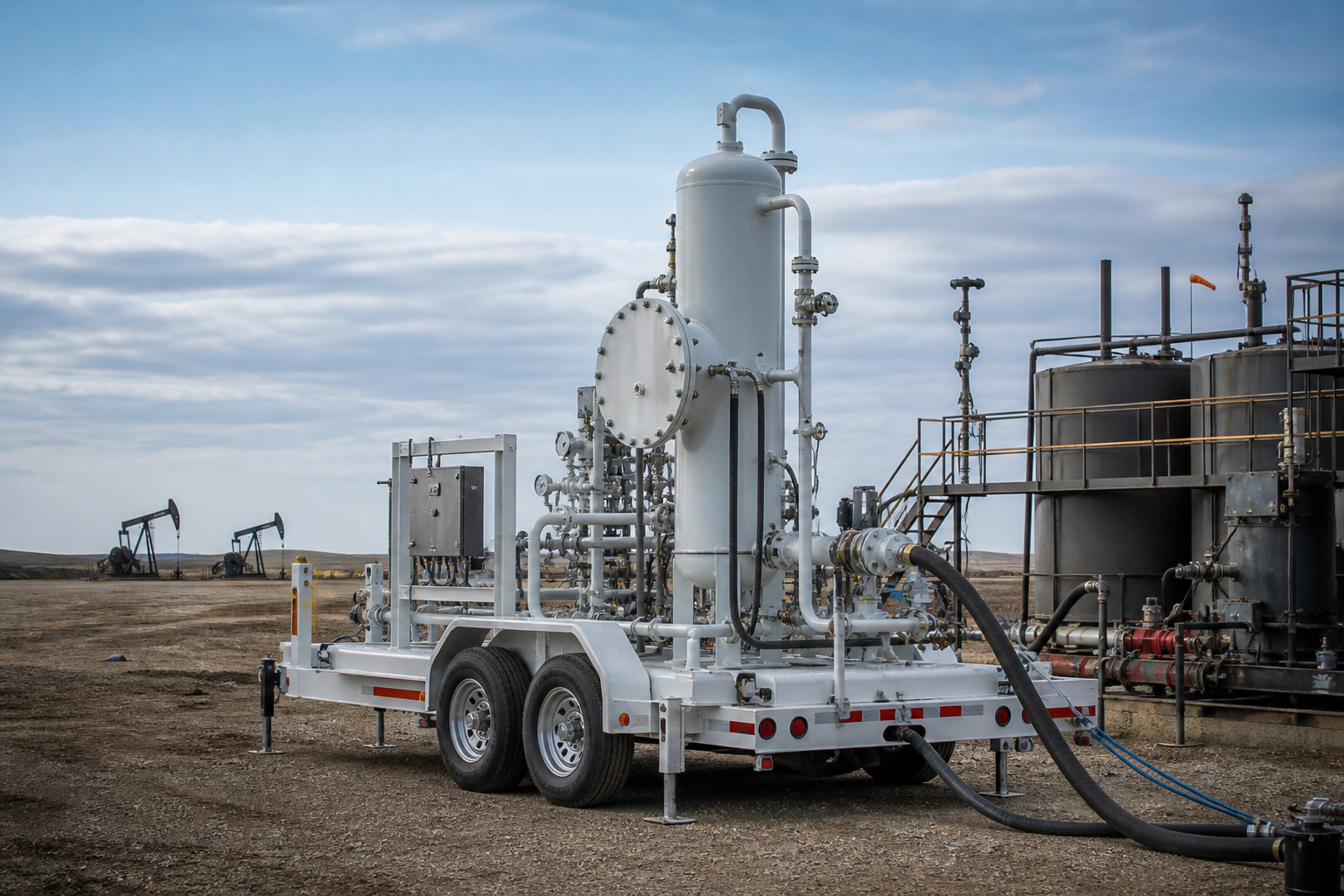
Key features: pH monitoring (>11 for efficiency), temperature control to prevent salt precipitation, corrosion-resistant materials (stainless steel, FRP), and mist eliminators. Designs address plugging from elemental sulfur or carbonates through sprays, high recirculation, and periodic washing.
Benefits of NaOH as an H₂S Scavenger
- Extremely fast reaction and high removal efficiency (up to 99.2% reported in packed beds).
- Low capital cost for small-to-medium volumes (<10–20 tons/day sulfur).
- Potential revenue from selling high-quality NaHS solution.
- Simple operation and flexible deployment (permanent or mobile units).
- Effective against H₂S, mercaptans, and other acid gases.
- Small footprint and scalability for offshore or remote sites.
Drawbacks and Limitations
- Non-regenerable: High ongoing OPEX for larger H₂S loads; spent caustic requires disposal or treatment.
- CO₂ Interference: Increases consumption and risks carbonate plugging unless SCT design is used.
- Corrosivity: Requires specialized materials and safety protocols; high pH can cause scaling.
- Solids Formation: Elemental sulfur or salts can plug packing, lines, and mist eliminators (especially in sulfur-handling units).
- Environmental/Disposal Issues: Residual sulfides in spent solution are toxic and odorous; secondary treatment (oxidation) often needed before discharge.
- Not economical for very high H₂S volumes compared to amines.
Other Uses of NaOH in the Oil and Gas Industry
Beyond H₂S scavenging, NaOH plays versatile roles:
- Drilling Fluids: pH control and alkalinity maintenance in water-based muds to enhance viscosity and inhibit corrosion.
- Crude Oil Desalting and Sweetening: Neutralizes acidic impurities and removes sulfur compounds from crude.
- Caustic Treating (Merox Process): Removes mercaptans from gasoline and jet fuel.
- Enhanced Oil Recovery (EOR): Alkaline flooding to improve sweep efficiency.
- Wastewater Treatment: Neutralization of acidic effluents and odor control.
- Pipeline and Equipment Cleaning: Removes scale, rust, and organic deposits.
Conclusion: When to Choose NaOH for H₂S Removal
NaOH remains a proven, cost-effective H₂S scavenger for targeted applications where simplicity, speed, and byproduct value matter. With proper design—especially short-contact-time or hybrid systems—operators can achieve selective, reliable removal while minimizing drawbacks like CO₂ consumption and solids issues. As regulations tighten and sustainability goals evolve, optimized caustic scrubbing continues to complement advanced technologies in the modern oil and gas landscape.