Article Content
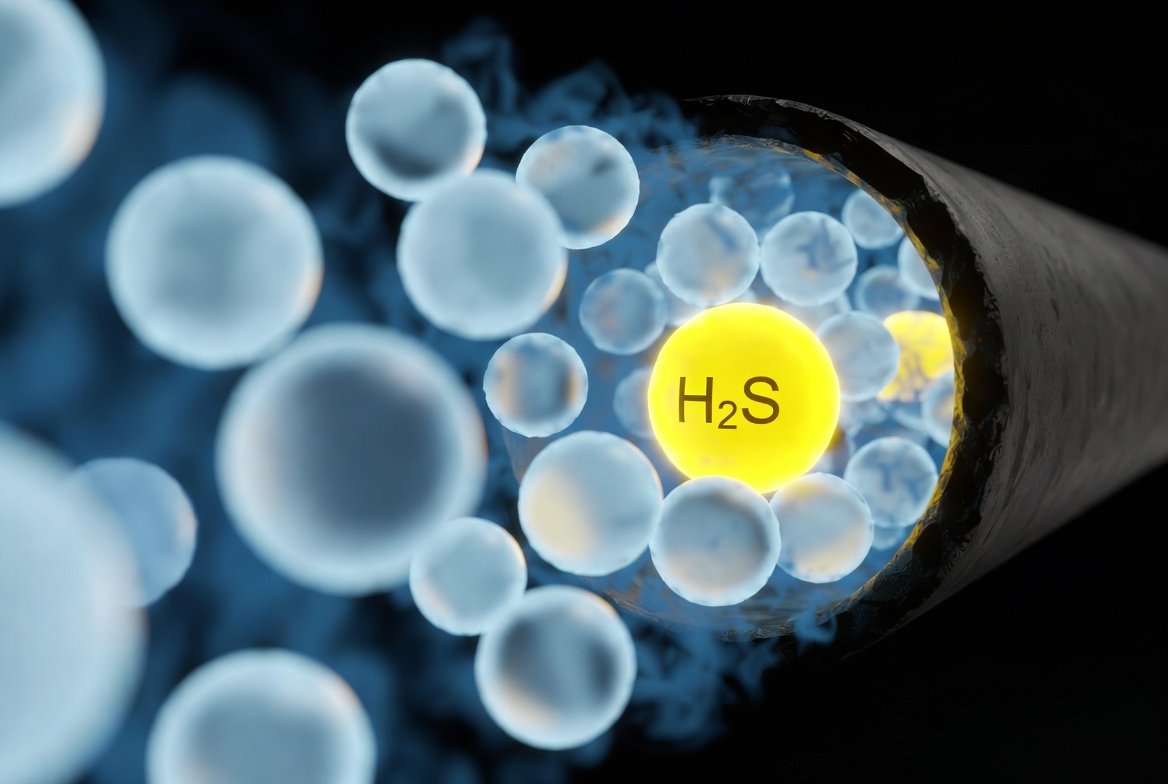
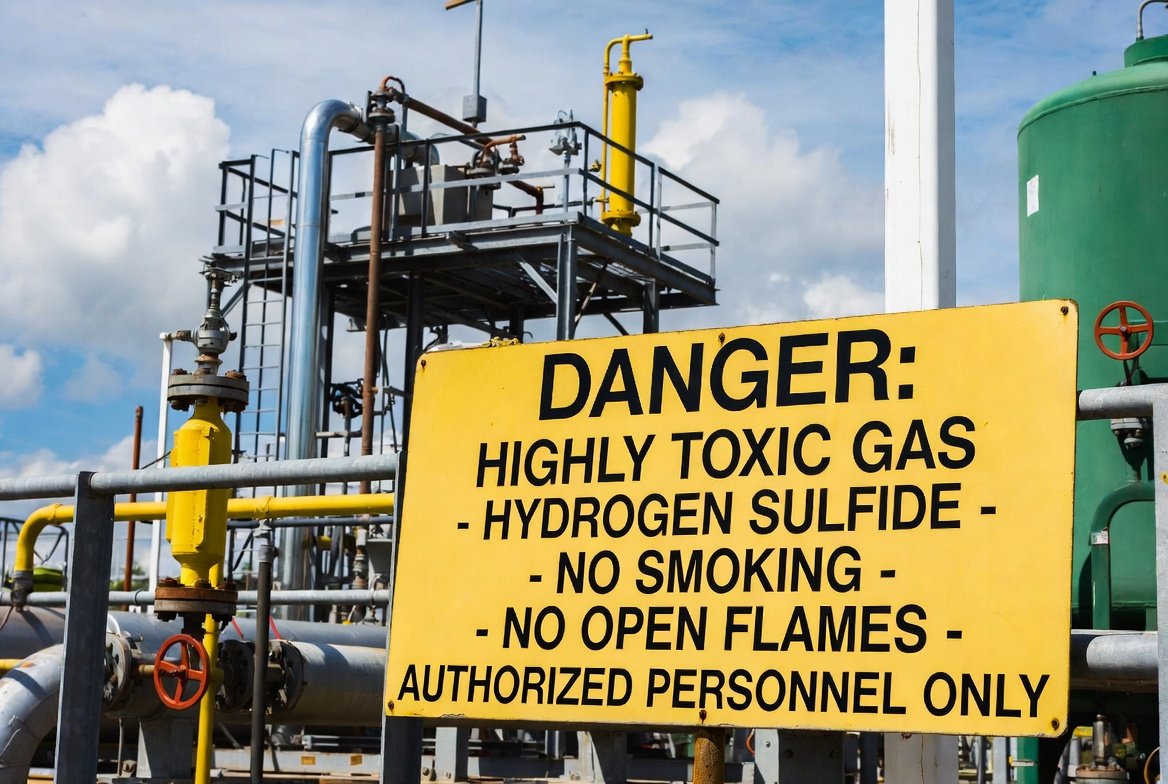
Alberta’s oil and gas industry is a cornerstone of the provincial economy, but it comes with inherent risks—none more significant than hydrogen sulfide (H₂S), commonly known as sour gas. This colourless, flammable, and highly toxic gas, which smells like rotten eggs at low concentrations, is present in approximately one-third of Alberta’s natural gas production. The Alberta Energy Regulator (AER) has established some of the world’s most rigorous H2S regulations to manage H₂S risks, balancing energy development with public safety, worker protection, and environmental stewardship.
This comprehensive article explores the AER’s regulatory framework for H₂S, from licensing requirements and emergency planning to measurement standards and well abandonment. Whether you’re an industry professional, landowner, policymaker, or concerned citizen in Alberta, understanding these rules is essential for appreciating how the province leads globally in sour gas management.
What Is H₂S and Why Does It Matter in Alberta?
Hydrogen sulfide (H₂S) forms naturally through the breakdown of organic materials in petroleum reservoirs. It is heavier than air, accumulates in low-lying areas, and becomes lethal at high concentrations. At 100–150 parts per million (ppm), it causes eye and respiratory irritation; at 300 ppm, it leads to unconsciousness; and above 500 ppm, a single breath can cause immediate collapse and death by paralyzing the respiratory system. Even low-level chronic exposure poses long-term health risks.
In Alberta, sour gas is defined by the AER as any well or operation where H₂S content exceeds 0.01 mol/kmol (roughly 100 ppm). High-concentration fields, such as those in the Montney Formation or areas like Crossfield East and Okotoks, can contain H₂S levels exceeding 23%. Sour gas not only poses immediate dangers during drilling, production, and maintenance but also generates sulphur dioxide (SO₂) when flared or incinerated, contributing to air quality concerns.
Despite the hazards, sour gas is economically vital. It supplies natural gas for heating, electricity, and industrial use while yielding elemental sulphur—a key ingredient in fertilizers, pharmaceuticals, and other products. Alberta has historically been one of the world’s largest sulphur exporters. The challenge lies in extracting and processing it responsibly, which is where AER regulations play a pivotal role.
A Brief History of H2S Regulations in Alberta
Alberta’s experience with sour gas dates back decades, but the watershed moment came in 1982 with the Lodgepole blowout near Drayton Valley. An Amoco Canada sour gas well (with approximately 25% H₂S) blew out uncontrollably for 68 days, releasing massive volumes of toxic gas. The incident hospitalized 16 people, sickened thousands, killed two workers attempting to cap the well, and contaminated air as far as Saskatchewan. A subsequent inquiry by the Energy Resources Conservation Board (ERCB, the AER’s predecessor) identified poor drilling practices, inadequate equipment, and regulatory gaps as root causes. It issued 39 recommendations that transformed sour gas oversight.
These reforms included stricter drilling plans, mandatory emergency response plans (ERPs), enhanced blowout prevention, specialized training, and public consultation requirements. The legacy of Lodgepole continues to shape today’s regulations, making Alberta an international leader in sour petroleum operations safety. Modern directives build directly on these lessons, incorporating advanced modelling, real-time monitoring, and risk-based approaches.
The Regulatory Framework: AER and Complementary Oversight
The AER administers regulations under the Oil and Gas Conservation Act, Pipeline Act, and related legislation. Its mandate is clear: protect public safety, the environment, and resource conservation while enabling responsible energy development. H₂S-specific rules are embedded across multiple directives, supported by the Alberta Occupational Health and Safety (OHS) Code, which sets workplace exposure limits (10 ppm as an 8-hour time-weighted average and 15 ppm ceiling).
Key principles include risk assessment, prevention through engineering controls, emergency preparedness, public involvement, and ongoing compliance. Operators must demonstrate that they can safely handle H₂S before receiving licenses, and the AER enforces through inspections, audits, and penalties under Directive 019: Compliance Assurance.
Key AER Directives Governing H₂S Operations
The AER’s approach is directive-based, with several interlocking documents addressing every stage of sour operations.
Directive 056: Energy Development Applications and Schedules
This foundational directive governs license applications for wells, facilities, and pipelines. It requires detailed H₂S release rate assessments for Category C, D, or E wells (those with potential sour gas exposure). Operators must calculate the maximum potential H₂S release rate using the Canadian Association of Petroleum Producers (CAPP) Guideline 2012-0008 before drilling. These assessments determine minimum Emergency Planning Zones (EPZs) and drive participant involvement programs.
Directive 056 also outlines facility categories based on H₂S content, sulphur inlet rates, and proximity to populated areas. It mandates setbacks from residences and public facilities, vapour recovery systems, and professional engineering sign-offs. Recent updates (as of 2025–2026) include new category classifications for geothermal facilities and integration with the AERH2S modelling tool.
Directive 071: Emergency Preparedness and Response Requirements
Directive 071 is the cornerstone of public safety for sour operations. It requires site-specific ERPs for all sour wells, pipelines, and facilities handling H₂S or high-vapour-pressure (HVP) products. ERPs must detail ignition decision procedures, public notification, evacuation plans, and coordination with municipalities and first responders.
Central to Directive 071 is the calculation of Emergency Planning Zones (EPZs)—geographic areas around operations where residents could be affected by an H₂S release. Historically calculated with the ERCBH2S model (introduced in 2008), the AER released the updated AERH2S model in November 2025. AERH2S incorporates modern meteorological data, updated scientific parameters, and improved EPZ selection methodology. It became mandatory for all new Directive 056 applications effective January 1, 2026, while existing EPZs may continue using the legacy model until further notice.
Operators must consult and notify all residents, landowners, and stakeholders within the EPZ. Critical sour wells require enhanced review meetings and more robust plans.
Directive 017: Measurement Requirements for Oil and Gas Operations
Accurate H₂S data is non-negotiable. Directive 017 specifies sampling frequencies, analysis protocols, and reporting via Petrinex. High-volume streams require frequent testing; recombined gas/condensate analysis ensures precise allocation. Inaccurate measurement can lead to non-compliance, royalty issues, and safety risks.
Directive 060: Upstream Petroleum Industry Flaring, Incinerating, and Venting
This directive minimizes emissions by prioritizing gas conservation. Routine venting of H₂S-bearing gas is heavily restricted or prohibited. Flaring must achieve high combustion efficiency to convert H₂S to less toxic SO₂. Notification radii apply before planned flaring (3 km for >1% H₂S; 1.5 km for lower concentrations). Annual and site-specific volume limits help reduce Alberta’s overall flaring footprint.
Directive 020: Well Abandonment
Sour wells demand heightened abandonment standards to prevent long-term H₂S migration. Inactive sour wells must be suspended within six months (versus 12 months for sweet wells). Critical sour wells require extended cement plugs, perforated interval isolation, and additional barriers to protect groundwater and surface environments.
H₂S Release Rate Assessments and Emergency Planning Zones
Before any sour well license is approved, operators submit a formal H₂S release rate assessment under Directive 056, Section 7.7.15. The assessment models worst-case release scenarios based on reservoir pressure, H₂S concentration, and deliverability. Results feed directly into AERH2S to establish the EPZ radius.
The EPZ is a planning tool only—it triggers enhanced emergency measures, public consultation, and notification. Larger EPZs (common near urban centers or with high-release wells) require broader stakeholder engagement. The AER reviews these assessments rigorously, often requiring additional data or mitigation strategies before approval.
Critical Sour Wells: Heightened Safeguards
A “critical sour well” is one capable of releasing large H₂S volumes that could endanger nearby populations. Classification considers drilling complexity, H₂S release rate (in m³/s), and distance to urban centers or public facilities.
Critical wells demand:
- Detailed drilling plans addressing well design, corrosion-resistant equipment, blowout prevention, and backup systems (e.g., extra drilling mud and degassers).
- Specialized crew qualifications, including Energy Safety Canada H₂S Alive training and Second Line Supervisor BOP Well Control certification.
- Daily/weekly inspections by operators plus independent AER oversight, with at least one detailed pre-critical-zone inspection.
- Site-specific ERPs approved by the AER, including ignition contingency plans (burning the well converts H₂S to SO₂, which disperses more readily).
In the event of a blowout, the AER deploys air monitoring units (“sniffer trucks”) to track H₂S and SO₂ plumes in real time, guiding evacuations or shelter-in-place orders.
Worker Safety, Compliance, and Enforcement
Beyond public safety, the AER collaborates with Alberta OHS to protect workers. Requirements include personal gas monitors, supplied-air breathing apparatus in high-risk zones, confined-space protocols, and rigorous training. Facilities must incorporate engineering controls such as ventilation, leak detection, and explosion-proof equipment.
The AER’s Compliance Dashboard publicly reports inspection findings, incidents, and enforcement actions. Non-compliance—whether from inadequate assessments, measurement errors, or ERP failures—can result in stop-work orders, fines, or license suspensions.
Recent Developments and Future Outlook
In November 2025, the AER introduced the AERH2S model, enhancing EPZ accuracy with updated science and computing capabilities. This reflects ongoing adaptation to new technologies, including carbon capture, hydrogen production, and geothermal integration. As Alberta transitions toward lower-emission energy, H₂S regulations will likely evolve to support methane reduction goals while maintaining world-class safety standards.
Industry and regulators continue collaborating through recommended practices for sour gas development planning, ensuring proliferation of sour infrastructure is managed responsibly.
Conclusion: A Model of Responsible Regulation
The AER’s comprehensive H₂S regulations demonstrate a commitment to evidence-based, risk-managed energy development. From the lessons of Lodgepole to the cutting-edge AERH2S tool, Alberta has built a framework that protects lives, supports economic growth, and preserves the environment. For operators, compliance is not just a legal obligation—it is a licence to operate safely and sustainably.
Landowners and the public benefit from transparent consultation, robust emergency planning, and accessible compliance data. As the energy sector evolves, these regulations will remain a benchmark for jurisdictions worldwide facing sour gas challenges.
By prioritizing safety, science, and stakeholder engagement, Alberta continues to show that responsible resource development and public protection can—and must—go hand in hand.
Sources: Official AER Directives 056, 071, 017, 060, and 020; AER Sour Gas and Critical Sour Wells pages; AER Bulletin 2025-34; historical records of the 1982 Lodgepole inquiry. Always consult the latest AER directives and seek professional advice for specific operations or concerns.