
Article Content
Natural gas continues to play a central role in the global energy mix through 2050, supported by its lower carbon intensity compared to coal and oil, flexibility in power generation, and expanding use in industry and LNG trade. However, a growing share of future supply will come from sour gas reservoirs containing hydrogen sulfide (H2S) and often elevated CO2 levels. This shift presents technical, safety, economic, and environmental challenges while creating sustained demand for advanced H2S removal technologies.
This article examines global natural gas production forecasts to 2050, highlights key sour gas regions and fields, estimates the evolving share of production requiring H2S treatment, and discusses market implications for operators and technology providers.
What Defines Sour Natural Gas?
Natural gas is classified as sour when it contains H2S above pipeline or processing thresholds, typically starting at low parts per million (ppm) levels for safety and materials integrity, with significant processing impacts above 0.5–1% or higher. “Acid gas” refers to the combination of H2S and CO2 that must be removed to meet sales gas specifications, protect equipment from corrosion (such as sulfide stress cracking), and comply with environmental regulations.
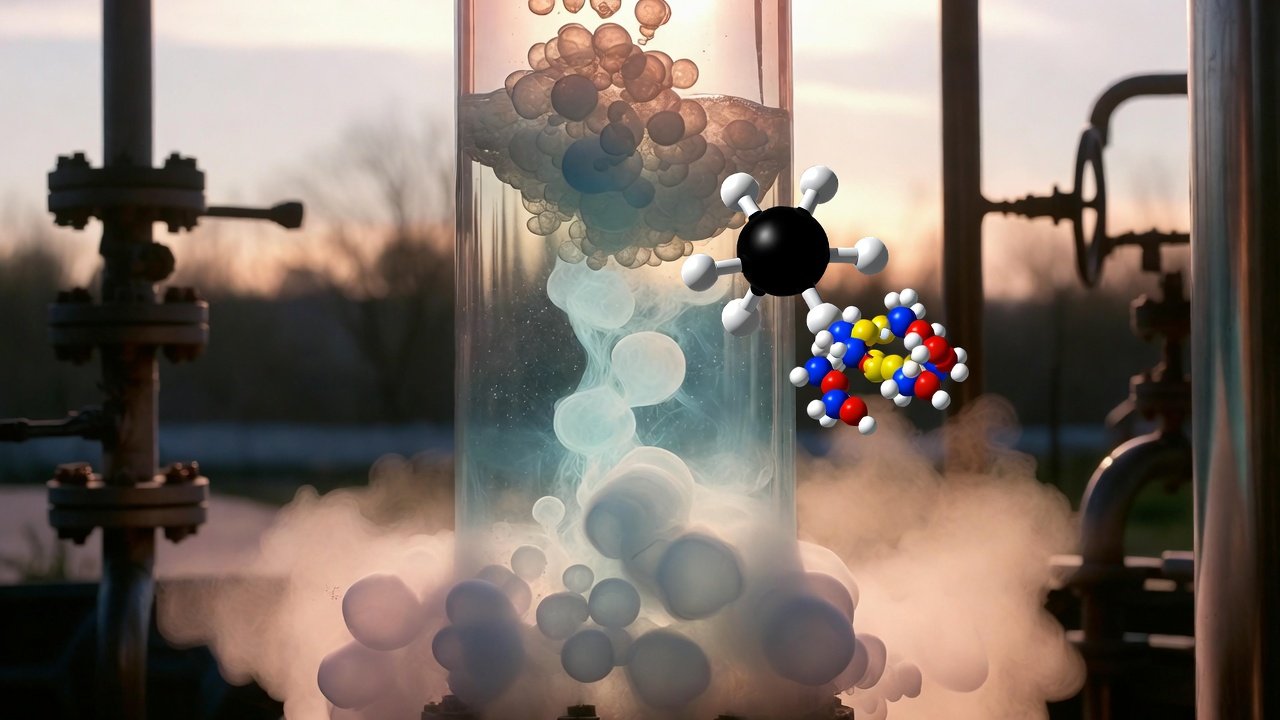
H2S is toxic, flammable, and corrosive. High concentrations require specialized materials, rigorous safety protocols, and robust sweetening processes. Sour gas often originates from deeper, hotter carbonate or clastic reservoirs where thermochemical sulfate reduction or other geochemical processes generate H2S. As conventional sweet gas fields mature and decline, operators increasingly develop these more challenging resources.
Global Natural Gas Production Outlook to 2050
Global natural gas production reached approximately 4,230 billion cubic meters (bcm) in 2025. Major outlooks project continued growth driven by power sector demand, industrial switching from coal, LNG exports, and energy security needs in developing economies.
According to the Gas Exporting Countries Forum (GECF) Global Gas Outlook, production is expected to expand by roughly 1,900 bcm, reaching more than 5,300–5,900 bcm by 2050 depending on the scenario. ExxonMobil’s Global Outlook anticipates more than 20% growth in natural gas demand by 2050. The International Energy Agency’s World Energy Outlook 2025 and other analyses show a wide range across scenarios, but the central trajectory points to sustained or modestly rising production in most base cases through mid-century.
Key regional production forecasts and trends include:
- North America: Projected to reach around 1,670 bcm by 2050 (significant growth from current levels near 1,200+ bcm). The United States remains the largest producer, supported by associated gas from oil plays (Permian) and LNG export infrastructure. Canada and Mexico contribute meaningfully.
- Middle East: Expected to reach approximately 1,150–1,155 bcm. Strong expansion from Qatar (LNG), Iran, Saudi Arabia, and the UAE. This region already accounts for a large share of global reserves and will drive much of the incremental supply.
- Eurasia (including Russia and Central Asia): Forecast near 1,300 bcm or slightly under, with Russia and Turkmenistan as primary contributors. Growth of nearly 40% from earlier baselines in some projections.
- Africa: Significant rise to around 600 bcm (roughly 10% of global supply), from about 250 bcm in recent years. New LNG projects and domestic demand support expansion.
- Asia-Pacific: Modest net growth, with China reaching ~370 bcm (heavily unconventional) and Australia increasing to nearly 200 bcm. Total regional production growth around 224 bcm in GECF projections.
- Latin America: Increase of over 110 bcm to approximately 280 bcm, led by Argentina (Vaca Muerta), Brazil, and Venezuela.
- Europe: Continued decline to around 70 bcm due to mature fields and policy shifts.
These projections assume continued investment in upstream development, infrastructure, and LNG capacity. Actual volumes will depend on prices, geopolitics, decarbonization policies, and the pace of renewable deployment. Natural gas is widely viewed as a bridge fuel and flexible partner to variable renewables, supporting a relatively resilient demand outlook through 2050.
Sour Gas Reservoirs and Regional Distribution
More than 40% of the world’s natural gas reserves are sour, according to IEA assessments. The Middle East holds the highest concentration, with approximately 60% of its gas reserves classified as sour. Russia accounts for more than one-third sour reserves. Worldwide, estimates suggest 15–30% or more of current production may contain meaningful H2S levels requiring treatment, though definitions vary (low-ppm vs. high-concentration “ultra-sour”).
Middle East — The epicenter of ultra-sour gas development. Notable fields include the Shah Field (UAE) with ~480 bcm reserves and ~23% H2S; the Khuff Formation (Saudi Arabia) with over 8.5 TCM and H2S up to 20% in zones; Ghawar Field (Saudi Arabia) with significant associated sour gas up to 15% H2S; Khursaniyah (Saudi Arabia) at 10–15% H2S; and the giant South Pars/North Dome field (Iran/Qatar) with varying but often significant acid gas content.
Many new and expansion projects in the region involve high H2S streams, requiring extensive amine sweetening, sulfur recovery units (Claus process), and sometimes acid gas reinjection or sequestration.
Russia and CIS Countries — Major sour gas assets include Orenburg Field (~425 bcm, 8–12% H2S), Tengiz (Kazakhstan, up to 18% H2S), and Shurtan (Uzbekistan, up to 15% H2S). Historical developments demonstrated large-scale sour gas processing capability.
North America — Sour gas has long been produced in Canada’s Alberta basin, with mature handling infrastructure and strict regulatory oversight. In the US, deeper zones in the Permian, Overthrust Belt, and certain Gulf of Mexico areas contain H2S. Overall concentrations are generally lower than Middle East ultra-sour fields but still require treatment at many facilities.
Other Regions — Asia and Africa have pockets of sour gas, often in deeper or carbonate plays. As exploration targets deeper or unconventional resources, the incidence of sour gas is expected to rise even in traditionally sweet-gas regions.
Precise forecasts for the percentage of future production containing H2S are limited. However, with more than 40% of reserves sour and depletion of easier sweet gas, the share of gas requiring dedicated H2S removal is projected to increase materially. Incremental supply from the Middle East, deeper North American plays, and select Eurasian and African fields will disproportionately contribute to higher H2S volumes. The treated sour gas proportion is expected to move closer to reserve shares over time, potentially reaching 35–50%+ of production in key basins by 2040–2050.
Market Implications for H2S Removal and Sour Gas Management
The outlook for sour gas directly translates into growing demand for H2S treatment solutions across the value chain—from wellhead and gathering systems to processing plants and export terminals.
Traditional amine sweetening remains the workhorse for bulk acid gas removal but faces challenges with very high H2S concentrations (energy intensity, solvent degradation, large footprint). Liquid scavengers excel for moderate H2S levels, polishing, or remote/wellhead applications. Solid adsorbents and iron oxide-based systems offer advantages in certain conditions, including ease of handling spent material.
High-H2S fields often require integrated approaches: selective membranes or hybrid systems, robust materials of construction, sulfur recovery or acid gas compression/reinjection, and sometimes carbon capture integration. Safety systems, real-time monitoring, and emergency response planning are essential.
Key market drivers through 2050 include the rising share of sour production in growth regions, regulatory pressure for lower emissions and safe operations, the economics of developing high-H2S resources profitably, LNG export projects demanding on-spec feed gas, and potential integration with CCS.
Challenges include high treatment costs in ultra-sour environments, logistics for chemicals and waste in remote locations, and the need for reliable performance under varying conditions. Opportunities exist for modular or skid-mounted systems, lower-OPEX scavenger formulations, selective H2S removal technologies, and digital optimization tools.
Operators in mature sour gas provinces such as Alberta benefit from decades of experience but continue to seek efficiency gains. Emerging producers and major expansions represent significant greenfield demand for proven H2S technologies.
Conclusion
Natural gas production is forecast to grow substantially through 2050, with regional shifts favoring the Middle East, North America, Africa, and Eurasia. A disproportionately large and increasing share of this supply will originate from sour reservoirs containing H2S. With over 40% of global reserves already classified as sour—and higher concentrations in critical growth areas—the industry faces a clear trajectory toward more complex gas processing requirements.
This evolution underscores the strategic importance of reliable, cost-effective, and safe H2S removal and management solutions. Whether through advanced liquid scavengers, solid media, custom-engineered scrubber systems, or integrated acid gas handling, technology providers that deliver performance under real-world field conditions will play an essential role in unlocking sour gas resources responsibly.
As the energy transition unfolds, sour gas will become a larger part of the supply picture. Proactive investment in treatment infrastructure and innovative technologies today will determine which operators and regions successfully monetize these resources while meeting safety, environmental, and commercial objectives through 2050 and beyond.