Article Content
Triazine-based liquid scavengers continue to serve as the primary workhorse for sour gas treatment around the world. They are cost-effective, straightforward to apply, and chemically reliable. Yet every experienced field engineer has encountered the same persistent issue: white or yellowish H2S scavenger solids forming in separators, plugging control valves, fouling flow meters, and obstructing bubble column internals. Understanding exactly why these solids appear—and more importantly, how to prevent them—can help operators reduce OPEX and eliminate unplanned downtime.
The Chemistry Behind Solid Formation
To address solids formation, it is essential to understand how triazine scavengers function. Both MEA Triazine (also known as 1,3,5-tris(2-hydroxyethyl)hexahydro-1,3,5-triazine) and MMA Triazine react with H₂S via a nucleophilic addition mechanism. The triazine ring opens, creating a series of intermediate products as it absorbs hydrogen sulfide from the gas or liquid stream.
The main culprit behind solids is dithiazine—specifically 1,3,5-dithiazinane, a six-membered sulfur-containing ring. Dithiazines become the dominant byproduct once the triazine is fully loaded with H₂S. These compounds have limited solubility in water and readily precipitate when:
- The scavenger solution concentrates due to water evaporation
- Temperatures fall below the cloud point of the dithiazine-rich mixture
- The scavenger is significantly overdosed relative to actual H₂S loading
- Residence time in the contactor is too short to keep byproducts dissolved
A secondary byproduct, trithiane (a fully sulfur-substituted triazine ring), can also form under very high H₂S loading and elevated temperatures. While less common, trithiane is notably harder to redissolve once it precipitates.
Key reaction pathway (simplified):
Triazine + H₂S → Hemiaminal intermediate → Dithiazine + Trithiane (at high H₂S loading) + NH₃ (released as gas or dissolved ammonia)
Ammonia is released as a byproduct in every triazine-based H₂S scavenging reaction. This can lead to downstream nitrogen contamination, which is particularly problematic in gas plants that use sensitive amine units or molecular sieve beds. For a full overview of available scavenger chemistries, see our guide on Non-Regenerative Liquid H2S Scavengers.
Key Factors That Drive Solids Formation
Solids rarely result from a single cause. In the field, they usually stem from the combined effect of several operating parameters that push the solution from stable to precipitating. The most important factors are outlined below.
H₂S Loading Rate and Scavenger Stoichiometry
The stoichiometric balance between active triazine and H₂S is critical. When H₂S loading is high relative to available scavenger, the reaction quickly produces fully loaded, low-solubility byproducts (dithiazines and trithianes). Ironically, under-dosing to save costs often creates the worst solids issues because the limited scavenger that does react becomes immediately overwhelmed.
Over-dosing in low-H₂S streams creates its own problems: excess unreacted triazine can polymerize over time, especially at higher temperatures, leading to viscous, sticky fouling.
Use our H2S Scavenger Blend Capacity Calculator to size the dose correctly against actual H₂S loading. Getting this ratio right is the single most effective step toward preventing solids.
Temperature
Temperature affects solubility in two ways. Higher temperatures keep dithiazines dissolved, while lower temperatures cause them to drop out of solution. This explains why solids often appear at the coldest points in the system—downstream separators, choke valves experiencing Joule-Thomson cooling, or during winter operations.
Extremely high temperatures (above ~80°C) can accelerate unwanted side reactions and degrade the triazine prematurely, generating additional polymeric foulants.
pH
Triazine scavengers perform best and remain most stable in the pH range of 7.5–10. In acidic conditions (lower pH), the triazine ring undergoes hydrolysis, breaking down into formaldehyde and amines that no longer scavenge H₂S effectively. Acidic environments also reduce dithiazine solubility, speeding up precipitation.
In produced water systems or streams with significant CO₂ co-production (which forms carbonic acid), pH monitoring is essential. Always track produced-water pH alongside H₂S levels.
Residence Time and Mixing
Poor mixing or insufficient residence time in the contactor prevents complete reaction at the gas-liquid interface. Partially reacted intermediates are more likely to separate and deposit than either fully reacted dithiazine (which can often be managed as a slurry) or unreacted scavenger.
Bubble column design is crucial here. Sparger type, column diameter, liquid level, and gas flow rate all influence bubble distribution and effective contact time. Our article on Bubble Column Types explores how contactor design impacts both efficiency and solids management.
Water Content and Evaporation
Triazine products are typically supplied as 40–50% aqueous solutions. In gas-phase contactors—especially in dry, hot climates or with high gas velocities—water evaporates, concentrating dithiazine in the remaining liquid. Once solubility limits are exceeded, precipitation occurs rapidly. This is especially pronounced in summer or when very dry gas enters the contactor.
⚠️ Field Note: A sudden rise in scavenger consumption with no corresponding increase in H₂S loading is often an early warning that solids are building up inside the contactor, reducing effective liquid volume and requiring more frequent top-ups. Do not ignore this signal.
MEA vs. MMA Triazine: Which Forms More Solids?
This remains one of the most frequently asked field questions, and the answer depends on operating conditions. Both MEA Triazine and MMA Triazine generate dithiazine byproducts, but their behavior differs in key ways.
| Property | MEA Triazine | MMA Triazine |
|---|---|---|
| Primary byproduct | MEA-dithiazine | MMA-dithiazine |
| Byproduct solubility | Higher (hydroxyl group aids water solubility) | Lower (methyl group is hydrophobic) |
| Solids formation tendency | Lower under moderate conditions | Higher, especially at low temperatures |
| Reactivity with H₂S | Slightly lower | Slightly higher |
| Cost (typical) | Lower | Higher |
| Best application | Moderate H₂S, warm climates, water-rich streams | High H₂S loading, gas phase applications |
| Nitrogen release | Yes (as ethanolamine) | Yes (as methylamine) |
In cold climates or high-H₂S applications, MMA triazine’s byproducts precipitate more readily because the hydrophobic methyl groups reduce water compatibility. Switching to MEA triazine—or to a custom blend tailored to the temperature and H₂S profile—can significantly cut solids formation. For a deeper comparison, see our article on H2S Removal from Water with MMA Triazine.
Operational Symptoms and Early Warning Signs
Early detection of solids formation prevents costly equipment failures. The most reliable indicators, listed in the order they typically appear, include:
- Increased scavenger consumption without any rise in H₂S loading. Solids reduce effective liquid volume in the contactor, shortening residence time and lowering efficiency.
- Cloudiness or turbidity in drain samples from the contactor or separator. Healthy scavenger should remain clear to pale yellow.
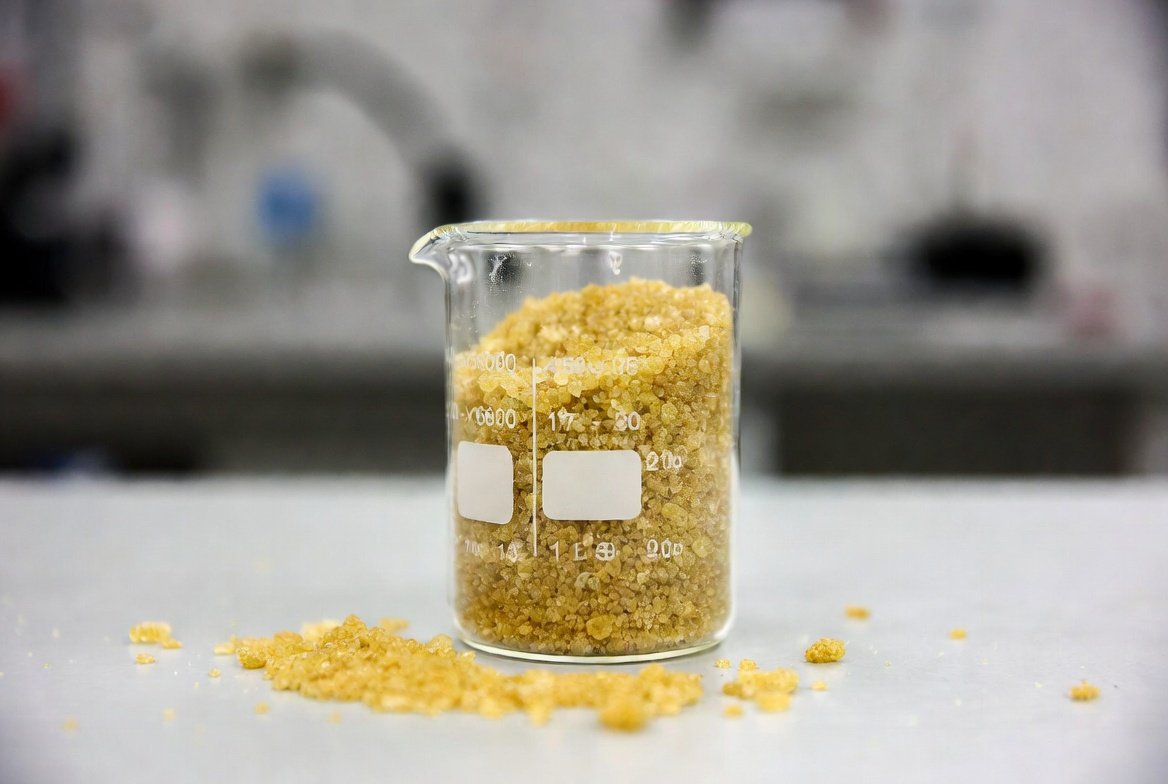
- Yellow or white sludge in separator drains. Dithiazine is usually white to pale yellow; trithiane tends to be darker yellow or tan.
- Control valve hunting or failure, especially level-control or dump valves. Solids are abrasive and collect in valve seats.
- Rising differential pressure across contactor internals (sparger, packing, or trays).
- Outlet H₂S breakthrough despite correct dosing—a late-stage sign of significant fouling.
If H₂S breakthrough occurs at the outlet, review your application method and whether it is optimized for the actual loading. Our recent article on Typical Efficiencies of H2S Scavenger Application Methods offers useful benchmarks.
Prevention Strategies
Preventing solids is far more economical than cleaning fouled equipment. The following strategies, when used together, deliver the best results.
Accurate Dose Rate Management
Begin with a stoichiometric calculation based on measured H₂S concentration, flow rate, and scavenger activity. Target a modest excess—typically 10–20% above stoichiometric—to ensure complete reaction without excessive overdose. Combine our Scavenger Treatment Cost Estimation Calculator with the Blend Capacity Calculator for optimal dosing under your specific conditions.
Chemistry Selection
Choose the right scavenger for the operating environment. In cold climates or high-H₂S streams, MEA triazine or proprietary blends with solubility enhancers often outperform standard MMA triazine. Formulations that include co-solvents or surfactants help keep dithiazine byproducts suspended rather than precipitated.
FirstKlaz Technologies provides proprietary non-triazine options that frequently deliver better $/kg H₂S removed performance and superior byproduct solubility. For applications where nitrogen contamination must be avoided entirely, our Non-Nitrogen based scavenger portfolio eliminates ammonia and amine release.
Contactor Design Optimization
Bubble column design directly influences solids risk. Critical parameters include:
- Superficial gas velocity: Excessive velocity evaporates water and concentrates byproducts. Our Superficial Gas Velocity Calculator helps keep operation in the optimal range.
- Liquid residence time: Adequate liquid inventory prevents rapid byproduct concentration.
- Sparger type and distribution: Uniform bubble distribution maximizes contact and avoids localized high-loading zones.
- Recirculation systems: Recirculating scavenger improves mixing and slows byproduct buildup.
Temperature Management
Maintain the contactor and downstream piping above the spent scavenger’s cloud point whenever possible. In cold climates, heat tracing on vessels and lines can be beneficial. If the gas experiences significant Joule-Thomson cooling across chokes or valves, evaluate whether injection should occur upstream of the cooling point.
Monitoring and Cleaning Regime
Implement routine monitoring: sample drains weekly, visually check turbidity, and compare scavenger consumption against H₂S throughput. Establish baselines during clean operation so deviations stand out immediately. Periodic water flushes combined with chemical inhibitors can prevent hard scale if early buildup is detected.
For a complete optimization framework, download our H2S Scavenger Optimization Playbook, which details the eight highest-impact field adjustments used across global operations.
When to Move Beyond Triazines
Certain conditions make triazine chemistry unsuitable, and persistent solids formation is often the clearest signal to switch. Consider alternatives when:
- H₂S concentrations consistently exceed 500–1,000 ppm and scavenger volumes become impractical
- Disposal of spent scavenger and dithiazine byproducts creates regulatory or cost challenges (see our article on Spent H2S Scavenger Byproducts in 2026)
- Nitrogen contamination from triazine byproducts affects downstream processes
- Sustainability or environmental certification demands greener solutions
At moderate-to-high H₂S levels, solid bed adsorbers using iron oxide or iron hydroxide media provide a non-liquid option with predictable spent-media handling. Our Solid Bed Adsorption overview and step-by-step sizing guide How to Size an Adsorbent Vessel for H2S Removal cover the engineering details.
For large continuous high-H₂S streams, liquid redox processes such as LO-CAT, Valkyrie, or Thiopaq convert H₂S directly to elemental sulfur, eliminating byproduct disposal issues. See our Summary of Liquid Redox Processes for technology comparisons.
Hybrid systems—pairing a liquid scavenger for polishing with a solid bed or redox unit for bulk removal—are gaining popularity. They combine the advantages of each approach while minimizing costs. We discuss this in depth in Hybrid H2S Removal Systems.
Unsure which technology best fits your application? Our structured selection guide Selecting H2S Removal Technology walks through the key decision criteria.
Conclusion
Dithiazine and trithiane solids in triazine-based H₂S scavenger systems are a well-documented issue, yet they continue to be mismanaged in many operations. The root causes almost always trace back to incorrect stoichiometric dosing, chemistry mismatched to the operating environment, suboptimal contactor design, or insufficient monitoring.
The encouraging news is that solids formation is largely preventable through proper chemistry selection, accurate dose control, well-designed contactors, and consistent monitoring. When triazines prove inadequate, solid-bed, redox, and hybrid alternatives can deliver equal or better performance without the byproduct challenges.
Key Takeaways
- Dithiazine is the primary solid byproduct of triazine H₂S scavenging; it precipitates when byproduct concentration exceeds solubility limits.
- MMA triazine generally produces solids more readily than MEA triazine, especially at low temperatures.
- High H₂S loading, low temperatures, high superficial gas velocity, and incorrect dose rates are the leading triggers.
- Prevention is achieved through accurate dosing, chemistry optimization, contactor design, and routine monitoring.
- Persistent solids problems are a signal to re-evaluate the technology choice—solid bed or hybrid systems may be more appropriate.
FirstKlaz Technologies provides field audits, system modeling, and custom chemistry solutions specifically engineered to eliminate solids formation in triazine scavenger systems. Contact us to discuss your specific application.