Article Content
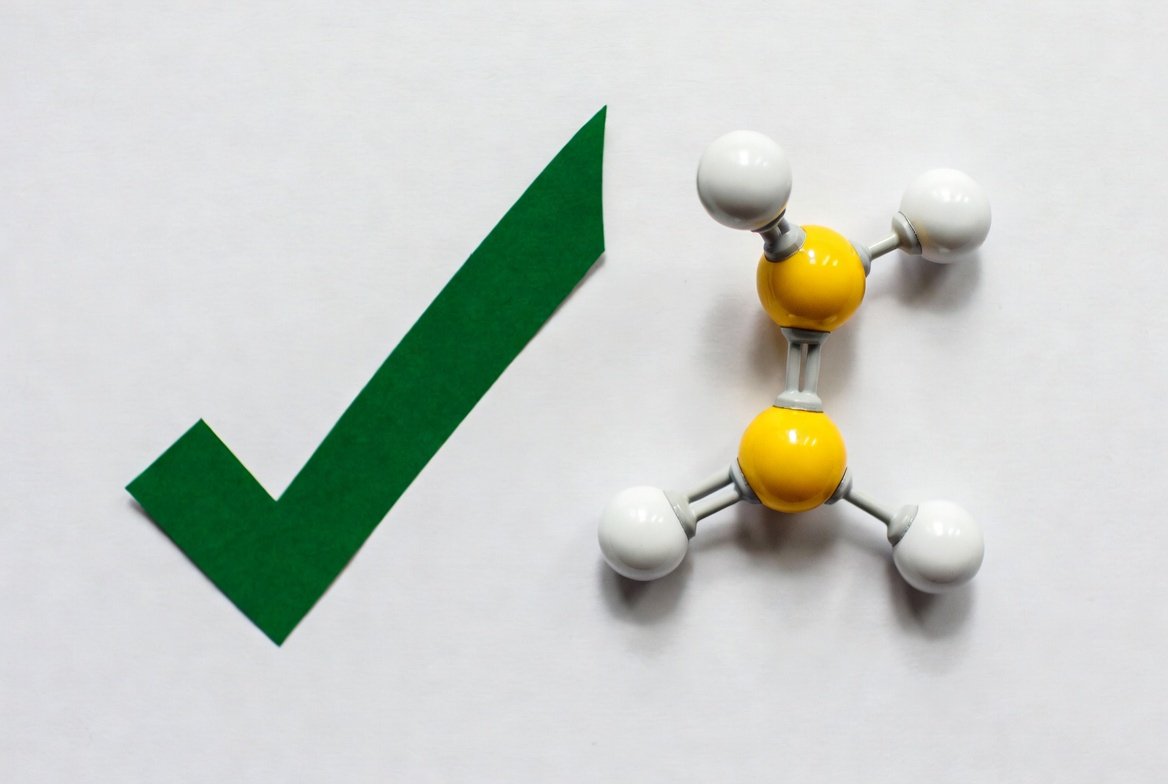
Geothermal plants turn reservoir heat into baseload electricity. The same steam and brine also carry non-condensable gases. Hydrogen sulfide is usually the most difficult of those gases. It is toxic, corrosive, odorous at parts-per-billion levels, and tightly permitted. A plant can meet its generation targets and still fail an odor complaint or an air permit if the H2S in the non-condensable gas (NCG) stream is treated as an afterthought.
This article reviews where H2S appears in geothermal service, how cycle and condenser design change the treating problem, and which removal methods fit each duty. The comparison is based on chemistry, sulfur fate, and operating constraints rather than on proprietary brand names.
Origin of H2S in Geothermal Fluids
Produced geothermal steam typically contains a few tenths of a percent to several percent NCG by weight. Carbon dioxide is usually the largest component. Hydrogen sulfide is next in many fields, followed by nitrogen, hydrogen, methane, ammonia, and traces of mercury, boron, and radon. The H2S is a natural product of water-rock reaction and sulfate reduction in the reservoir, not an industrial additive.
Concentrations vary by field. Dry-steam systems such as The Geysers historically delivered tens to a few hundred ppmv H2S in the NCG-rich vent after condensation. Flash fields can produce similar or higher loads once steam is separated. Binary plants keep geothermal fluid in a closed loop and do not create a large condenser off-gas stream, but well-pad vents and blowdowns still need a treating plan.
H2S is denser than air and has a very low odor threshold. A bypass, drain, or cooling-tower drift path can create a local nuisance even when the main stack is in compliance. Olfactory fatigue occurs well below immediately dangerous concentrations, so smell cannot be used as a warning. Continuous monitoring at occupied areas, confined spaces, and NCG equipment belongs in the same design package as the abatement unit.
How Plant Configuration Moves H2S
The treating problem is set by the power cycle, not only by the reservoir chemistry.
In a dry-steam plant, well steam goes directly to the turbine and is condensed after expansion. Steam-jet ejectors or liquid-ring vacuum pumps pull NCG from the condenser and produce a compact, H2S-rich stream. That stream is the primary abatement feed. If the condenser is a direct-contact unit, circulating water also absorbs sulfide that can later strip from the cooling tower.
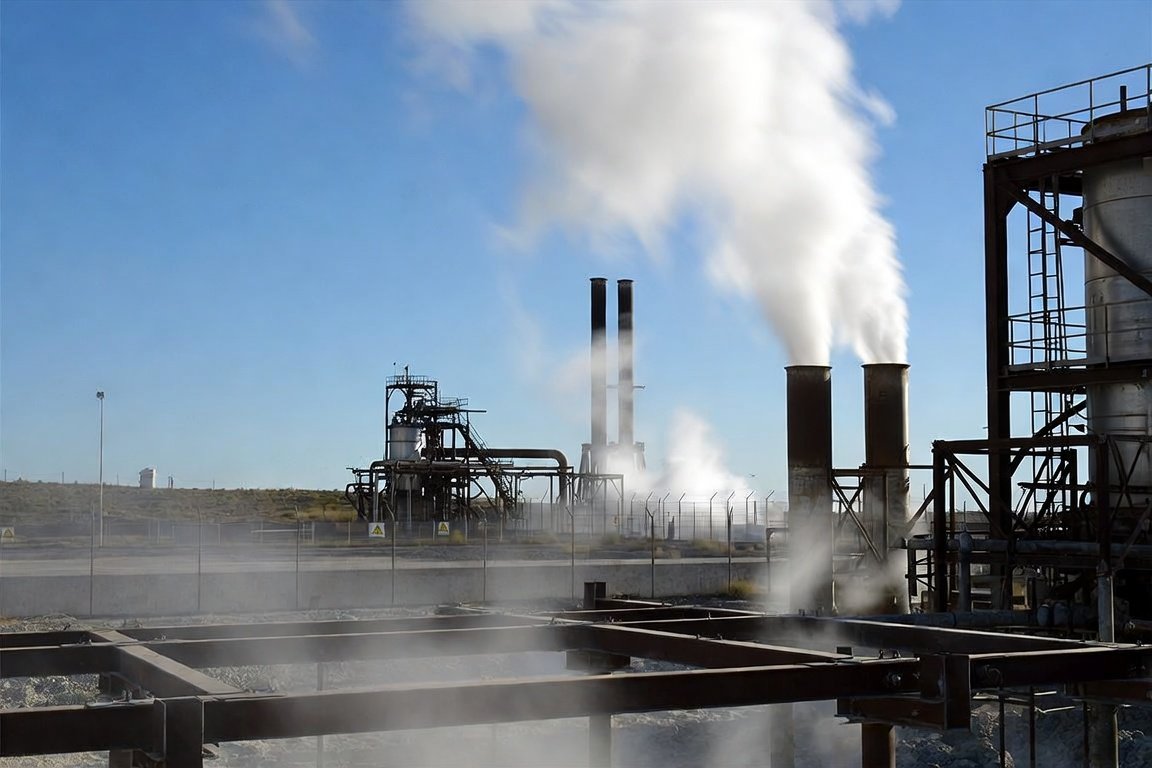
In a flash plant, hot brine is flashed in one or more separators. Steam goes to the turbine and brine is usually reinjected. The condenser and NCG extraction train again create the main H2S vent. Extra H2S leaves with flash-tank vents, well tests, and steam stacking when turbines are offline. Stacking most often triggers public complaints because the emission rate can rise sharply for several hours.
In a binary plant, geothermal fluid heats a secondary working fluid and is then reinjected. There is no steam condenser and therefore no large ejector stream. H2S risk moves to wellhead vents, reliefs, and any tank that sees flashed brine. Binary cycles reduce air emissions, but they do not remove the need for H2S controls on the fluid-handling side.
Condenser type is as important as cycle type. Surface condensers keep NCG in a small, high-concentration stream that is easier to treat. Direct-contact condensers mix steam with cooling water, so part of the H2S dissolves and later leaves the cooling tower. Plants that started with direct-contact condensers have often added circulating-water oxidation or converted to surface condensation once emission limits tightened.
Design Targets and Interfering Species
Geothermal H2S limits come from occupational rules, ambient air standards, odor ordinances, and site-specific permits. Treated NCG is commonly specified at a few ppmv to tens of ppmv H2S, depending on stack height, meteorology, and proximity to a community. Some permits regulate sulfur as SO2 after incineration. Others limit both reduced sulfur and the oxidized product.
Co-contaminants decide whether a simple process will last in the field. Ammonia interferes with Claus-type chemistry and with some liquid-redox catalysts. Carbon dioxide consumes caustic and weakens alkaline absorption of H2S. Mercury, when present, needs a dedicated sorbent so that sulfur product and wastewater do not become mercury-bearing wastes. Silica and brine carryover foul packings, spray nozzles, and exchangers if knock-out and wash stages are undersized.
Process Options
No single process fits every geothermal plant. Sulfur load, NCG rate, ammonia, available utilities, and the preferred sulfur product set the short list. The methods below have commercial geothermal history or transfer cleanly from sour-gas and biogas practice.
Incineration, caustic scrubbing, and liquid scavengers
The simplest path is to incinerate NCG and scrub the SO2, or to absorb H2S in a caustic tower. Untreated incineration turns a toxicity problem into an SO2 problem and is usually acceptable only for well-test flares and short stacking events. Continuous NCG from a large flash plant is a poor candidate for incineration without recovery.
Caustic scrubbing is reliable at low to moderate sulfur loads. Sodium or potassium hydroxide reacts quickly with H2S to form bisulfide and sulfide. Carbon dioxide competes for alkali, so dual-loop or pH-staged contactors are used when CO2 is high. Spent sulfide liquor is a regulated waste unless it is oxidized to sulfate. Liquid scavenger or caustic packages are often the lowest-capital choice for small sites and intermittent vents. They become expensive when the continuous sulfur rate justifies recovery.
Liquid redox
Liquid redox systems absorb H2S into a circulating solution and oxidize dissolved sulfide to elemental sulfur with air and a metal catalyst. Vanadium-based Stretford units were installed widely at The Geysers and proved that geothermal NCG can be treated continuously at high removal efficiency. Chelated-iron processes later became the more common commercial choice because they avoid vanadium and operate near ambient temperature.
These units fit geothermal duty when the sulfur load is roughly 0.2 to 20 tonnes per day and a wet sulfur cake is acceptable. They tolerate variable H2S better than a Claus plant and do not need a fixed H2S-to-SO2 ratio. Recurring issues are sulfur handling, solution losses, salt build-up, and ammonia if the feed is not conditioned. For many mid-size plants, liquid redox remains the default continuous abatement technology.
Biological oxidation
Biological units absorb H2S into a circulating liquor and oxidize dissolved sulfide to elemental sulfur or sulfate with sulfur-oxidizing bacteria. THIOPAQ-type systems and biotrickling filters have been used on geothermal and biogas NCG. Chemical consumption is low. The limits are temperature control, oxygen management, and inventory stability. Geothermal NCG is often hot and ammonia-rich, so a quench step is usually required. These units handle steady moderate loads well and handle stacking peaks poorly unless a spare chemical scrubber is kept in parallel.
Selective oxidation and modified Claus routes
On a large NCG stream that is lean in ammonia, catalytic selective oxidation or a Selectox-plus-Claus arrangement can convert H2S to elemental sulfur. The sulfur product is drier than liquid-redox cake, but feed control and capital are higher. These processes are rarely justified below a substantial continuous sulfur rate. Geothermal steam also carries moisture, mercury, and ammonia that a refinery Claus feed typically does not.
Solid adsorbents
Iron oxide and iron hydroxide media, zinc oxide polishing beds, and impregnated activated carbons are used for low-flow vents, well-test packages, backup treating, and polishing after bulk removal. Iron media convert H2S to iron sulfides. Spent beds are handled as solid waste, subject to leachability and mercury content. Adsorbents are the wrong sole treatment for the main ejector stream of a large flash plant. They are often the right treatment for binary-plant vents, tank vapors, and temporary stacking. Size the vessel on contact time and sulfur loading, and provide extra knock-out because geothermal vents are wet.
NCG reinjection
Some fields compress NCG and inject it with spent brine. Reinjection removes an air emission point and can support reservoir pressure. It is not risk-free. H2S and CO2 can change wellbore corrosion, injectivity, and migration to other wells or surface features. Reinjection is a reservoir decision first. When it works, it can eliminate a continuous sulfur plant. It does not eliminate treating for well tests, workovers, and emergency vents.
Comparison of Common Options
| Option | Best-fit sulfur load | Typical treated H2S | Sulfur fate | Main limitations |
|---|---|---|---|---|
| Caustic or liquid scavenger scrubber | Low continuous or intermittent vents | Often below 4 to 10 ppmv | Sulfide brine or spent scavenger | CO2 consumes alkali; disposal cost rises with load |
| Liquid redox | About 0.2 to 20 t/d sulfur | Typically below 10 ppmv | Elemental sulfur cake or slurry | Solution chemistry, sulfur handling, ammonia |
| Biological oxidation | Steady moderate loads | Low ppmv with good control | Biosulfur or sulfate | Temperature and load swings; slow start-up |
| Selective oxidation or Claus-type | Larger continuous NCG streams | Low residual with tail-gas treating | Molten or solid sulfur | Capital; NH3 and mercury sensitivity |
| Iron-based or carbon adsorbents | Low-rate vents and polishing | Sub-ppmv possible near end of bed life | Spent solid media | Not economic as the only step on large NCG |
| NCG reinjection | Field-specific | No stack emission if reliable | Returned to reservoir | Reservoir compatibility; backup vents still required |
Details That Keep a Unit Online
Geothermal abatement units fail more often from poor feed conditioning than from the wrong core chemistry. A durable design includes knock-out or quench on the ejector discharge, a wash or filter for brine carryover, and a mercury guard if the field produces mercury. Materials must handle wet H2S, chloride, and occasional oxygen. 316L stainless is a common starting point, but chloride cracking still occurs. Duplex stainless, lined carbon steel, and non-metallics each have a place once the chloride and temperature envelope is known.
Steam stacking needs its own design case. When a turbine trips, steam that would have gone through the condenser is vented and the H2S rate can jump by an order of magnitude. A unit sized only for normal NCG will be bypassed during the event the public notices. Practical answers include a spare chemical contactor, a dedicated stacking oxidizer, an oversized redox absorber with surge volume, or an operating limit on stacking duration.
Cooling-tower pathways should be checked even after the ejector stream is treated. Direct-contact condensers transfer H2S into circulating water. If that water is not oxidized, the tower becomes a second emitter. Iron-catalyst oxidation of circulating water was used for this reason at The Geysers. Surface condensers reduce that path and usually simplify compliance.
Utilities are easy to underestimate. Liquid redox and biological units need air blowers, circulation pumps, and sulfur handling. Caustic systems need alkali logistics and a destination for spent liquor. Adsorbent vessels need crane access and a spent-media bin. In remote fields, chemical delivery and sulfur haul-away can dominate cost more than the reactor.
Selecting a System
A defensible selection starts with a measured NCG composition across the year, including stacking and well-test cases. Sulfur rate, CO2-to-H2S ratio, ammonia, and mercury then set the short list. Compare capital and operating cost on a life-cycle basis that includes media disposal, sulfur haul-away, and the cost of an exceedance. Hybrid systems are often correct: liquid redox or biological treatment on the main NCG stream, a caustic or scavenger package on stacking and well tests, and a small adsorbent polisher on tank vents.
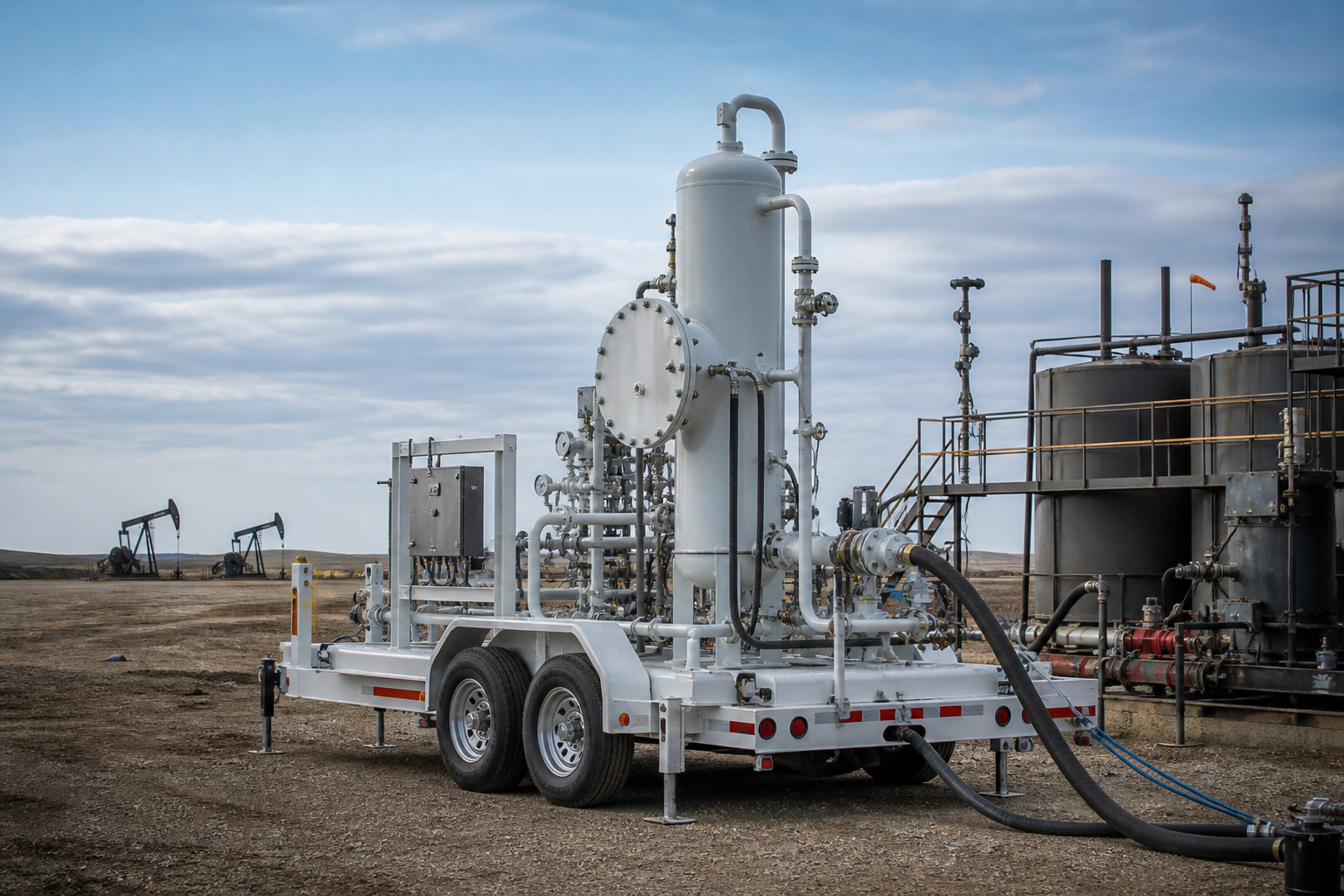
Custom packaged equipment is frequently the practical answer. Geothermal plants are often far from a refinery sulfur complex, plot space is limited, and the NCG rate is large enough to need engineered contactors but too small to justify a full Claus train. Skid-mounted scrubbers, mobile adsorbent vessels, and containerized redox or biological packages can be designed around the measured gas and expanded if the field adds wells.
Conclusion
Hydrogen sulfide is a built-in feature of many geothermal resources, not a symptom of poor operations. The power cycle determines where the H2S reports. The condenser design determines whether it stays in a compact NCG stream or leaks into the cooling tower. The right abatement method is the one that matches sulfur load, co-contaminants, and the preferred destination for sulfur.
FirstKlaz Technologies designs custom H2S contactors, liquid-scavenger systems, and adsorbent packages for sour industrial gases, including the compact and mobile configurations that geothermal projects often require. When the treating solution must fit the actual NCG composition rather than a generic brochure duty, a field-specific design is the reliable path to permit compliance and community acceptance.