Article Content
Texas occupies a singular place in the story of American and global energy. More than any other state, it has shaped the modern petroleum industry through landmark discoveries, technological firsts, and sustained production leadership. The January 10, 1901 eruption of the Lucas Gusher at Spindletop near Beaumont is widely regarded as the birth of the Texas oil boom and a pivotal moment that accelerated the world’s transition into the oil age. From the modest early wells of the 1860s to the shale revolution pioneered in the Barnett Shale and the continuing dominance of the Permian Basin, Texas has repeatedly rewritten the rules of exploration, production, and regulation. Today the state accounts for more than 40 percent of total U.S. crude oil output, with daily production exceeding 5.8 million barrels in recent periods, while also ranking as a top natural gas producer and a global refining and petrochemical powerhouse. This article traces the full arc of that remarkable history.
The Early Days: First Oil Wells in Texas
Oil was no stranger to Texas long before commercial drilling began. Native American tribes had long known of natural seeps and used the substance for medicinal and waterproofing purposes. Spanish explorers recorded similar observations as early as 1543 near Sabine Pass. Serious attempts at extraction, however, arrived only after the Civil War.
In 1866, Lyne T. Barret and partners of the Melrose Petroleum Oil Company completed the first producing oil well in Texas at Oil Springs in Nacogdoches County. Using a primitive rotary auger system driven by a steam engine, Barret’s well reached 106 feet and initially flowed about 10 barrels per day. Although short-lived due to low oil prices and the turmoil of Reconstruction, the well demonstrated that Texas possessed commercially interesting quantities of petroleum and established the basic mechanical principles that would later dominate rotary drilling worldwide.
A more consequential discovery occurred on June 9, 1894, when a water-well contractor drilling for the city of Corsicana accidentally struck oil. The find sparked Texas’s first true oil boom. By early 1897 the Corsicana field was producing several thousand barrels per day. In 1898 the state’s first modern refinery was built there, and by 1900 additional production had been established at the nearby Powell field. Corsicana proved that Texas could support an integrated oil industry and attracted outside capital and expertise that would prove critical in the years immediately ahead.
The Spindletop Revolution: January 10, 1901
No single event did more to transform Texas and the American oil industry than the discovery at Spindletop. On January 10, 1901, at approximately 10:30 a.m., the Lucas No. 1 well on Spindletop Hill near Beaumont erupted in a spectacular gusher. Captain Anthony F. Lucas, a mining engineer, had persevered through two years of difficult drilling on a salt dome structure. When the well came in, it initially flowed an estimated 75,000 to 100,000 barrels per day, sending a column of oil more than 100 feet into the air that was visible for miles.
The well was eventually brought under control after nine days, having already produced hundreds of thousands of barrels. In its first full year of operation the Spindletop field yielded more than 17 million barrels—roughly 94 percent of Texas’s entire 1902 production. Crude prices collapsed to as low as three cents per barrel in the immediate aftermath, yet the economic shockwaves were overwhelmingly positive. The discovery proved the enormous potential of Gulf Coast salt domes, triggered a wave of exploration across the state and the nation, and directly led to the founding or rapid growth of major companies including the Texas Fuel Company (later Texaco) and Gulf Oil. Beaumont became the first of many legendary Texas oil boomtowns, and the Spindletop legend entered American folklore as the moment the modern petroleum age truly began.
Geological Foundations of Texas Hydrocarbons
Texas owes its hydrocarbon wealth to an extraordinary variety of geological settings spanning nearly every geologic era except the Precambrian. Along the Gulf Coast, Jurassic-age salt domes created classic structural traps that localized oil and gas accumulations—structures first dramatically validated at Spindletop. The East Texas Basin features prolific Cretaceous sandstones, most notably the Woodbine formation that hosted the giant East Texas field. In West Texas and southeastern New Mexico, the Permian Basin developed within a vast intracratonic basin filled with thick sequences of Permian carbonates, sandstones, and shales; the basin remains one of the most prolific petroleum provinces on Earth. North-central Texas contains the Mississippian-age Barnett Shale, while South Texas is underlain by the organic-rich Eagle Ford Shale of Cretaceous age. Additional resources exist in the Panhandle, the Fort Worth Basin, and offshore state waters. This geological diversity has allowed Texas to sustain production through multiple technological eras and price cycles.
Expansion and Multiple Booms in the Early 20th Century
Following Spindletop, exploration spread rapidly. In 1908 the first offshore drilling in Texas took place in shallow Galveston Bay, eventually leading to the Goose Creek field. Major onshore discoveries continued throughout the 1910s and 1920s: the Electra field (1911) on the W.T. Waggoner Ranch, the Ranger field (1917), the Burkburnett Townsite field (1918), the Mexia field (1920), and numerous salt-dome fields along the Gulf Coast including Damon Mound, Barbers Hill, and Blue Ridge.
The Panhandle region boomed in the early 1920s with major oil and gas finds that created the town of Borger almost overnight. By the mid-1920s new fields were being opened in Howard, Winkler, Austin, and Guadalupe counties. Each new discovery reinforced Texas’s growing reputation as a land of seemingly endless opportunity for wildcatters and investors alike. The cumulative effect was a transformation of the state’s economy, population distribution, and political influence.
The East Texas Giant and Regulatory Innovation
On October 3, 1930, self-taught wildcatter Columbus Marion “Dad” Joiner completed the discovery well for what would become the largest oil field ever found in the lower 48 states—the East Texas Oil Field. The well, often associated with the Daisy Bradford #3 or Bradford well near Joinerville in Rusk County, tapped the Woodbine sandstone in a stratigraphic trap of unprecedented scale. Within months the field stretched across Rusk, Gregg, Smith, and Upshur counties, encompassing more than 140,000 acres.
The sheer volume of production—ultimately exceeding 5 billion barrels—created immediate problems of over-supply and collapsing prices during the Great Depression. The Railroad Commission of Texas, originally created in 1891 to regulate railroads, had gradually assumed authority over oil and gas pipelines (1917) and conservation (1919). In 1931, facing chaos in East Texas, Governor Ross Sterling declared martial law and ordered the National Guard to shut in wells. The legislature subsequently empowered the Commission to implement proration—setting monthly production allowables for each well and field. Rule 37, requiring minimum well spacing, protected correlative rights and reservoir pressure. These regulatory innovations, born of crisis, became models copied by other states and helped stabilize the industry for decades. The Railroad Commission’s influence on world oil prices from the 1930s through the 1960s was profound until OPEC assumed that role after 1973.
The Permian Basin: From Santa Rita No. 1 to Modern Giant
While East Texas captured headlines in 1930, another transformative discovery had already occurred farther west. On May 28, 1923, the Santa Rita No. 1 well in Reagan County blew in on University of Texas lands, marking the first commercial production from the Permian Basin. Named for the patron saint of impossible causes, the well had been drilled under difficult conditions for nearly two years. Its success opened one of the largest and most enduring oil provinces in the world.
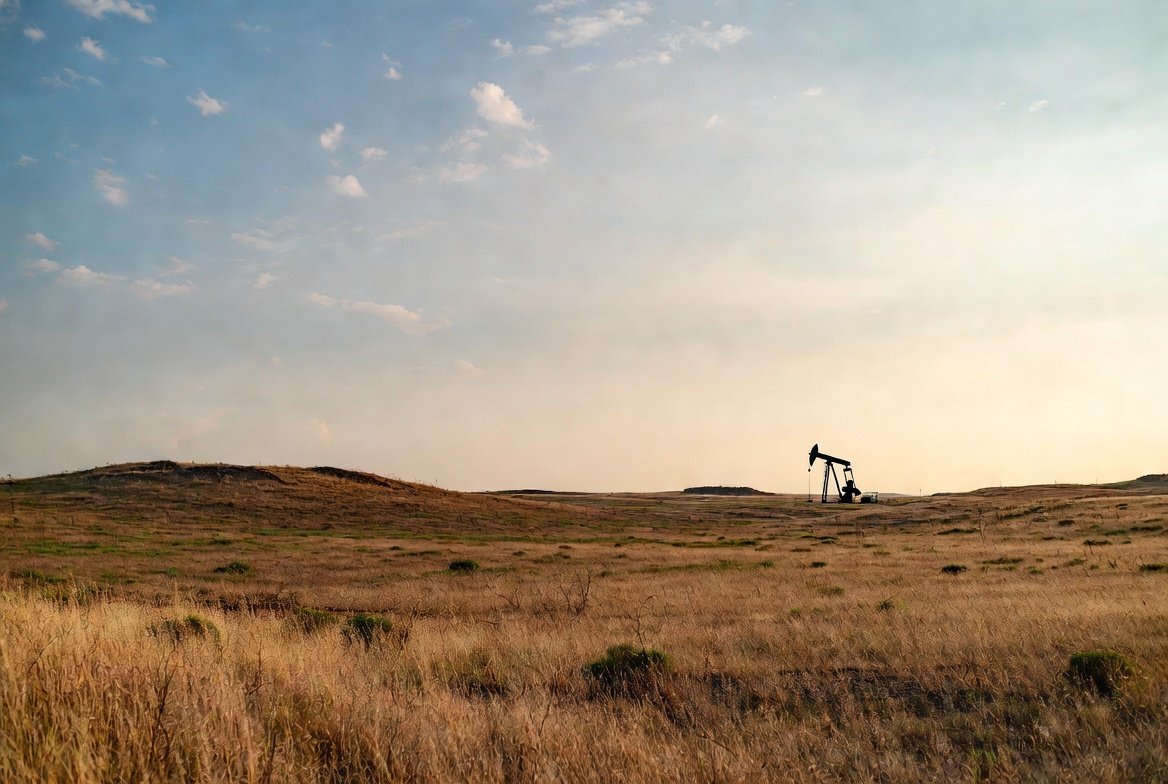
Subsequent discoveries in the 1920s and 1930s—Big Lake, Westbrook, Slaughter, Levelland, and many others—established the Permian as a core producing region. Production occurred from multiple stacked pays in Permian carbonates and older Paleozoic formations. The basin’s complex geology, with its reefs, evaporites, and structural features, rewarded persistent drilling and improving technology. By the late 20th century the Permian had already produced billions of barrels; the application of horizontal drilling and hydraulic fracturing after 2010 turned it into a global superstar once again. Today the Permian Basin alone accounts for roughly half of all U.S. oil production, demonstrating the remarkable longevity of Texas’s premier hydrocarbon province.
The Shale Revolution: Barnett, Eagle Ford, and Beyond
Texas not only hosted conventional giants; it also gave birth to the modern shale revolution. Beginning in the early 1980s, George P. Mitchell and his company, Mitchell Energy, began systematically experimenting with the Barnett Shale in the Fort Worth Basin. After nearly two decades of persistence and technical refinement, the combination of horizontal drilling and hydraulic fracturing—particularly the development of “slickwater” fracs—made shale gas commercially viable. The landmark S.H. Griffin well in 1998 demonstrated the breakthrough. The Barnett became the first major shale play to be successfully developed at scale and served as the technological template copied around the world.
The revolution quickly spread. In South Texas the Eagle Ford Shale emerged around 2008–2010 after Petrohawk Energy’s early horizontal wells in La Salle County. The Eagle Ford delivered both liquids-rich gas and light tight oil, driving another wave of investment, infrastructure, and population growth in South Texas. Meanwhile, operators applied the lessons learned in the Barnett and Eagle Ford to the stacked pays of the Permian Basin, unlocking previously uneconomic resources in the Wolfcamp, Spraberry, Bone Spring, and other formations. Texas thus became both the cradle and the greatest beneficiary of the shale era that reshaped global energy markets in the 2010s and 2020s.
Economic, Social, and Infrastructure Legacy
The oil and gas industry has been the single most important driver of modern Texas economic development. Boomtowns such as Beaumont, Kilgore, Odessa, and Borger sprang up almost overnight, bringing sudden wealth alongside the classic challenges of rapid growth—housing shortages, strained services, and social upheaval. Houston evolved into the undisputed “Energy Capital of the World,” home to corporate headquarters, engineering firms, service companies, and the largest concentration of refining and petrochemical capacity in the United States.
State revenues from severance taxes, royalties (especially from University lands), and related economic activity have funded schools, highways, and public institutions for generations. The industry directly and indirectly supports hundreds of thousands of high-wage jobs. Port facilities, pipelines, and processing plants built for oil and gas now also serve LNG export terminals at Corpus Christi, Freeport, and elsewhere, positioning Texas at the center of the global natural gas trade. The cultural imprint—rugged individualism, technological optimism, and a deep connection to the land’s subsurface resources—remains visible across the state.
Challenges and Adaptation in the Texas Energy Sector
Texas oil and gas history has never been a straight line of uninterrupted progress. Boom-and-bust cycles have been recurring features, from the price collapse after Spindletop to the devastating 1980s downturn that followed the 1970s price spikes. The East Texas crisis of 1931 required unprecedented state intervention. Environmental and community concerns—coastal land loss, water use for hydraulic fracturing, induced seismicity in certain areas, and occasional spills—have prompted stricter regulations and technological responses.
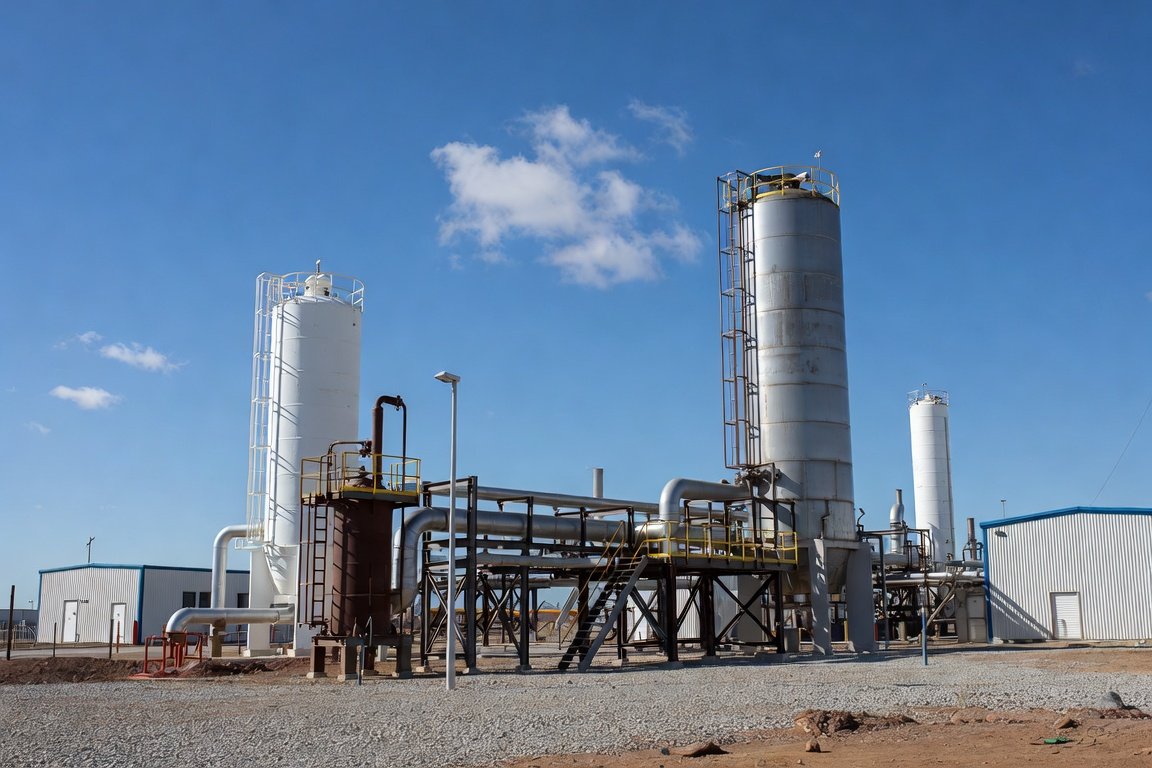
In many Texas formations, particularly portions of the Permian Basin and some Gulf Coast fields, operators must also contend with hydrogen sulfide (H₂S) in sour gas and crude streams. Safe handling and removal of H₂S is essential for personnel safety, equipment integrity, regulatory compliance, and environmental protection. These operational realities have driven continuous innovation in treatment technologies throughout the industry’s history in the state.
Modern Outlook and Continued Leadership
Entering the mid-2020s, Texas remains the unquestioned leader of U.S. oil and natural gas production. The Permian Basin continues to set records through longer laterals, improved completion designs, and infrastructure expansion. The Eagle Ford and Barnett, while more mature, still contribute meaningfully, and new horizontal development continues in other plays. LNG export capacity along the Texas Gulf Coast has grown rapidly, linking Texas production directly to global markets. At the same time, the industry faces pressure to reduce emissions, improve water recycling, and adapt to evolving energy policies.
Throughout these transitions, Texas’s combination of favorable geology, mature infrastructure, experienced workforce, and pragmatic regulatory tradition has allowed it to maintain its central role. The same innovative spirit that turned a salt dome near Beaumont into a global sensation in 1901 continues to drive efficiency and production gains today.
Key Milestones in Texas Oil and Gas History
- 1866 — Lyne T. Barret completes the first producing oil well in Texas at Oil Springs, Nacogdoches County.
- June 9, 1894 — Accidental discovery of the Corsicana field sparks Texas’s first major oil boom.
- January 10, 1901 — The Lucas Gusher erupts at Spindletop, igniting the modern Texas oil industry.
- 1908 — First offshore drilling in Texas occurs in Galveston Bay (Goose Creek field).
- May 28, 1923 — Santa Rita No. 1 opens the Permian Basin on University of Texas lands.
- October 3, 1930 — Dad Joiner discovers the giant East Texas Oil Field.
- 1931 — Railroad Commission implements proration and Rule 37 following East Texas crisis; Governor declares martial law.
- Early 1980s–1998 — George Mitchell and Mitchell Energy pioneer commercial shale gas development in the Barnett Shale.
- 2008–2010 — Eagle Ford Shale horizontal drilling boom begins in South Texas.
- 2010s–2020s — Permian Basin resurgence through horizontal drilling and hydraulic fracturing makes it the largest oil-producing region in the United States.
Texas’s oil and gas story is one of geological good fortune matched by human ingenuity, regulatory adaptation, and relentless technological progress. From the first modest rotary well in Nacogdoches to the sophisticated horizontal shale wells of today, the state has repeatedly demonstrated its capacity to lead the American energy sector. As the industry continues to evolve, Texas remains at its center—producing, refining, exporting, and innovating on a scale few other regions can match.
Editor’s Pick
- History of oil and gas in the Permian Basin — A deeper look at the geological and production history of Texas’s most prolific region.
- Technical resources on H₂S removal technologies and sour gas handling for oilfield applications.