Article Content
This article offers a detailed, non-biased examination of H₂S scavenger chemistry, its historical development, key classes of scavengers, performance metrics, selection factors, and emerging trends, grounded in established chemical engineering principles and industry practices.
The Chemistry of H₂S Scavenging: Fundamental Principles
H₂S is a weak diprotic acid that dissociates in aqueous solutions, making it reactive toward bases and oxidizing agents. Scavengers work through several mechanisms: acid-base neutralization, nucleophilic addition, oxidation to elemental sulfur or sulfate, and precipitation as insoluble metal sulfides. The ideal scavenger reacts rapidly and selectively with H₂S, produces stable, non-hazardous byproducts, operates effectively across a wide pH and temperature range, and minimizes secondary issues such as corrosion, foaming, or solids formation.
Reaction kinetics, stoichiometry, and mass transfer limitations play critical roles in real-world performance. In gas-liquid contactors or direct injection applications, contact time, droplet size (for atomized injection), and pH control significantly influence scavenging efficiency. Overdosing wastes chemical, while underdosing risks breakthrough and corrosion.
Historical Development of H₂S Scavengers
Early approaches relied on simple caustic solutions (sodium or potassium hydroxide) for pH elevation and neutralization. While inexpensive, these generate large volumes of spent caustic requiring disposal and can lead to carbonate scaling when CO₂ is present. The 1970s-1980s saw the rise of triazine-based scavengers, particularly monoethanolamine (MEA) and methylamine (MMA) triazines. These heterocyclic compounds react via nucleophilic attack on H₂S, forming water-soluble dithiazines. Triazines offered improved capacity and handling compared to earlier options, becoming the workhorse for many midstream and upstream applications.
Subsequent decades brought oxidizers such as hydrogen peroxide, sodium hypochlorite, and potassium permanganate, which convert H₂S to elemental sulfur or sulfate. These are effective but can introduce oxygen-related corrosion risks or halogenated byproducts. Iron-based chemistries, including ferrous sulfate or ferric compounds, precipitate sulfides but often suffer from sludge handling challenges.
Major Classes of Modern H₂S Scavengers
Triazine-Based Scavengers
MEA and MMA triazines remain popular due to their high reactivity, liquid form, and relatively low cost. Typical formulations range from 25-50% active. They perform well in neutral to alkaline conditions and are suitable for both gas and liquid phases. Limitations include potential for dithiazine polymer formation leading to solids, nitrogen contribution to downstream processes, and reduced efficiency at very high temperatures or in the presence of high CO₂. Custom blends can mitigate some drawbacks through additives that control pH or inhibit polymerization.
Non-Triazine Organic Scavengers
Proprietary formulations, including oxazolidines (such as MBO), aldehydes, and specialized amines, offer alternatives with potentially lower nitrogen content or better thermal stability. These often target improved kinetics or reduced byproduct issues. Some demonstrate superior cost-per-kg-H₂S-removed metrics in specific applications, particularly where regulatory pressure on nitrogen or formaldehyde exists.
Oxidizing Agents
Hydrogen peroxide, chlorine dioxide precursors, and metal oxidizers provide rapid conversion but require careful dosing to avoid over-oxidation or safety concerns. Peroxide-based systems are attractive for their “green” profile, decomposing to water and oxygen, but they are best suited for lower H₂S concentrations or polishing applications.
Metal-Based and Precipitating Scavengers
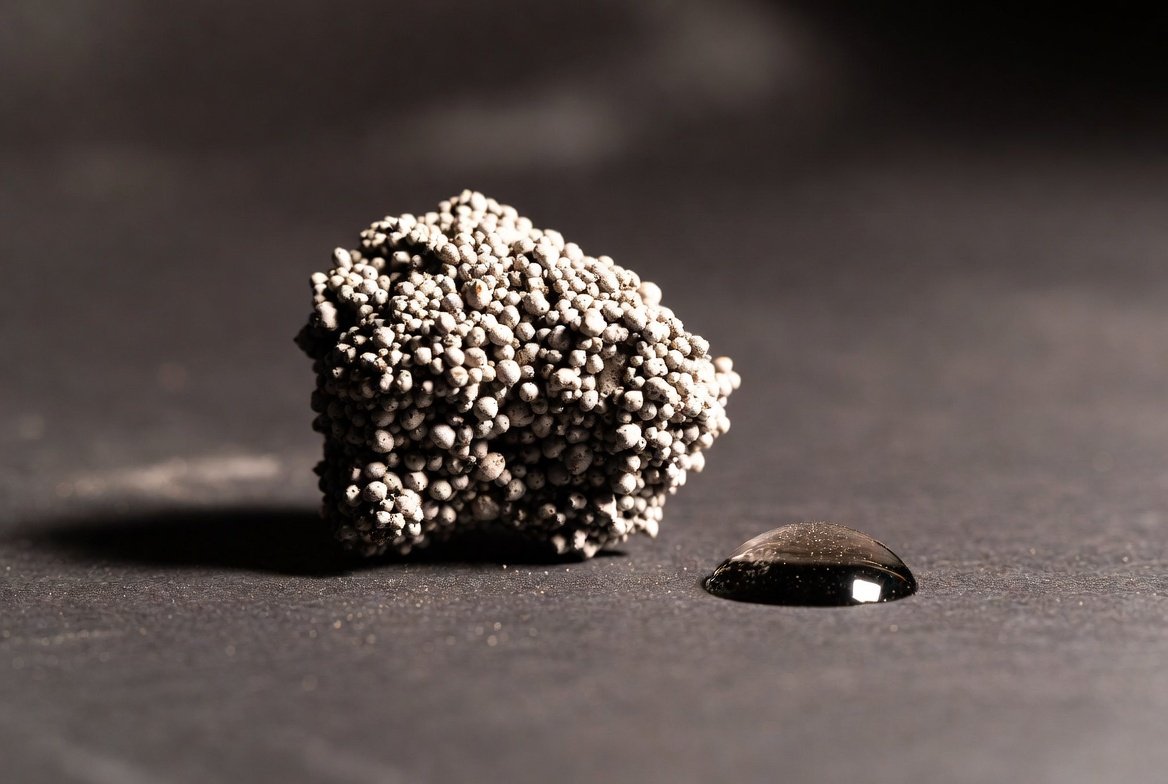
Iron, zinc, and copper compounds form insoluble sulfides. Iron oxide or hydroxide-based products are common in fixed-bed adsorbents but also appear in liquid suspensions. These excel in high-H₂S-load biogas or wastewater scenarios but generate solid waste that must be managed. Mixed metal oxides (Cu, Zn, Mn) in pelletized forms offer improved pressure drop characteristics for gas treatment.
Green and Environmentally Friendly Options
Increasing regulatory and ESG demands have spurred development of CEFAS Gold-rated or biodegradable scavengers. These may combine natural extracts, modified polymers, or low-toxicity synthetics. Performance can match or exceed traditional options in controlled tests, though field variability and cost remain important considerations.
Performance Metrics and Evaluation
Key metrics for comparing scavengers include:
- Capacity: kg H₂S removed per kg or liter of scavenger.
- Reaction Rate: Time to achieve target residual H₂S levels.
- Temperature and pH Range: Operational window.
- Byproduct Profile: Solids, liquids, gases, toxicity, and disposal requirements.
- Cost Effectiveness: Total treatment cost per unit H₂S, including logistics, handling, and disposal.
- Compatibility: Effects on corrosion, emulsions, foaming, and downstream catalysts or processes.
Laboratory bottle tests, dynamic loop testing, and field pilots provide essential data. However, translation from lab to field often reveals discrepancies due to multiphase flow, contaminants, and system hydraulics. Advanced modeling software incorporating kinetics and thermodynamics aids in prediction and optimization.
Selection Criteria for Specific Applications
Choosing the right scavenger requires holistic analysis:
- Upstream Oil & Gas: High-pressure gas, produced water, or multiphase streams favor fast-reacting liquids with minimal solids risk. Non-nitrogen options may be preferred to protect amine units.
- Midstream Pipelines and Facilities: Focus on cost, injectability, and compatibility with export specifications.
- Biogas and Renewable Natural Gas: Strict sulfur limits for grid injection or vehicle fuel favor biological polishing combined with chemical or adsorbent steps; low-nitrogen scavengers prevent issues in upgrading.
- Refining and Petrochemical: Integration with existing amine treating or Claus units influences choice.
- Wastewater and Pulp & Paper: Emphasis on odor control and effluent quality drives selection toward oxidizers or biological-compatible chemistries.
Site-specific factors such as temperature extremes, presence of mercaptans or CO₂, available infrastructure, and discharge regulations heavily influence decisions. Flexible OPEX models, including chemical supply and monitoring services, can reduce client risk.
Challenges and Mitigation Strategies
Common issues include solids formation (especially with triazines), incomplete reaction leading to residual H₂S, emulsion stabilization in oil systems, and high chemical consumption due to side reactions. Mitigation involves optimized injection (atomizing nozzles for better dispersion), pH buffering, temperature control, and periodic system cleaning. Regular monitoring with online analyzers and laboratory verification supports data-driven adjustments. Preventive maintenance and spare capacity planning minimize downtime risks.
Environmental considerations extend beyond the scavenger itself to include transportation emissions, packaging, and end-of-life management of spent materials. Life-cycle assessment (LCA) tools are increasingly used to quantify overall sustainability.
Emerging Innovations and Future Directions
Research continues into encapsulated or slow-release formulations, hybrid organic-inorganic systems, and scavengers derived from renewable feedstocks. Photocatalytic or electrocatalytic approaches that convert H₂S directly to hydrogen or sulfur show laboratory promise for integrated energy recovery. AI-assisted formulation design and real-time predictive dosing algorithms are entering field trials, potentially reducing consumption by 15-30% through dynamic optimization.
Nanotechnology-enhanced adsorbents and membrane-integrated scavenging may offer step-change improvements in selectivity and footprint. Regulatory evolution, particularly around PFAS, nitrogen loading, and Scope 3 emissions, will continue shaping chemistry priorities toward lower-impact solutions.
Practical Implementation and Best Practices
Successful deployment starts with detailed characterization of the H₂S source (concentration, flow, co-contaminants). Pilot testing under representative conditions is highly recommended before full-scale commitment. Vendor collaboration for custom formulation and ongoing technical support adds value. Operator training on safety, handling, and troubleshooting enhances reliability.
Integration with broader H₂S management—source reduction, mechanical design improvements, and monitoring—amplifies benefits. Regular performance audits and benchmarking against industry data help identify optimization opportunities. In an era of energy transition, scavenger chemistry that supports lower carbon footprints and circular economy principles will gain prominence.
While no single chemistry is universally superior, informed selection based on rigorous evaluation enables operators to achieve safe, compliant, and cost-effective H₂S control. Continued innovation promises even more efficient and sustainable options, supporting the industry’s dual goals of operational excellence and environmental stewardship.