Article Content
This article provides a comprehensive, unbiased overview of biological H2S removal methods, focusing on biotrickling filters (BTFs), liquid redox processes like THIOPAQ, and related systems. It examines their principles, applications, performance metrics, advantages, limitations, and emerging trends based on established engineering principles and industry practices.
Understanding H₂S Generation and the Need for Biological Treatment
Hydrogen sulfide forms primarily through the anaerobic reduction of sulfate by sulfate-reducing bacteria (SRB) in environments lacking oxygen. In industrial settings, this occurs in anaerobic digesters for biogas production, wastewater collection systems, sour gas streams, and process waters in pulp and paper mills or mining operations. H₂S concentrations can range from a few ppm in ventilation air to tens of thousands of ppm in raw biogas or natural gas streams.
Beyond its toxicity—capable of causing immediate health risks at concentrations above 100 ppm and fatal at higher levels—H₂S leads to corrosion of infrastructure, odor complaints in communities near facilities, and regulatory non-compliance. Traditional methods often involve high chemical usage or energy-intensive processes. Biological approaches leverage naturally occurring sulfide-oxidizing bacteria (SOB) to convert H₂S into less harmful compounds, typically elemental sulfur or sulfate, offering an environmentally friendlier alternative.
Core Principles of Biological H₂S Removal
Biological desulfurization relies on chemolithotrophic or phototrophic microorganisms that use H₂S as an energy source. The primary reaction under aerobic conditions is:
2H₂S + O₂ → 2S⁰ + 2H₂O (partial oxidation to elemental sulfur)or complete oxidation:
H₂S + 2O₂ → SO₄²⁻ + 2H⁺These processes occur at ambient temperatures and pressures, minimizing energy input compared to incineration or catalytic methods. Key parameters influencing performance include pH (often 1.5–9 depending on the system), oxygen supply, nutrient availability, and gas flow rates. SOB such as Thiobacillus, Acidithiobacillus thiooxidans, and others form biofilms on packing media or remain suspended in liquid systems.
Biotrickling Filters (BTFs) for H₂S Removal
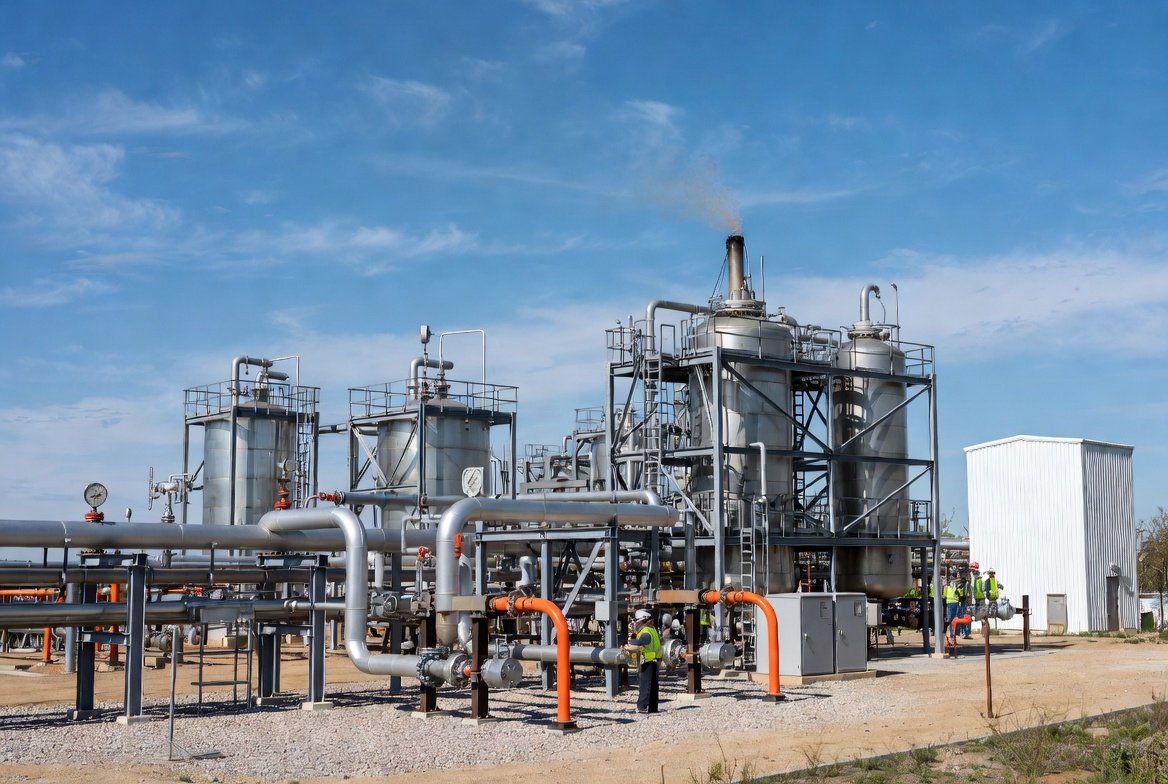
Biotrickling filters are fixed-bed bioreactors where contaminated gas flows through a packed column irrigated with a nutrient solution. Microorganisms immobilized on the packing material (e.g., polypropylene rings, polyurethane foam, or structured plastics) oxidize absorbed H₂S. The liquid recycle allows control of pH, removal of byproducts like sulfate, and maintenance of biofilm health.
Design Considerations:
- Packing Material: High surface area, low pressure drop, and durability are essential. Common choices include random or structured plastics resistant to acidification.
- Empty Bed Residence Time (EBRT): Typically 10–60 seconds for effective removal, depending on H₂S loading.
- Elimination Capacity: Modern BTFs can achieve 50–200 g H₂S/m³/h or higher under optimized conditions.
- Oxygen Supply: Controlled aeration prevents excess sulfate formation while avoiding anaerobic zones that could produce more H₂S.
In practice, BTFs excel in treating low to medium H₂S concentrations (up to 5,000–10,000 ppm) in biogas, wastewater off-gases, and ventilation air. Removal efficiencies often exceed 95–99%, with outlet concentrations below 5–25 ppm achievable. Applications include biogas upgrading for renewable natural gas (RNG) injection and odor control in municipal wastewater treatment plants (WWTPs).
Challenges include potential clogging from elemental sulfur accumulation, which requires periodic backwashing or media replacement, and sensitivity to temperature fluctuations or toxic inhibitors in the gas stream. Recent advances involve hybrid designs combining BTFs with chemical pre-scrubbing for high-load scenarios or using specialized inocula for faster startup.
Liquid Redox Biological Systems: The THIOPAQ Process
The THIOPAQ system, developed by Paques, represents a leading commercial biological liquid redox technology. It integrates chemical absorption with biological regeneration in a two-stage process:
- Absorption Stage: H₂S is absorbed into an alkaline solution (typically sodium hydroxide-based) in a scrubber or contactor, forming hydrosulfide ions.
- Biological Regeneration: The spent solution enters a bioreactor where SOB oxidize sulfide to elemental sulfur under controlled micro-aerobic conditions. The sulfur is separated as a slurry for potential recovery or disposal, and the solution is regenerated for reuse.
THIOPAQ achieves high removal efficiencies (>99.5%) even at inlet H₂S levels up to 200,000 ppm in some configurations. It is particularly suited for biogas from anaerobic digesters in wastewater treatment, landfills, and agricultural operations, as well as select oil and gas applications. Key benefits include production of marketable elemental sulfur (often >95% purity after processing), minimal chemical consumption after startup, and robust operation across variable loads.
Operational data from full-scale installations show low OPEX, with main costs related to nutrients, power for aeration/pumping, and sulfur handling. The process can be retrofitted to existing scrubbers, enhancing its appeal for brownfield projects.
Comparison with Other H₂S Removal Technologies
| Technology | Typical H₂S Range | Efficiency | Advantages | Limitations | Best Applications |
|---|---|---|---|---|---|
| Biotrickling Filters | Low-Medium (10-10,000 ppm) | 95-99+% | Low chemical use, sustainable, odor control | Clogging risk, larger footprint, startup time | Biogas, WWTP vents, ventilation air |
| THIOPAQ / Liquid Redox Bio | Medium-High | >99% | Sulfur recovery, high loading rates | Complex biology management, nutrient needs | Biogas upgrading, industrial off-gas |
| Chemical Scavengers (e.g., Triazines) | Low-Medium | High | Compact, fast response | High recurring chemical costs, byproducts | Oil & gas point sources |
| Iron-Based Adsorbents | Medium | High | Simple operation | Media replacement, disposal costs | Fixed-bed applications |
| Amine Absorption / Claus | High | Very High | Scalable for large volumes | Energy intensive, high CAPEX | Natural gas processing |
Biological systems shine in applications where sustainability goals, such as reducing Scope 1/2 emissions or minimizing waste, are prioritized. Hybrid approaches—combining biological polishing with upstream chemical treatment—often provide optimal economics and reliability.
Case Studies and Performance Data
In wastewater treatment facilities, BTFs have demonstrated reliable performance treating digester biogas with inlet H₂S of 2,000–4,000 ppm, achieving near-complete removal and enabling RNG production compliant with pipeline specifications (typically <4 ppm H₂S). One full-scale BTF using polypropylene packing reached elimination capacities of over 50 g H₂S/m³/h with consistent >99% efficiency independent of moderate load variations.
THIOPAQ installations in European and North American biogas plants have reported sulfur yields suitable for agricultural use or further refining, with reduced sludge production compared to purely chemical systems. In pulp and paper or mining contexts, biological methods help manage H₂S in process waters and vents, contributing to lower corrosion rates and improved workplace safety.
Challenges observed in field applications include maintaining optimal redox potential, managing elemental sulfur particle size for separation, and handling trace contaminants like siloxanes or VOCs that may affect microbial health. Regular monitoring of pH, dissolved oxygen, and biomass activity is critical for long-term success.
Emerging Trends and Optimization Strategies
Recent innovations focus on enhancing biological robustness:
- Genetically Optimized Strains or Consortia: Engineered or selected SOB for higher tolerance to extremes in pH, temperature, or salinity.
- Advanced Packing and Reactor Designs: 3D-printed or modular media for better mass transfer and easier maintenance.
- Integration with Renewable Energy: Solar-powered aeration or heat recovery to improve net-zero credentials.
- Real-Time Monitoring and AI Control: Sensors for H₂S, pH, and ORP coupled with predictive algorithms to optimize nutrient dosing and airflow.
- Sulfur Valorization: Processes to convert recovered sulfur into high-purity products for fertilizers, batteries, or industrial chemicals, improving project economics.
Research into micro-aerobic desulfurization directly within anaerobic digesters (adding limited oxygen or nitrate) is also expanding, potentially reducing the need for separate treatment units.
For industries in regions like Alberta, Canada—where oil sands, biogas, and mining activities intersect—biological methods can complement existing infrastructure while aiding compliance with stringent environmental regulations on emissions and odors.
Implementation Considerations and Best Practices
Successful deployment requires thorough site-specific assessment:
- Characterize gas composition, flow variability, and contaminants.
- Conduct pilot testing to validate microbial performance and sizing.
- Design for redundancy and easy maintenance access.
- Integrate with upstream/downstream processes (e.g., dehydration, compression for biogas).
- Train operators on biological system nuances, as they differ from purely chemical plants.
While CAPEX for biological systems can be comparable or higher initially due to reactor size, OPEX savings from reduced chemical purchases often yield favorable lifecycle costs, especially for continuous, moderate-to-high volume streams. Regulatory incentives for green technologies further enhance viability.
Limitations persist: Biological systems may underperform during sudden load spikes or toxic shocks without hybridization. They also require more space than compact scavenger injection systems, making them less ideal for offshore or space-constrained sites.
Conclusion: The Role of Biological Technologies in Sustainable H₂S Management
Biological H₂S removal technologies, exemplified by biotrickling filters and advanced liquid redox systems like THIOPAQ, represent a mature yet evolving suite of solutions that align with global pushes toward sustainability and circular economy principles. By harnessing microbial processes, industries can achieve effective H₂S control with minimized environmental footprint, supporting safer operations, regulatory compliance, and resource recovery.
As energy transitions and biogas/RNG markets expand, these methods will likely play an increasingly central role alongside traditional technologies. Operators should evaluate them on a case-by-case basis, considering total cost of ownership, site constraints, and long-term strategic goals. Ongoing research and field experience continue to broaden their applicability, promising even greater efficiency and integration in the years ahead.
Effective H₂S management ultimately requires a holistic approach—combining accurate monitoring, appropriate technology selection, and proactive maintenance—to protect assets, personnel, and the environment while maintaining operational efficiency.