Article Content
This article provides a comprehensive, unbiased overview of H₂S-induced corrosion mechanisms, modern detection and monitoring techniques, and proven mitigation strategies, drawing on established principles from materials science, chemical engineering, and industry standards.
Understanding H2S in Sour Service Environments
Hydrogen sulfide occurs naturally in many crude oil and natural gas reservoirs, often resulting from geological processes or bacterial sulfate reduction. Concentrations can range from trace amounts to several percent in “sour” fields. When present in produced fluids, H₂S dissolves in water to form a weak acid, creating conditions ripe for electrochemical corrosion on metal surfaces. Pipelines transporting multiphase fluids (oil, gas, water) are especially vulnerable due to the presence of free water that facilitates corrosion reactions.
Beyond direct chemical effects, H₂S contributes to a phenomenon known as sour service corrosion, governed by standards such as NACE MR0175/ISO 15156. These guidelines define material requirements for environments containing H₂S to prevent catastrophic failures like sulfide stress cracking (SSC). The presence of even low partial pressures of H₂S (as little as 0.05 psi or 0.0035 bar) can trigger stringent material qualifications.
Corrosion Mechanisms Driven by H2S
H₂S-induced corrosion involves multiple interrelated mechanisms, making it particularly insidious:
General and Pitting Corrosion
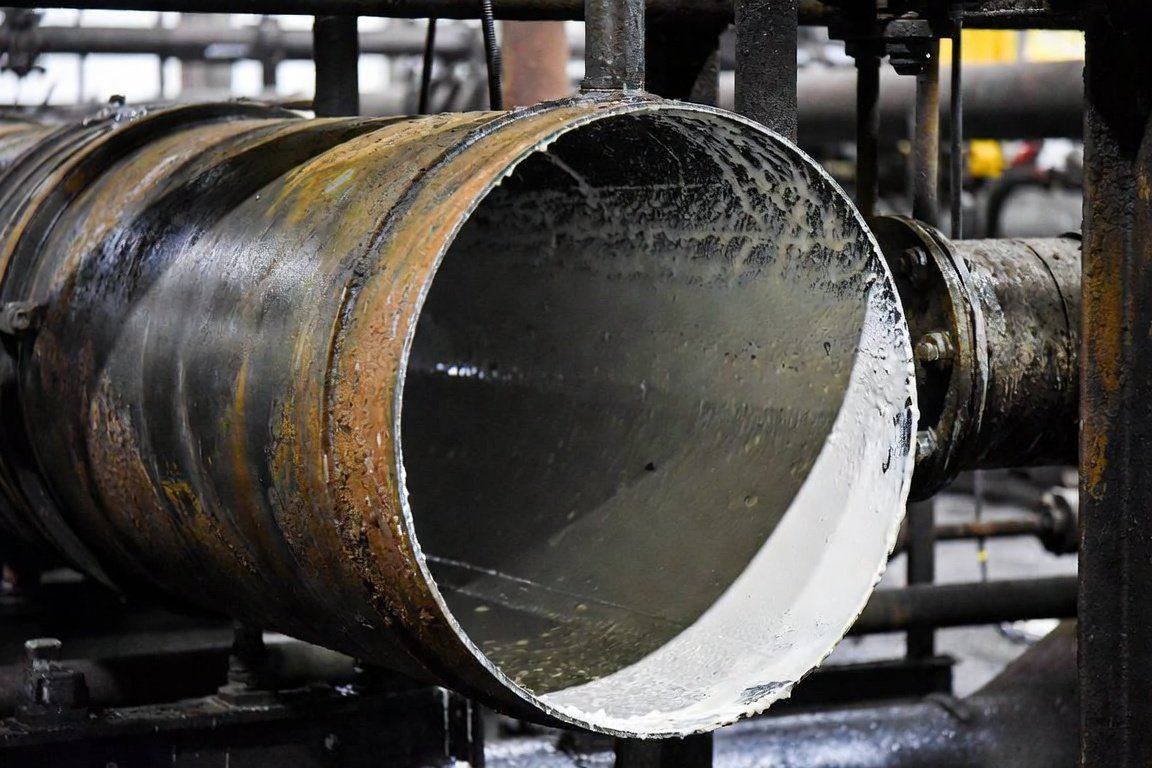
In aqueous environments, H₂S acts as a weak acid, promoting the anodic dissolution of iron: Fe → Fe²⁺ + 2e⁻. The cathodic reaction often involves hydrogen evolution or direct reduction of H₂S species. This leads to uniform thinning or, more dangerously, localized pitting where protective scales break down. Iron sulfide (FeS) scales that form can be semi-protective or highly porous, depending on temperature, pH, and flow conditions, sometimes accelerating rather than inhibiting further attack.
Sulfide Stress Cracking (SSC) and Hydrogen Embrittlement
One of the most severe risks is SSC, a form of hydrogen-induced cracking. Atomic hydrogen generated during corrosion diffuses into the steel lattice, reducing ductility and promoting crack initiation and propagation under tensile stress. High-strength steels are particularly susceptible. Factors influencing SSC severity include H₂S concentration, pH, temperature (most severe around room temperature), and applied or residual stresses.
Stress-Oriented Hydrogen-Induced Cracking (SOHIC) and Hydrogen Induced Cracking (HIC)
In plate steels and welds, HIC manifests as stepwise cracking due to hydrogen pressure buildup at inclusions. SOHIC combines elements of SSC and HIC, often occurring in the heat-affected zones of welds under applied stress. These mechanisms are critical concerns in pipeline girth welds and fittings.
Corrosion Under Deposits and Microbiologically Influenced Corrosion (MIC)
H₂S can foster environments for sulfate-reducing bacteria (SRB), which produce additional biogenic H₂S and exacerbate under-deposit corrosion. Biofilms and iron sulfide deposits create differential aeration cells and acidic microenvironments that accelerate localized attack.
Temperature plays a complex role: higher temperatures may promote more protective mackinawite or pyrrhotite scales but can also accelerate general corrosion rates up to certain thresholds.
Impacts on Pipeline Integrity and Operations
Corrosion induced by H₂S leads to substantial economic and safety consequences. Pipeline failures can result in leaks, environmental releases, production downtime, and regulatory penalties. Industry data consistently ranks corrosion among the top causes of pipeline incidents. In sour service pipelines, wall thinning, pitting, and cracking reduce pressure ratings and service life, often necessitating derating or premature replacement.
Secondary effects include increased maintenance costs, inhibitor consumption, and challenges in pigging operations due to scale buildup. For operators, effective management is essential not only for asset longevity but also for maintaining social license to operate in an era of heightened environmental scrutiny.
Detection and Monitoring Technologies
Early detection is paramount for proactive corrosion management. A combination of direct and indirect methods is typically employed.
Inline Inspection (ILI) Tools
Smart pigs using magnetic flux leakage (MFL), ultrasonic testing (UT), and electromagnetic acoustic transducers (EMAT) provide detailed mapping of metal loss and anomalies. MFL excels at detecting general corrosion and pitting, while UT offers precise wall thickness measurements. Regular ILI runs, combined with baseline surveys, allow calculation of corrosion growth rates.
Electrochemical Monitoring
Linear polarization resistance (LPR), electrochemical noise (ECN), and electrical resistance (ER) probes installed at strategic locations (e.g., low points, bends) provide real-time corrosion rate data. These are particularly useful for optimizing chemical inhibition programs. ECN is sensitive to localized corrosion mechanisms common in H₂S environments.
Corrosion Coupons and Probes
Weight-loss coupons remain a reliable, low-cost method for average corrosion rate determination over exposure periods. Advanced probes incorporate H₂S-specific sensors or combine multiple techniques for comprehensive data.
Non-Destructive Testing (NDT) and Advanced Sensing
External ultrasonic thickness measurements, guided wave ultrasonics for long-range screening, and fiber-optic distributed sensing for strain and temperature anomalies complement internal inspections. Emerging technologies include wireless sensor networks and AI-driven analysis of monitoring data for predictive maintenance.
Integration with SCADA systems and risk-based inspection (RBI) frameworks per API 580/581 standards enables data-driven decision making.
Mitigation Strategies for H2S Corrosion
Effective mitigation requires a multi-layered approach tailored to specific operating conditions.
Material Selection
Choosing appropriate materials is the first line of defense. Carbon steels with controlled hardness and chemistry are suitable for milder sour conditions when properly qualified. For more severe environments, corrosion-resistant alloys (CRAs) such as duplex stainless steels, super duplex, or nickel alloys (e.g., Inconel) provide superior resistance. Cladding or lined pipelines offer cost-effective alternatives for internal protection. Compliance with ISO 15156 is mandatory for sour service.
Chemical Inhibition
Corrosion inhibitors, often film-forming amines or imidazolines, are widely used. In H₂S systems, inhibitors must be compatible with sour conditions and effective against both general and localized attack. Continuous or batch injection, combined with monitoring, optimizes dosage and performance. Compatibility with other chemicals (scale inhibitors, biocides) is critical.
Internal Coatings and Linings
Epoxy or other polymer coatings provide a barrier against corrosive fluids. However, coating integrity must be maintained, as holidays can lead to accelerated localized corrosion.
Cathodic Protection (CP)
For external corrosion control on buried or subsea pipelines, impressed current or sacrificial anode CP systems are standard. In sour environments, CP criteria may need adjustment, and interactions with H₂S (e.g., hydrogen charging) require careful design.
Operational and Design Practices
Velocity management to minimize erosion-corrosion, water removal through pigging and separators, pH control, and oxygen exclusion are essential. Design features like smooth bore pipelines, avoidance of dead legs, and proper drainage reduce accumulation of corrosive phases. Regular cleaning removes deposits that harbor H₂S and bacteria.
Sulfur Recovery and H2S Treatment Integration
Upstream H₂S removal or scavenging reduces downstream corrosion potential. Technologies like amine sweetening, scavengers, or biological treatment can lower H₂S levels before gas enters pipelines, though complete elimination is often uneconomical for high-sour streams.
Regulatory and Industry Standards
Pipeline operators must adhere to frameworks such as those from PHMSA (U.S.), CSA Z662 (Canada), and international standards like DNV-OS-F101 for subsea pipelines. Integrity management programs (IMP) per ASME B31.8S or API 1160 require systematic threat identification, risk assessment, and mitigation planning specific to H₂S corrosion. Reporting thresholds for incidents and proactive integrity assessments are increasingly stringent.
Case Studies and Lessons Learned
Numerous incidents highlight the consequences of inadequate H₂S corrosion management. Failures in sour gas pipelines have led to releases, fires, and environmental damage, underscoring the need for holistic programs. Successful operators integrate multidisciplinary teams—materials engineers, corrosion specialists, operations personnel—and leverage digital twins for simulation and prediction.
In one notable approach, combining ILI data with real-time ER probe monitoring allowed optimization of inhibitor programs, extending pipeline life while reducing chemical costs. Another example involved upgrading to CRAs in high-risk sections following detailed risk assessments.
Emerging Trends and Future Directions
Advancements in nanotechnology for coatings, machine learning for predictive analytics of corrosion data, and improved sensor technologies promise enhanced capabilities. Graphene-based composites, self-healing coatings, and AI-powered anomaly detection are areas of active development. Integration of corrosion management with broader digital transformation initiatives, including IoT and big data analytics, will drive more efficient, predictive strategies.
Sustainability pressures are also influencing approaches, favoring low-environmental-impact inhibitors, reduced chemical usage through optimization, and materials that support circular economy principles.
Conclusion
H₂S-induced corrosion remains a critical integrity threat in oil and gas pipelines, but through understanding of underlying mechanisms, deployment of advanced detection technologies, and implementation of layered mitigation strategies, operators can effectively manage risks. A proactive, data-driven approach integrating material science, monitoring, and operational best practices is essential for safe, reliable, and sustainable operations. As the industry evolves toward more challenging reservoirs and stricter regulations, continued innovation and knowledge sharing will be key to overcoming these challenges. Site-specific assessments and consultation with qualified corrosion specialists are recommended for tailored solutions.