Article Content
Among the various H₂S removal technologies available—such as amine sweetening, iron oxide beds, liquid scavengers, and membranes—activated carbon adsorption stands out as a reliable, relatively low-maintenance option particularly suited for moderate H₂S concentrations (typically under 1000-2000 ppm) or as a final polishing step. It is valued for its simplicity, ability to handle variable loads, and effectiveness in achieving very low outlet concentrations.
Correct sizing of the activated carbon adsorbent vessel is one of the most important aspects of system design. An undersized vessel will experience early breakthrough, leading to frequent media replacement, higher operating costs, and potential off-spec product gas. Conversely, an oversized vessel wastes capital investment, increases footprint, and can lead to suboptimal flow distribution. This comprehensive guide walks through the engineering principles, key parameters, detailed calculations, practical design considerations, and real-world examples for properly sizing fixed-bed activated carbon vessels for H₂S removal from natural gas streams.
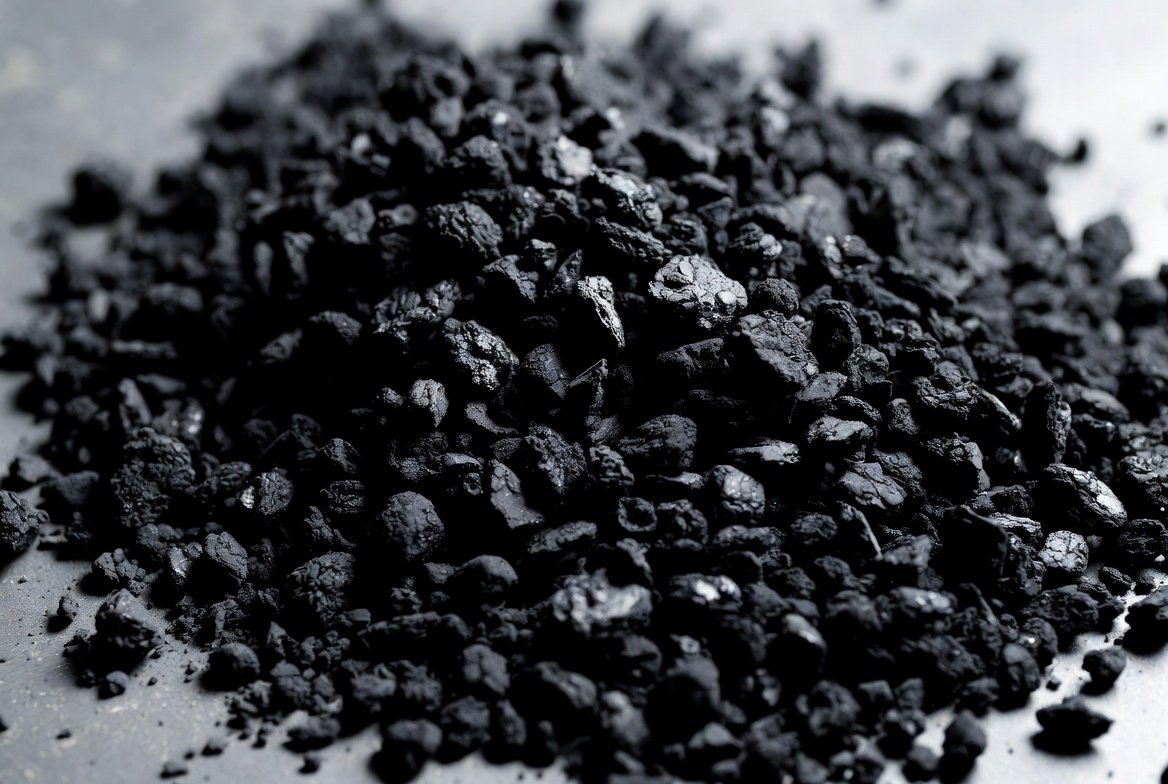
Activated carbon functions through a combination of physical adsorption onto its vast internal surface area (usually 800 to 1500 square meters per gram) and, in the case of specially impregnated or catalytic activated carbons, chemical reactions where H₂S is oxidized to elemental sulfur or higher oxides in the presence of oxygen and moisture. Non-impregnated virgin granular activated carbon (GAC) typically provides working capacities in the range of 10 to 30 kilograms of H₂S per cubic meter of bed volume. In contrast, advanced impregnated carbons using potassium hydroxide, potassium iodide, or metal oxides can deliver significantly higher capacities ranging from 65 up to 140 kg H₂S per m³ or more under favorable conditions.
Fundamentals of H₂S Adsorption on Activated Carbon
The adsorption process in a fixed-bed configuration involves the natural gas stream flowing through a packed column of GAC. H₂S molecules transfer from the bulk gas phase to the external surface of the carbon particles, then diffuse into the intricate pore structure where they are retained. Over time, the adsorption front or mass transfer zone (MTZ) moves through the bed until breakthrough occurs, defined as the point when effluent H₂S concentration exceeds the design limit.
Several critical factors influence adsorption efficiency and bed life:
- Inlet H₂S and overall gas composition, including competing species like CO₂, heavy hydrocarbons, and mercaptans
- Operating temperature (optimal usually 15–50°C) and pressure
- Gas flow rate, superficial velocity, and humidity levels
- Selection of carbon type, particle size distribution (common meshes include 4×8, 4×10, 8×30), and impregnation chemistry
- Bed geometry parameters such as depth, diameter, empty bed contact time (EBCT), and length-to-diameter ratio
Moisture plays a dual role. For catalytic carbons, a relative humidity of 40–60% often maximizes capacity by facilitating the oxidation reaction: 2H₂S + O₂ → 2S + 2H₂O. However, excessive free water can block pores and reduce performance. Since many natural gas streams are relatively dry, designers may need to incorporate upstream humidification or choose carbons specifically engineered for low-humidity service. The presence of even small amounts of oxygen (as low as 0.1–1%) dramatically improves H₂S removal capacity through catalytic pathways.
Understanding the breakthrough curve is essential. The curve shows how effluent concentration evolves over time or throughput. Sharp breakthrough curves indicate efficient bed utilization, while broad curves signal mass transfer limitations or poor design.
Critical Design Parameters
Gas Flow Rate and Contaminant Loading
Accurate determination of both average and maximum flow rates is the foundation of sizing. Use actual cubic feet per minute (ACFM) or normal cubic meters per hour at operating pressure and temperature. Apply the ideal gas law or appropriate compressibility charts for conversion from standard conditions.
The daily H₂S mass loading can be calculated as follows:
Daily H₂S load (kg/day) ≈ Flow rate (Nm³/day) × H₂S concentration (ppmv) × (34 g/mol / 22.4 L/mol) × 10⁻⁶
In oilfield units commonly used in North America: Approximate H₂S lb/day = MMSCFD × ppmv × 0.0898. These calculations allow engineers to quantify the total contaminant burden the system must handle over the desired service interval.
Adsorption Capacity and Safety Factors
Design must rely on dynamic working capacity obtained from laboratory or pilot breakthrough tests rather than static equilibrium isotherms. Typical literature and supplier values are:
- Virgin GAC: 10–30 kg H₂S/m³ of bed volume
- Impregnated or catalytic carbons: 65–140+ kg H₂S/m³
A safety factor between 1.5 and 2.5 is standard practice to account for feed variability, temperature swings, incomplete utilization, and unexpected co-adsorption. Vendor-specific data sheets and ASTM D6646 or similar test methods should be used for validation.
Empty Bed Contact Time (EBCT)
EBCT is a key performance indicator calculated as EBCT = Bed volume / Volumetric flow rate. For gas-phase H₂S adsorption on activated carbon, values typically range from 2 to 15 seconds, with 5–10 seconds being common for many applications. Extended EBCT enhances removal efficiency and extends service life at the expense of larger vessel size and higher initial cost.
Superficial Velocity and Bed Geometry
Superficial or linear velocity is the gas velocity through the empty vessel cross-section. Recommended design range is 0.1 to 0.5 m/s (approximately 20 to 100 feet per minute). Too high a velocity risks fluidization, channeling, or excessive pressure drop; too low may lead to poor distribution. The bed should maintain a length-to-diameter (L/D) ratio of 3:1 minimum, ideally 4:1 to 6:1, with minimum bed depths of 1 to 1.5 meters to ensure proper MTZ development.
Step-by-Step Vessel Sizing Procedure
Step 1: Define Process Data
Compile comprehensive process information including peak and turndown flow rates, detailed gas analysis, temperature and pressure ranges, moisture content, presence of liquids or solids, target outlet H₂S concentration, and desired run length between carbon changes (typically 30 to 180 days).
Step 2: Calculate Required Carbon Volume
Required bed volume (m³) = (Total H₂S mass to be removed over cycle in kg) / (Working capacity in kg/m³) × Safety factor.
For illustration, consider 1 MMSCFD gas containing 500 ppm H₂S, targeting a 90-day cycle with an 80 kg/m³ catalytic carbon and a 1.8 safety factor. After calculating the daily load (approximately 44.9 lb/day or 20.4 kg/day), total H₂S over 90 days is scaled accordingly, leading to the necessary carbon volume. This step is iterated with vessel geometry constraints.
Step 3: Select Configuration
Lead-lag series arrangement is highly recommended for continuous operation. The lead vessel captures the majority of the H₂S while the lag vessel acts as a guard. Upon breakthrough on the lead, valves are switched so the former lag becomes lead, and the spent vessel is taken offline for media replacement. Parallel configurations provide additional redundancy for critical or high-flow applications.
Step 4: Determine Vessel Dimensions
Cross-sectional area is sized based on allowable superficial velocity: Area (ft²) = Actual flow (ACFM) / Velocity (ft/min). Vessel diameter is then derived from Area = πD²/4. Standard diameters are preferred for cost reasons. Bed height follows directly from volume divided by area, after which EBCT, L/D ratio, and freeboard (typically 20-50% for bed expansion) are verified.
Step 5: Pressure Drop Analysis
Pressure drop through the packed bed is predicted using the Ergun equation:
ΔP/L = [150 × μ × (1-ε)² × V / (ε³ × d_p²)] + [1.75 × ρ × (1-ε) × V² / (ε³ × d_p)]
Key variables include gas viscosity μ, density ρ, bed voidage ε (0.35–0.45 typical), particle diameter d_p, and velocity V. Total allowable pressure drop is generally kept under 5–10 psi (0.34–0.69 bar) to minimize compression costs. Manufacturer pressure drop charts for specific mesh sizes should supplement theoretical calculations.
Vessel Materials and Mechanical Design
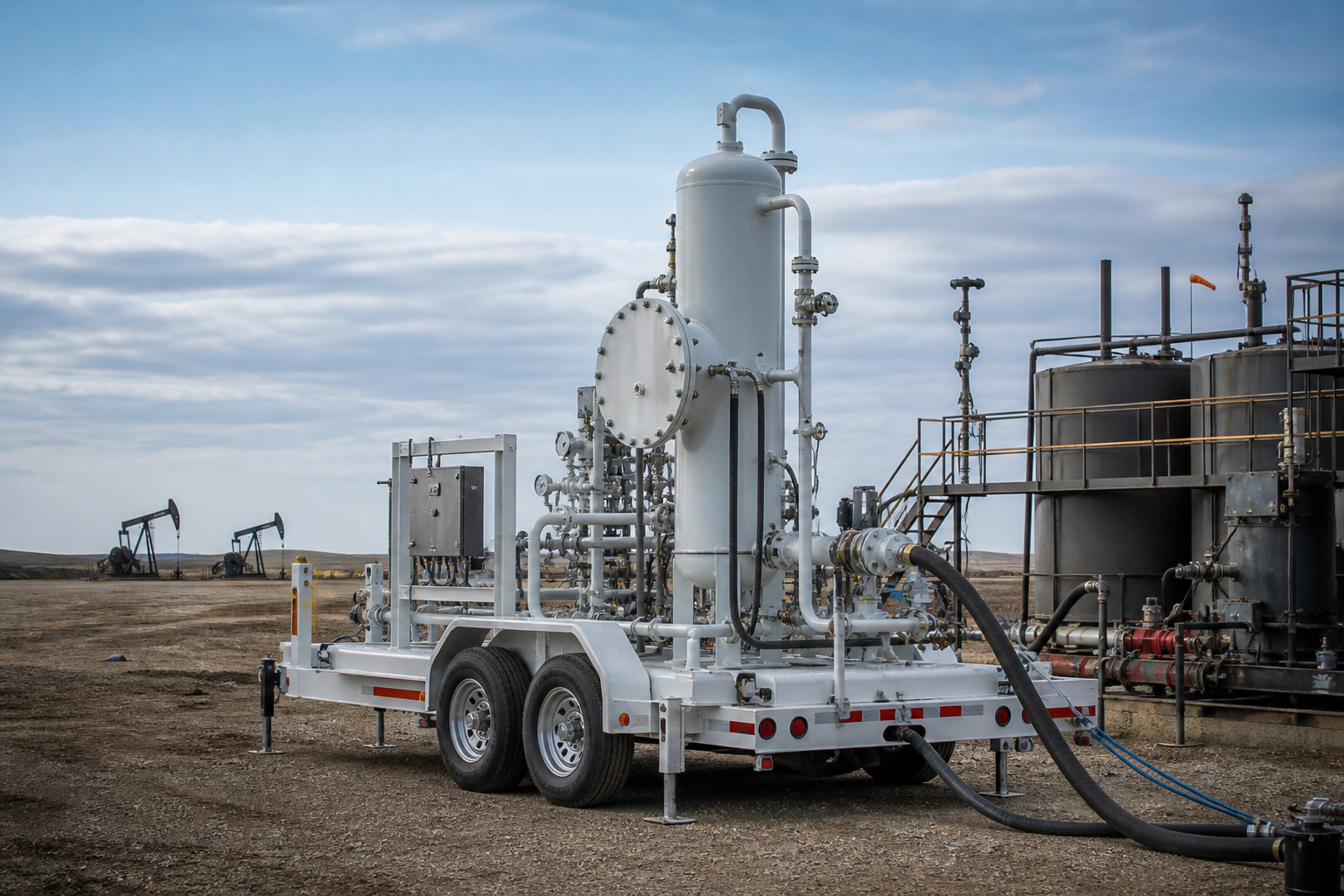
Adsorbent vessels are most often designed as vertical cylindrical pressure vessels in accordance with ASME Section VIII codes. Materials of construction are typically carbon steel with internal coatings or stainless steel (304/316) for better corrosion resistance given the wet, sour environment. Fiberglass-reinforced plastic (FRP) is a viable alternative for lower pressure applications.
Essential internal and external features include:
- Large top and bottom manways to facilitate carbon loading and unloading
- Inlet gas distributors and outlet collection screens to ensure uniform flow and retain carbon
- Multiple sampling ports at different bed heights for performance monitoring
- Drain connections, vent lines, differential pressure gauges, and temperature indicators
- Adequate freeboard volume above the bed to accommodate expansion during upsets
Robust pre-filtration upstream is mandatory to remove compressor oils, hydrocarbons, particulates, and liquid droplets that could foul or deactivate the carbon.
Operational Considerations and Monitoring
Successful long-term operation requires continuous online H₂S monitoring at inlet and outlet. Mathematical models like the Bed Depth Service Time (BDST) approach or the more comprehensive Thomas model are useful for performance prediction and scale-up. Regular carbon sampling and analysis help track remaining capacity.
Spent activated carbon loaded with sulfur is frequently classified as hazardous waste and requires specialized disposal or regeneration services. Lead-lag operation typically achieves 80–95% utilization of the theoretical capacity.
Detailed Example Calculation
Let’s examine a practical case: 0.5 MMSCFD natural gas stream with 1000 ppm H₂S at 70°F and 100 psig. Target outlet <10 ppm, using catalytic carbon with 80 kg/m³ working capacity, desired 60-day service life, and safety factor of 1.75.
Step calculations:
1. Daily H₂S ≈ 0.5 × 1000 × 0.0898 ≈ 44.9 lb/day (20.4 kg/day).
2. Total H₂S over 60 days ≈ 2,694 lb (1,222 kg).
3. Required media mass and volume accounting for bulk density (approx. 500 kg/m³) and safety factor yields the bed volume.
4. Sizing for superficial velocity of 30–60 ft/min determines diameter (e.g., two 8-ft diameter vessels) and corresponding bed height to satisfy EBCT of 5–10 seconds and acceptable pressure drop.
Such designs should always be confirmed with pilot testing under actual gas conditions.
Advanced Considerations and Optimization
For complex or large-scale projects, employ process simulation tools such as Aspen Adsorption or specialized gas processing software that incorporates adsorption isotherms (Langmuir, Freundlich), mass transfer coefficients, and energy balances. Hybrid configurations combining upstream bulk removal (amines, scavengers, or iron sponge) with downstream carbon polishing frequently deliver the lowest total cost of ownership.
Economic optimization balances capital expenditure on larger vessels and more carbon against reduced frequency of media replacement and lower disposal costs. Sensitivity analysis on key variables like flow rate, H₂S concentration, and carbon unit price is recommended. Integration with SCADA systems for automated valve switching in lead-lag setups enhances reliability.
Emerging developments include regenerable carbons and improved impregnants that extend service intervals further, reducing lifecycle costs.
Conclusion
Proper sizing of activated carbon adsorbent vessels for H₂S removal is a multi-faceted engineering task that integrates contaminant loading calculations, adsorption kinetics, fluid dynamics, mechanical design, and economic considerations. By methodically applying the principles and procedures detailed in this article—starting with solid process data, selecting appropriate carbon media, calculating volumes and dimensions, analyzing pressure drop, and incorporating safety margins and monitoring—operators can achieve dependable, efficient, and regulatory-compliant performance.
Always engage experienced vendors for media selection and conduct site-specific pilot studies when feasible. FirstKlaz Technologies brings extensive expertise in designing, manufacturing, and optimizing custom H₂S removal systems, including activated carbon solutions tailored to the unique requirements of Alberta’s oil and gas industry and projects worldwide.
This guide is provided for informational purposes. Full engineering design must be performed by licensed professionals incorporating project-specific data, vendor recommendations, and applicable codes and standards.